Crow Worksheet Download
Free reading worksheets on Crow. Each worksheet has 20 problems with an answer key and are ideal for teachers and homeschooling. You can download the PDF, create a set of flash cards or set it up for online learning.


Sheet Information >
Available at 2nd grade, 3rd grade, 4th grade, 5th grade and 6th grade reading levels.
Read the passage
Crows are amazing birds that you might have seen around your neighborhood. They have shiny black feathers and are very intelligent creatures. These birds live all over the world, from the countryside to the city, and they can adapt to many different environments.
Crows are omnivores, which means they eat both plants and animals. Their diet includes insects, fruits, nuts, and even small animals like mice. Sometimes, they even eat food that humans have left behind, like bread crumbs or popcorn. Crows also have interesting relationships with other animals, like working together with other crows to protect their nests from predators.
Crows are not only interesting but also have a fascinating life cycle. After hatching from their eggs, baby crows, called 'nestlings', grow up in their nests under the care of their parents. When they are old enough, they leave the nest and learn how to find food and survive on their own. Crows can live up to 20 years in the wild, and they are known for their intelligence and problem-solving skills, which makes them very different from other bird species. Crows are incredible animals that can teach us a lot about the natural world.
Crows are fascinating birds that live all around the world. They are black in color and have strong beaks and legs, which help them find food easily. Crows usually eat insects, fruits, seeds, and sometimes even small animals like frogs or mice. These smart birds are also known to use tools to get their food, like using sticks to poke into tree bark to find insects.
Crows make their homes in trees, building nests out of sticks and twigs. Their life cycle starts when they lay eggs in their nests, and after about 18 days, baby crows hatch from the eggs. Baby crows, called chicks, stay with their parents for a while to learn how to fly and find food. Crows can live for up to 20 years in the wild, which is quite a long time for a bird.
Crows have a unique relationship with humans and other animals. They are known to recognize human faces and can even remember who has been kind or mean to them. Crows also help other animals by warning them of danger, like if a predator is nearby. One interesting fact is that crows belong to the same family as ravens, but they are smaller and have a different call.
In this article, young readers will learn about the fascinating lives of crows, their eating habits, and where they live. They will also discover the life cycle of crows, their relationships with humans and other animals, and some interesting facts about these intelligent birds.
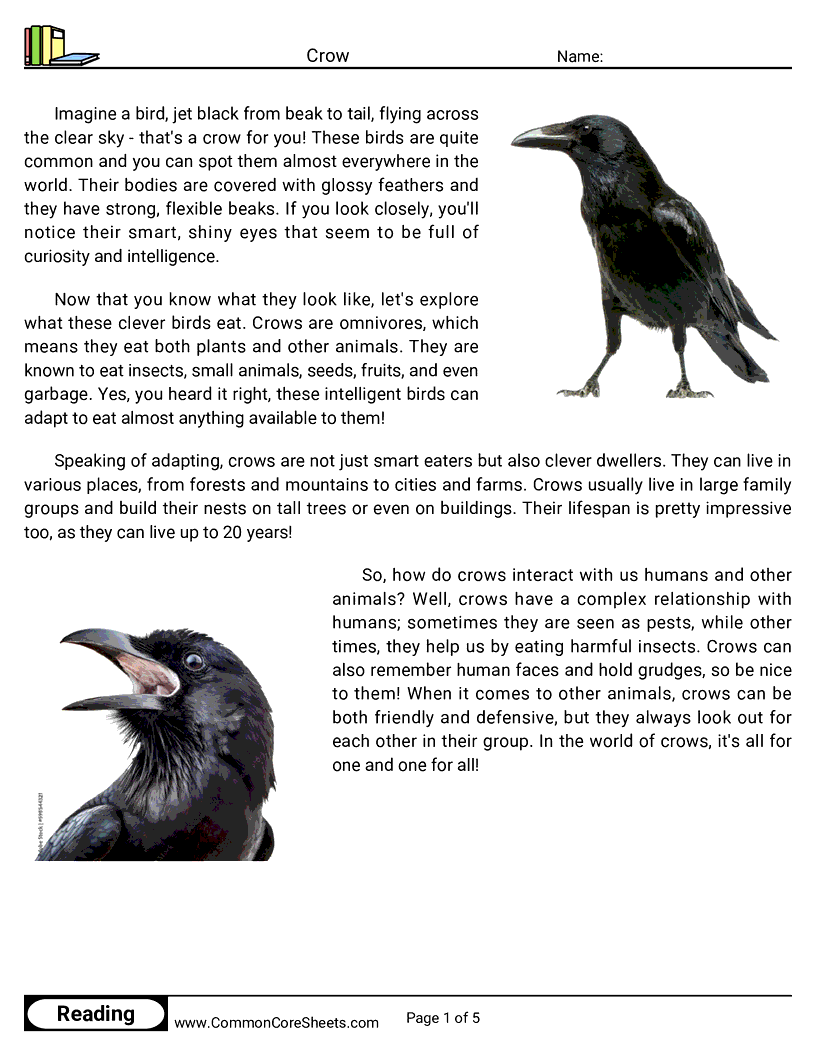
Imagine a bird, jet black from beak to tail, flying across the clear sky - that's a crow for you! These birds are quite common and you can spot them almost everywhere in the world. Their bodies are covered with glossy feathers and they have strong, flexible beaks. If you look closely, you'll notice their smart, shiny eyes that seem to be full of curiosity and intelligence.
Now that you know what they look like, let's explore what these clever birds eat. Crows are omnivores, which means they eat both plants and other animals. They are known to eat insects, small animals, seeds, fruits, and even garbage. Yes, you heard it right, these intelligent birds can adapt to eat almost anything available to them!
Speaking of adapting, crows are not just smart eaters but also clever dwellers. They can live in various places, from forests and mountains to cities and farms. Crows usually live in large family groups and build their nests on tall trees or even on buildings. Their lifespan is pretty impressive too, as they can live up to 20 years!
So, how do crows interact with us humans and other animals? Well, crows have a complex relationship with humans; sometimes they are seen as pests, while other times, they help us by eating harmful insects. Crows can also remember human faces and hold grudges, so be nice to them! When it comes to other animals, crows can be both friendly and defensive, but they always look out for each other in their group. In the world of crows, it's all for one and one for all!
Crows are fascinating birds that you've probably seen in your neighborhood. These intelligent creatures belong to the family Corvidae and are found all over the world. They have a sleek black appearance and can be easily recognized by their distinctive cawing sounds. In this article, you'll learn about their diet, habitat, life cycle, and their relationships with humans and other animals.
First, let's take a look at what these clever birds like to eat. Crows are omnivores, which means they eat both plants and animals. Their diet includes insects, fruits, seeds, nuts, and even small animals like mice and frogs. They are also known to scavenge for food in garbage bins or feed on roadkill.
Now, let's talk about where crows make their homes. These adaptable birds can live in various environments, such as forests, grasslands, and even cities. Crows build their nests out of twigs and branches, usually high up in trees to protect their young from predators. In colder climates, crows may migrate to warmer areas during the winter months.
Crows have an interesting life cycle and social structure. They mate for life, and both the male and female take care of their young. The young crows, called fledglings, leave the nest after about a month, but they often stay with their parents for several months. This helps the parents teach the young crows important skills like finding food and avoiding predators.
Lastly, let's explore the relationships crows have with humans and other animals. Crows have been known to form bonds with humans, and they can even recognize individual human faces. However, they are also known to be quite mischievous, stealing shiny objects or raiding crops. As for other animals, crows sometimes work together with other bird species to protect their territories from predators.
In conclusion, crows are intelligent, adaptable, and intriguing creatures that can teach us a lot about the natural world. Whether you see them in your backyard or the local park, take a moment to observe and appreciate these fascinating birds.
Crows are fascinating birds that can be found all over the world. They belong to the Corvidae family, which also includes ravens, magpies, and blue jays. These intelligent creatures come in a variety of sizes and colors, but they all share their distinctive, loud caw. Crows have been a part of many cultures' folklore and mythology, often symbolizing intelligence and adaptability. Let's dive deeper into the world of crows and learn more about these amazing birds.
First, let's explore the different environments where crows can be found. Crows are highly adaptable and can live in a wide range of habitats, from forests and grasslands to cities and suburban areas. They are social birds, often seen in groups called 'murders' or 'conspiracies'. These groups help them find food, protect their territory, and work together to solve problems. No matter where you live, you're likely to spot a crow nearby!
Now, let's take a look at what crows eat and how they find their food. Crows are omnivores, meaning they eat both plants and animals. Their diet includes seeds, fruits, insects, small mammals, and even carrion (dead animals). Crows are known for their problem-solving skills and have been observed using tools, such as sticks, to obtain food. They are also known to raid garbage cans and steal food from other animals.
Crows have a unique life cycle and interesting relationships with humans and other animals. They mate for life and build nests high up in trees to protect their eggs and young from predators. Crows can recognize human faces and react differently to people they perceive as friends or enemies. They have been known to form mutually beneficial relationships with other animals, such as wolves, leading them to food in exchange for protection. Crows also have a complex system of communication, using a wide range of vocalizations and body language to convey messages to each other.
Lastly, let's learn about the differences between crows and other bird species. Crows are often confused with ravens, but there are some key differences between the two. Ravens are larger, have thicker bills, and a more wedge-shaped tail compared to crows. Crows also differ from other birds in their high intelligence, problem-solving abilities, and strong social structures. These unique qualities make crows a truly fascinating species to study and observe.
About this worksheet
Students read a short passage about crows and answer comprehension questions to show understanding of the text.
This worksheet is designed to boost children's reading comprehension skills with engaging content on crows. It comprises 20 questions exploring various aspects of a crow's life, habits, and characteristics. The worksheet can be customized according to teaching needs, transformed into flashcards for more interactive learning, or easily integrated into distance learning modules to promote curiosity and knowledge about wildlife while enhancing reading abilities.
Student objectives
- Read a short informational passage about crows
- Answer questions using details from the text
- Find the main idea of what the passage is about
- Learn new facts about crows and their behavior
Everyday practice
- Read a fact sheet at the zoo and tell someone what you learned
- Explain a bird you saw outside to a family member
- Answer questions about a book you just read
- Pull out key details from a story to retell it