Coyote Worksheet Download
Free reading worksheets on Coyote. Each worksheet has 20 problems with an answer key and are ideal for teachers and homeschooling. You can download the PDF, create a set of flash cards or set it up for online learning.


Sheet Information >
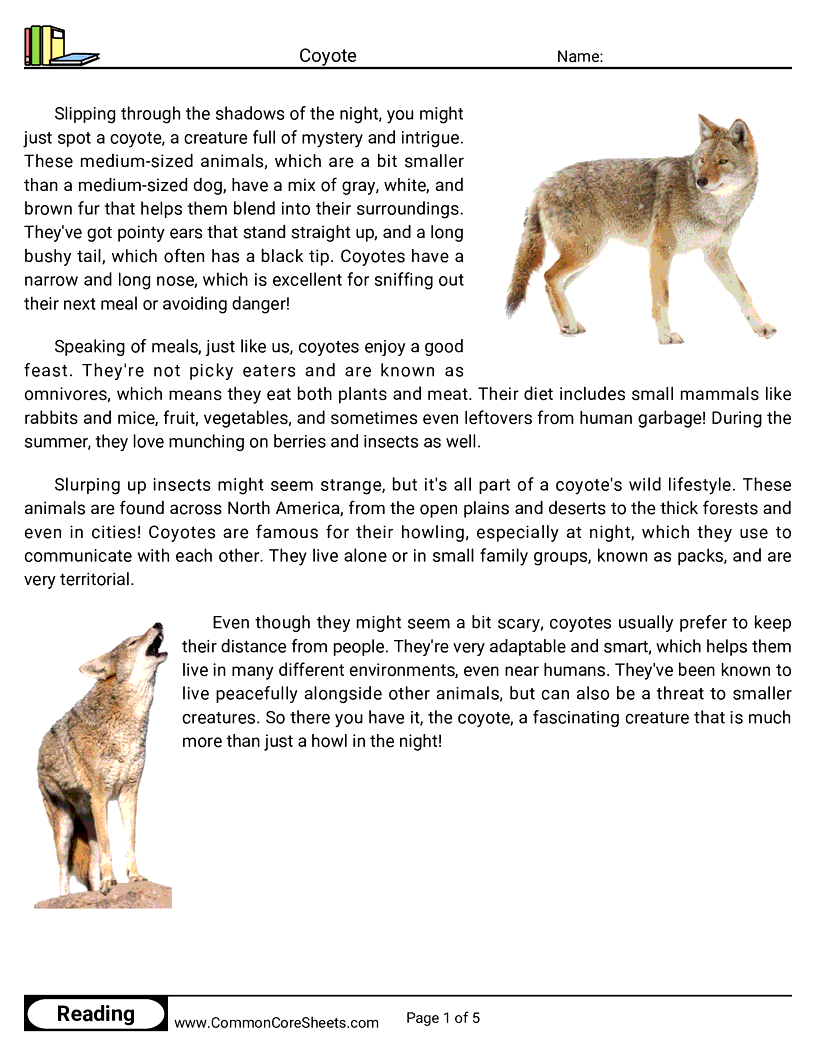
Available at 2nd grade, 3rd grade, 4th grade, 5th grade and 6th grade reading levels.
Read the passage
Coyotes are fascinating animals that can be found in many parts of North America. They have a coat of thick fur that is usually gray, brown, or yellowish in color, and they have pointy ears and a bushy tail. Coyotes are related to wolves, dogs, and foxes, but they are smaller than wolves and larger than foxes.
Coyotes are carnivorous, which means they mostly eat meat, but they can also eat plants and fruits. Their diet includes rabbits, rodents, birds, and even insects, but they have been known to eat garbage and pet food when they live close to humans. In the wild, coyotes live in dens, which are usually found in caves, under rocks, or in hollow logs.
Coyotes have a few ways to protect themselves from predators, such as their speed and their ability to work together in packs. They are known for their cleverness and have a complex social structure, which helps them communicate with each other and defend themselves from other animals. It's important for humans to remember that while coyotes are interesting creatures, they are wild animals and should be treated with respect and caution.
Coyotes are fascinating animals that live all across North America. They are usually gray or reddish-brown and have a bushy tail, pointy ears, and a long snout. Coyotes are omnivores, which means they eat both plants and other animals like rabbits, squirrels, and even insects. Some interesting facts about coyotes are that they are very fast runners and can reach speeds of up to 40 miles per hour!
Coyotes have a unique life cycle that begins when they are born as pups in a den. They stay with their family, called a pack, and learn how to hunt and survive from their parents. Coyotes usually live for about 6 to 8 years in the wild, but they can live longer in captivity. One cool thing about coyotes is that they are really good at adapting to different environments, from forests and deserts to cities and suburbs.
Coyotes have various relationships with humans and other animals. Sometimes they can be seen as a nuisance because they might eat livestock or pets, but they also help control rodent populations. Coyotes have a lot of predators like wolves, bears, and even other coyotes, so they have some defenses like sharp teeth and strong legs to help them escape danger. Even though they might look similar to dogs or wolves, coyotes are actually a different species with their own unique traits and behaviors.
In conclusion, coyotes are amazing creatures with interesting lives, and they play an important role in our ecosystems.
Slipping through the shadows of the night, you might just spot a coyote, a creature full of mystery and intrigue. These medium-sized animals, which are a bit smaller than a medium-sized dog, have a mix of gray, white, and brown fur that helps them blend into their surroundings. They've got pointy ears that stand straight up, and a long bushy tail, which often has a black tip. Coyotes have a narrow and long nose, which is excellent for sniffing out their next meal or avoiding danger!
Speaking of meals, just like us, coyotes enjoy a good feast. They're not picky eaters and are known as omnivores, which means they eat both plants and meat. Their diet includes small mammals like rabbits and mice, fruit, vegetables, and sometimes even leftovers from human garbage! During the summer, they love munching on berries and insects as well.
Slurping up insects might seem strange, but it's all part of a coyote's wild lifestyle. These animals are found across North America, from the open plains and deserts to the thick forests and even in cities! Coyotes are famous for their howling, especially at night, which they use to communicate with each other. They live alone or in small family groups, known as packs, and are very territorial.
Even though they might seem a bit scary, coyotes usually prefer to keep their distance from people. They're very adaptable and smart, which helps them live in many different environments, even near humans. They've been known to live peacefully alongside other animals, but can also be a threat to smaller creatures. So there you have it, the coyote, a fascinating creature that is much more than just a howl in the night!
Coyotes are fascinating creatures that can be found all over North America. These animals are part of the Canidae family, which includes dogs, wolves, and foxes. Coyotes have a unique appearance with their grayish-brown fur, bushy tail, and pointy ears. They are known for their distinctive howl, which they use to communicate with other coyotes.
Coyotes live in a wide range of habitats, from deserts to forests to even cities. They are highly adaptable animals and can survive in many different environments. Coyotes are also known to travel long distances in search of food and a place to call home. They are mostly active during the evening and early morning hours, making them nocturnal creatures.
These smart animals are opportunistic eaters and have a varied diet. Coyotes will eat small mammals like rabbits and rodents, as well as fruits, insects, and even garbage. They are also known to hunt in packs when going after larger prey like deer. This ability to eat a wide variety of food helps them survive in many different environments.
Coyotes have a unique life cycle and interesting relationships with other animals. They usually mate for life and raise their pups in a den, teaching them how to hunt and survive. Coyotes are sometimes seen interacting with other animals like badgers, with whom they sometimes team up to hunt. On the other hand, they can also sometimes be seen as a threat to livestock and pets.
Humans and coyotes have had a long and complicated relationship. While coyotes help control rodent populations, they are sometimes seen as a nuisance when they venture into human-populated areas. Efforts are being made to educate people on how to coexist with coyotes and protect both humans and these amazing animals. Understanding and appreciating these fascinating creatures is essential for maintaining a healthy ecosystem.
Coyotes are fascinating creatures that can be found in many parts of North America. These animals have a unique appearance, with their brownish-gray fur and pointy ears. Coyotes also have a bushy tail that helps them keep their balance while they're running. They can reach speeds of up to 40 miles per hour, making them excellent hunters. Coyotes can grow up to four feet long and weigh between 20 to 50 pounds.
One of the most interesting things about coyotes is their diverse diet. These animals are omnivores, which means they eat both plants and animals. Coyotes primarily hunt small mammals, like rabbits, squirrels, and mice. However, they also enjoy fruits, vegetables, and even insects. During times when food is scarce, coyotes will eat almost anything they can find.
The life cycle of a coyote is another fascinating subject. Coyotes mate for life and give birth to litters of three to twelve pups each spring. The parents take care of the pups for about six months, teaching them how to hunt and survive in the wild. Once the pups are old enough, they leave their family to start their own lives. Coyotes typically live between six to eight years in the wild.
Coyotes have a complex relationship with both humans and other animals. While they tend to avoid humans, coyotes sometimes come close to urban areas in search of food. This can lead to conflicts with people, especially if the coyotes become aggressive. Coyotes are also known to compete with other predators, such as wolves and mountain lions, for food and territory. However, they can also form unlikely partnerships with animals like badgers to hunt burrowing animals together.
There are a few key differences between coyotes and other similar species. Coyotes are often mistaken for wolves, but they are smaller and have a more slender build. Additionally, coyotes have a more varied diet than wolves, which primarily eat large mammals. Coyotes also have a unique vocalization, known as a yip-howl, which they use to communicate with each other. These distinctive features make coyotes an interesting and unique part of the animal kingdom.
About this worksheet
Students read a nonfiction passage about coyotes and answer questions about the main ideas and details in the text.
This worksheet is designed to enhance children's reading skills while educating them about coyotes. The worksheet consists of 20 interactive questions about various aspects of a coyote's life - their physical features, habits, behavior, and diet. This engaging material can be adapted to various learning methods - customized per individual needs, converted into flashcards for portable learning, or utilized for distance learning set-ups.
Student objectives
- Read a short informational text about coyotes
- Find key facts and details in what you read
- Answer questions using evidence from the passage
- Learn new vocabulary about animals and their habitats
- Understand the main idea of a nonfiction text
Everyday practice
- Read facts about an animal you saw at the zoo or on a hike
- Look up information about a wild animal in your backyard
- Answer questions after reading a nature article or book
- Explain to a friend what a coyote is and where it lives
- Compare a coyote to a dog or wolf you know about