Cougar Worksheet Download
Free reading worksheets on Cougar. Each worksheet has 20 problems with an answer key and are ideal for teachers and homeschooling. You can download the PDF, create a set of flash cards or set it up for online learning.


Sheet Information >
Available at 2nd grade, 3rd grade, 4th grade, 5th grade and 6th grade reading levels.
Read the passage
Hey kids, let's learn about cougars, also known as mountain lions or pumas! These big cats have a wide range of colors, from light tan to reddish-brown, and they can grow up to 9 feet long. Cougars have strong legs and sharp claws to help them climb trees and catch their favorite meals like deer, elk, and smaller animals.
Now, let's explore where cougars live and their life cycle. These amazing creatures can be found in many places across North and South America, including forests, mountains, and even deserts. Cougars usually live alone and have a life cycle that starts with being born as a cub, growing up with their mom for about two years, and then setting off on their own to find a home and start a family.
Lastly, let's look at how cougars interact with humans and other animals. While they usually avoid people and are not considered dangerous, it's important to be cautious and respectful if you ever encounter one in the wild. Cougars play a vital role in the ecosystem by controlling the populations of other animals, and their main defense is their ability to camouflage, hiding from both prey and predators.
In conclusion, cougars are incredible and fascinating animals that play an important role in the world around us. Remember to admire them from a distance, and always respect their space and the environment they call home.
Hey there, today we are going to learn about cougars, amazing animals that are also known as mountain lions or pumas! Cougars are carnivores, which means they eat meat, and their favorite meals include deer, elk, and sometimes smaller animals like rabbits and raccoons. These big cats are very skilled at hunting and can jump really high to catch their prey! Did you know that cougars can jump up to 18 feet in the air? That's taller than a one-story building!
Now let's explore where these fascinating creatures live and their life cycle. Cougars can be found in many parts of North and South America, from the snowy mountains of Canada to the lush forests of Brazil. They like to live in areas with plenty of trees and rocks where they can hide and stalk their prey. A cougar's life cycle begins when they are born as tiny, blind cubs, and they grow up to be strong, independent hunters after about two years with their moms.
Lastly, let's talk about how cougars interact with humans and other animals. Cougars are very shy and usually avoid people, but sometimes they can come too close to our homes, especially if they are looking for food. As for other animals, cougars are at the top of the food chain, which means they have few natural enemies, but they do share their habitat with other animals like bears and wolves. So, the next time you're out exploring nature, remember to keep an eye out for these majestic creatures and appreciate the important role they play in our ecosystem.
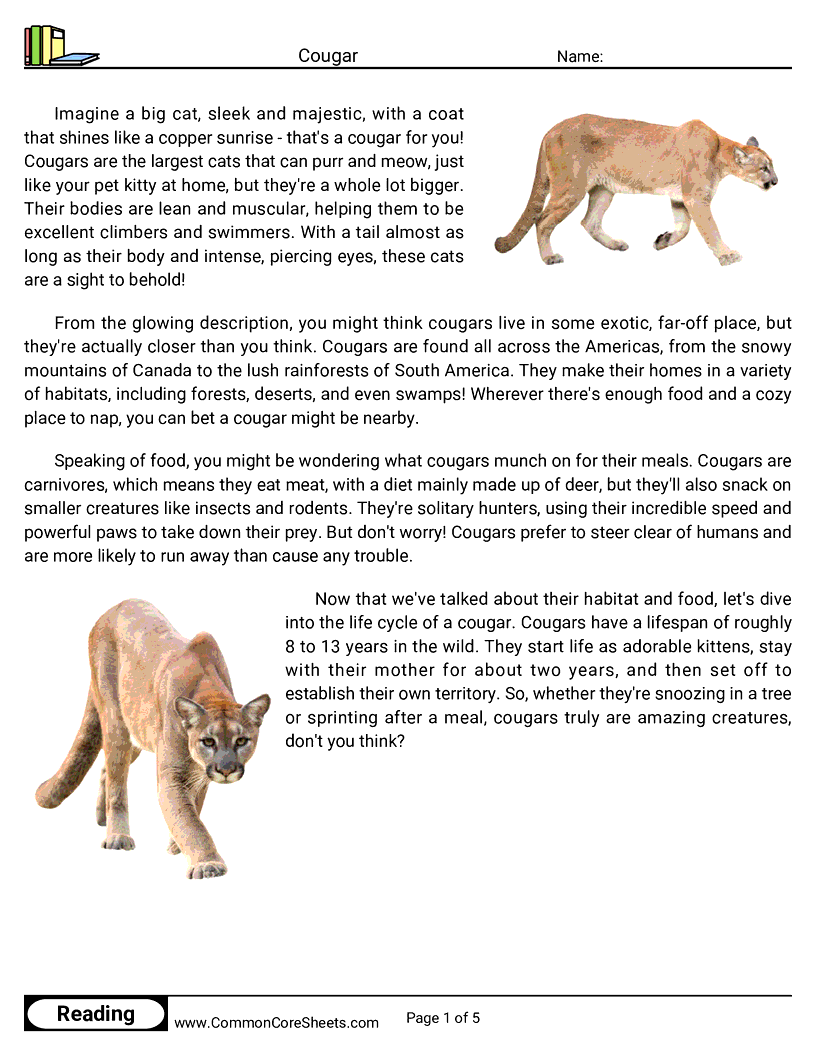
Imagine a big cat, sleek and majestic, with a coat that shines like a copper sunrise - that's a cougar for you! Cougars are the largest cats that can purr and meow, just like your pet kitty at home, but they're a whole lot bigger. Their bodies are lean and muscular, helping them to be excellent climbers and swimmers. With a tail almost as long as their body and intense, piercing eyes, these cats are a sight to behold!
From the glowing description, you might think cougars live in some exotic, far-off place, but they're actually closer than you think. Cougars are found all across the Americas, from the snowy mountains of Canada to the lush rainforests of South America. They make their homes in a variety of habitats, including forests, deserts, and even swamps! Wherever there's enough food and a cozy place to nap, you can bet a cougar might be nearby.
Speaking of food, you might be wondering what cougars munch on for their meals. Cougars are carnivores, which means they eat meat, with a diet mainly made up of deer, but they'll also snack on smaller creatures like insects and rodents. They're solitary hunters, using their incredible speed and powerful paws to take down their prey. But don't worry! Cougars prefer to steer clear of humans and are more likely to run away than cause any trouble.
Now that we've talked about their habitat and food, let's dive into the life cycle of a cougar. Cougars have a lifespan of roughly 8 to 13 years in the wild. They start life as adorable kittens, stay with their mother for about two years, and then set off to establish their own territory. So, whether they're snoozing in a tree or sprinting after a meal, cougars truly are amazing creatures, don't you think?
Cougar, also known as mountain lions or pumas, are fascinating animals that you may have heard of before. These large cats have a tan or light-caramel fur color and live mostly in the Americas. They are strong and agile, making them excellent hunters in the wild. In this article, we'll explore more about these incredible creatures and learn some interesting facts about them.
One important thing to know about cougars is their diet and what they eat. Their favorite meals are deer, elk, and even smaller animals like rabbits and rodents. Cougars are stealthy hunters, stalking their prey and then pouncing with great force. Their strong jaws and sharp teeth allow them to easily catch and kill their food.
Next, let's talk about where cougars live and their habitat. These adaptable animals can be found in a variety of environments, from mountains and forests to swamps and deserts. Cougars prefer areas with dense vegetation, which provides them with good cover while hunting. They also need a reliable source of water, as they must drink regularly to stay healthy.
Now, we'll discuss the life cycle of a cougar and how they grow and develop. Female cougars give birth to a litter of kittens, usually between one and six, after a gestation period of about 90 days. The kittens will stay with their mother for up to two years, learning how to hunt and survive in the wild. Once they are old enough, the young cougars will leave their mother to find their own territory and start their own families.
Lastly, let's explore cougars' relationship with humans and other animals. Cougars are generally shy and avoid contact with humans, but they can be dangerous if they feel threatened or if they are hungry and cannot find their usual prey. They share their habitat with other predators like wolves and bears, and sometimes compete with them for food. As for their defenses, cougars rely on their speed, strength, and stealth to protect themselves and their territory.
In conclusion, cougars are amazing animals with unique features and adaptations that make them skilled hunters and survivors. It's essential to respect and protect these magnificent creatures and their habitats, ensuring that they continue to thrive in the wild for future generations to appreciate and enjoy.
Hey kids, have you ever heard of cougars, also known as mountain lions or pumas? These large, powerful cats are found throughout North and South America. They have a sleek body, large paws, and a long tail that helps them balance while climbing trees and rocks. Cougars are solitary creatures, which means they like to live alone rather than in groups. They are also very territorial and use their sharp claws to mark their territory on trees.
Now, let's talk about the life cycle of these fascinating creatures. Cougars are mammals, which means they give birth to live babies called cubs. The mother cougar typically has a litter of two to three cubs and takes care of them for about two years. During this time, she teaches them how to hunt and survive in the wild. Once they're old enough, the cubs leave their mother to find their own territories and start their own families.
So, what do cougars eat, you might wonder? They are carnivores, which means they eat other animals to survive. Their favorite prey include deer, elk, and smaller animals like rabbits and birds. Cougars are excellent hunters, using their speed and stealth to sneak up on their prey before pouncing. They can even jump high into the air to catch a bird in flight!
As for their relationship to humans and other animals, cougars are generally shy and avoid people. However, sometimes they may come into contact with humans when searching for food. It's important to remember that, while rare, cougars can be dangerous if they feel threatened. Their relationship with other animals varies, as they may share habitats with other predators like bears and wolves. But, they usually avoid direct competition by hunting at different times or in different areas.
Lastly, let's look at some interesting facts and differences between cougars and other big cats. Did you know that cougars can't roar like lions or tigers? Instead, they make a variety of other sounds, including purrs, hisses, and screams. Cougars are also unique in that they can adapt to a wide range of habitats, from deserts to forests and even snowy mountains. Their incredible agility and strength make them one of the most impressive predators in the animal kingdom.
In this array, each paragraph is represented by a key (1 to 5), and the sentences within each paragraph are also represented by keys (1 to 5). This format allows for easy access and manipulation of the content for various purposes.
About this worksheet
Students read a short informational passage about cougars and answer comprehension questions about the details they learned.
This worksheet is designed to enhance children's reading skills and knowledge about cougars, presenting 20 questions on their habits, habitats, diet and interaction with humans. Tailored to promote distance learning, its comprehensive content can be customized and easily converted into flashcards, fueling an engaging and flexible learning platform.
Student objectives
- Read a nonfiction passage about cougars and understand the main idea
- Find specific facts and details in what you read
- Learn new vocabulary words related to animals and their habitats
- Answer questions using information from the text
Everyday practice
- Read facts about an animal at the zoo and remember key details
- Look up information about a pet or wild animal you're curious about
- Explain to a friend what you learned from an article or book
- Read a sign at a nature center and answer someone's question about it