Centipede Worksheet Download
Free reading worksheets on Centipede. Each worksheet has 20 problems with an answer key and are ideal for teachers and homeschooling. You can download the PDF, create a set of flash cards or set it up for online learning.


Sheet Information >
Available at 2nd grade, 3rd grade, 4th grade, 5th grade and 6th grade reading levels.
Read the passage
Hey there, did you know centipedes are amazing little creatures? These long, flat insects have lots of legs - usually between 15 and 177 pairs! Their name actually means '100 feet', but they can have more or fewer legs depending on their species.
Centipedes are speedy predators that live in many different habitats, like forests, grasslands, and even your garden. They munch on insects, spiders, and other small creatures, which makes them helpful in controlling pests. Their life cycle includes four stages: egg, larva, pupa, and adult, and they can live for up to 6 years!
When it comes to their relationship with humans and other insects, centipedes are pretty fascinating. While they might look a little scary, they're usually harmless to humans and can even help by eating pests in our homes and gardens. Their main defense is their speed, but some larger species can also use their venomous bite to protect themselves from predators.
In this fun article, we learned all about centipedes – their many legs, what they eat, where they live, and their life cycle. We also discovered that while they might look a bit intimidating, they're mostly harmless to humans and can actually be helpful friends in our gardens. So next time you see a centipede, remember how amazing these little creatures are!
Centipedes are fascinating creatures that have been around for millions of years! These long, slender animals have many legs, with some species having up to 400 legs! They come in a variety of colors, from brown and black to bright red or green, and can be found all over the world. Centipedes like to live in dark, damp places like under rocks, logs, or leaves where they can hide from predators.
These creepy crawlies have an interesting diet and life cycle. Centipedes are carnivorous, which means they eat other animals, including insects, spiders, and even small vertebrates like lizards. Their life cycle consists of three stages: egg, nymph, and adult, with the nymphs looking like smaller versions of the adults. As centipedes grow, they shed their exoskeleton, or outer skin, and grow new legs in a process called molting.
Despite their intimidating appearance, centipedes actually have a unique relationship with humans and other insects. While they might seem scary, centipedes are actually helpful to humans because they eat pests that can harm our homes and gardens. Centipedes have some impressive defenses, like venomous fangs and the ability to quickly escape from danger. Their many differences from other species, such as their huge number of legs and their unique hunting techniques, make centipedes truly one-of-a-kind in the insect world.
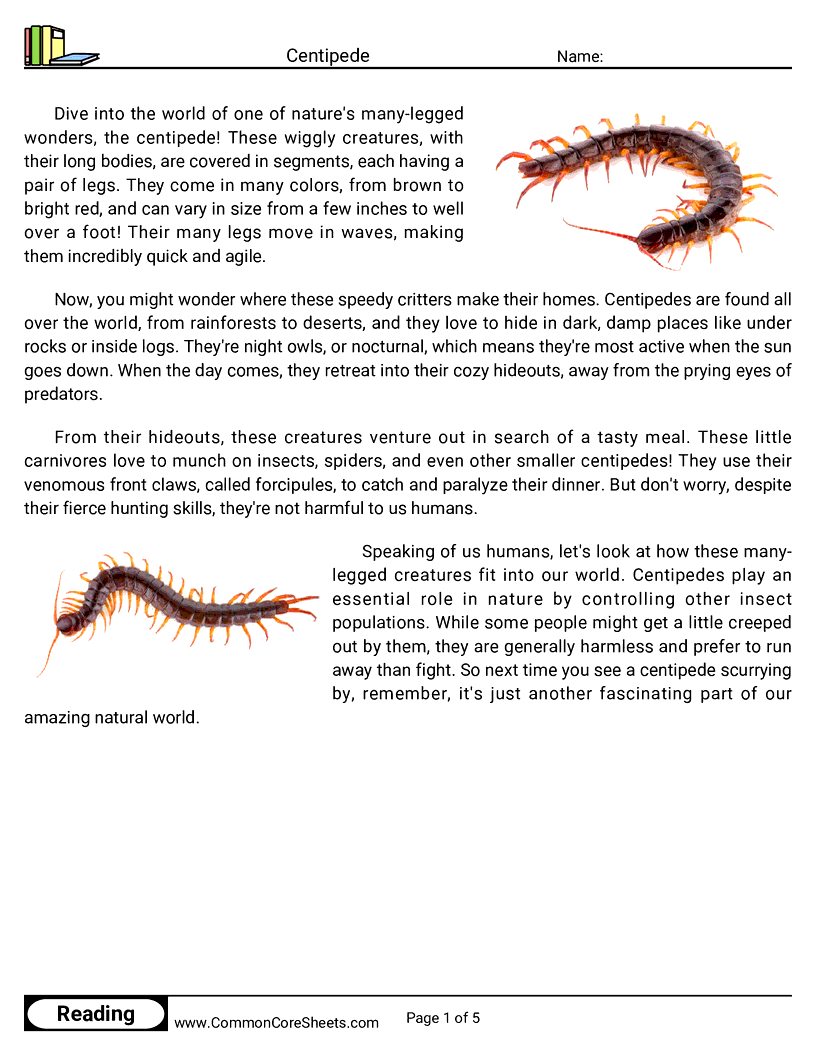
Dive into the world of one of nature's many-legged wonders, the centipede! These wiggly creatures, with their long bodies, are covered in segments, each having a pair of legs. They come in many colors, from brown to bright red, and can vary in size from a few inches to well over a foot! Their many legs move in waves, making them incredibly quick and agile.
Now, you might wonder where these speedy critters make their homes. Centipedes are found all over the world, from rainforests to deserts, and they love to hide in dark, damp places like under rocks or inside logs. They're night owls, or nocturnal, which means they're most active when the sun goes down. When the day comes, they retreat into their cozy hideouts, away from the prying eyes of predators.
From their hideouts, these creatures venture out in search of a tasty meal. These little carnivores love to munch on insects, spiders, and even other smaller centipedes! They use their venomous front claws, called forcipules, to catch and paralyze their dinner. But don't worry, despite their fierce hunting skills, they're not harmful to us humans.
Speaking of us humans, let's look at how these many-legged creatures fit into our world. Centipedes play an essential role in nature by controlling other insect populations. While some people might get a little creeped out by them, they are generally harmless and prefer to run away than fight. So next time you see a centipede scurrying by, remember, it's just another fascinating part of our amazing natural world.
Centipedes are fascinating creatures that have been around for millions of years. These crawly critters have long, flat bodies with many pairs of legs, which help them move quickly and easily through their environment. Some centipedes can grow up to 12 inches long, while others are only an inch or two. There are over 8,000 known species of centipedes in the world, each with its own unique features and characteristics.
These creepy crawlies have a varied diet and are known to eat many different types of food. Centipedes are carnivorous and primarily eat insects, spiders, and other small invertebrates. They use their venomous front legs, called forcipules, to paralyze and capture their prey. Some larger species of centipedes have even been known to eat small mammals, like mice or baby birds!
Centipedes can be found all over the world, living in a wide range of habitats. They prefer dark, damp environments like under rocks, logs, or leaf litter in forests, grasslands, and gardens. Some species even live in desert regions, but they usually come out at night when it's cooler and more humid. Centipedes are resilient creatures and are able to adapt to different environments, making them a widespread and successful group of organisms.
The life cycle of a centipede is relatively simple and straightforward. They begin as eggs, which the female centipede lays in a moist, protected area. Once the eggs hatch, the young centipedes, or nymphs, go through a series of molts, shedding their exoskeleton to grow larger. These molts continue until the centipede reaches adulthood, which can take anywhere from a few months to several years, depending on the species.
Centipedes are generally harmless to humans, but they do have some interesting relationships with other insects and animals. Their venom is usually not strong enough to harm humans, but it can cause some pain and swelling if they bite. Centipedes are beneficial to gardeners, as they help control pests like aphids, slugs, and other insects. However, they can also be prey for larger animals like birds, reptiles, and even other invertebrates like spiders and scorpions.
With their many legs and varied diet, centipedes are truly intriguing creatures that play an important role in ecosystems around the world.
Centipedes are fascinating creatures that can be found in various parts of the world. These creatures are usually brownish or reddish and have many legs, which can range from 15 to 177 pairs depending on the species. Centipedes are part of the arthropod family, which includes insects, spiders, and crustaceans. They have long, segmented bodies and are known for their speed and agility. In this article, we will dive into the world of centipedes and learn more about their life cycle, habitat, and interesting facts about them.
Centipedes are carnivorous creatures, meaning they primarily eat other insects and small animals. Their diet consists of spiders, insects, and even other centipedes. Using their venomous fangs, centipedes are able to immobilize their prey before consuming it. The larger the centipede, the larger the prey they can catch and eat. Some species are even known to eat small vertebrates like lizards and mice.
Centipedes can be found in various habitats all around the world. They are generally found in dark, damp environments like under rocks, logs, or leaf litter. Some species of centipedes can be found in deserts, while others prefer forests or grasslands. In your own backyard, you may find centipedes hiding in your garden, compost pile, or even the basement of your house. Remember that centipedes prefer to stay hidden and are rarely seen during the day.
The life cycle of a centipede begins when it hatches from an egg. Centipedes go through a process called molting, where they shed their exoskeleton in order to grow. During each molt, centipedes typically gain more body segments and legs. Most centipedes live for 1 to 6 years, depending on the species and environmental factors. Centipedes reproduce by laying eggs, either in soil or under rocks, and some species provide maternal care for their offspring.
Centipedes have a unique relationship with humans and other insects. While they may seem scary, centipedes are actually beneficial to humans because they help control insect populations. However, some species of centipedes have venomous bites that can be painful to humans, so it's important to be cautious around them. Centipedes are also prey for larger animals such as birds, mammals, and reptiles. In conclusion, centipedes are fascinating creatures that play important roles in their ecosystems, and there's always more to learn about these intriguing arthropods.
About this worksheet
Students read a short passage about centipedes and answer comprehension questions about the facts presented.
This worksheet is designed to engage children in learning about centipedes. It covers a wide range of concepts from their anatomy, habits, diet, to their role in the ecosystem. Comprising of 20 problems, this reading comprehension task can be customized and converted into flashcards for ease of study. It’s also suitable for distance learning, making it a versatile tool in both classrooms and home-based education.
Student objectives
- Read a short informational passage about centipedes
- Find and recall facts stated in the text
- Answer questions using details from what you read
- Understand new words about centipedes and their bodies
Everyday practice
- Read a fact card at a zoo or bug exhibit and remember what it says
- Look up information about an animal you saw outside
- Tell a friend or family member facts you learned about bugs
- Read a nature magazine and answer questions about it