Alligator Snapping Turtle Worksheet Download
Free reading worksheets on Alligator Snapping Turtle. Each worksheet has 20 problems with an answer key and are ideal for teachers and homeschooling. You can download the PDF, create a set of flash cards or set it up for online learning.
Select a Different Activity
>


Sheet Information >
Available at 2nd grade, 3rd grade, 4th grade, 5th grade and 6th grade reading levels.
Read the passage
Have you ever heard of the alligator snapping turtle? These fascinating creatures are the largest freshwater turtles in the world, and they can weigh up to 250 pounds. They have strong jaws, a spiky shell, and a unique worm-like lure on their tongues to help them catch fish, frogs, and other small animals for food.
Alligator snapping turtles live in the southeastern United States, primarily in rivers, swamps, and lakes. Their life cycle begins with the female laying her eggs in a hole she digs near the water. Once the baby turtles hatch, they make their way to the water and start their lives, living up to 70 years or more!
These amazing turtles are an important part of their ecosystem, but they also have a few things to watch out for. Their strong jaws and spiky shells help protect them from predators, but they can also pose a bit of danger to humans if they feel threatened. Remember, it\'s always best to admire these incredible animals from a safe distance and protect their natural habitats so they can continue to thrive.
Hey there, let\'s learn about the amazing alligator snapping turtle! These large turtles can weigh up to 200 pounds and have a big head with a strong, hooked beak. Their body is covered in a thick, rough shell that looks like the bark of a tree. Their tail is long and strong, just like an alligator\'s, which is how they got their name.
Alligator snapping turtles live in the southeastern United States, in rivers, lakes, and swamps. They eat fish, frogs, snakes, and even small mammals, using their worm-like tongue to lure prey into their mouth. These turtles lay their eggs on land, and their babies hatch after about 100 days. As they grow, they continue to live in the water, and can live for over 70 years!
Humans should be careful around alligator snapping turtles because they can bite very hard. However, these turtles are important for the ecosystem, as they help control the populations of other animals. Their strong shells and powerful jaws are their main defenses against predators. These turtles are different from other turtles, like the common snapping turtle, because they have a larger size and a more unique appearance.
In conclusion, alligator snapping turtles are fascinating creatures with interesting features, behaviors, and roles in their environment. Remember to respect their space and admire them from a safe distance!
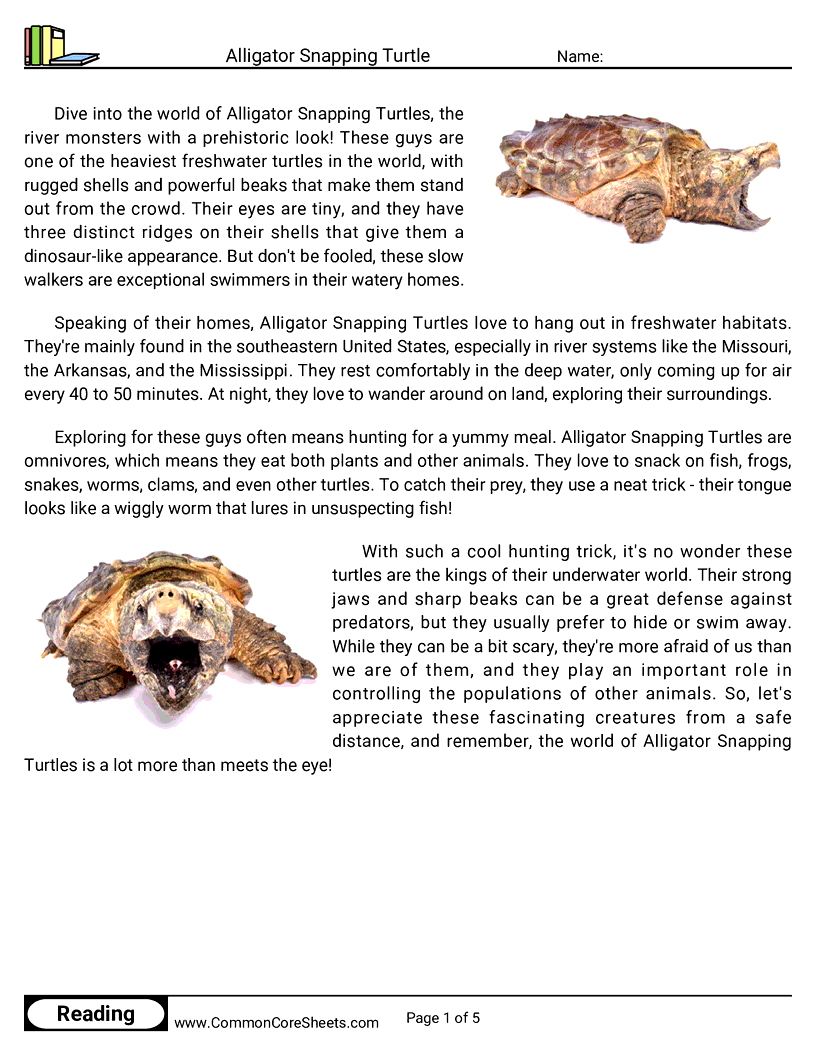
Dive into the world of Alligator Snapping Turtles, the river monsters with a prehistoric look! These guys are one of the heaviest freshwater turtles in the world, with rugged shells and powerful beaks that make them stand out from the crowd. Their eyes are tiny, and they have three distinct ridges on their shells that give them a dinosaur-like appearance. But don't be fooled, these slow walkers are exceptional swimmers in their watery homes.
Speaking of their homes, Alligator Snapping Turtles love to hang out in freshwater habitats. They're mainly found in the southeastern United States, especially in river systems like the Missouri, the Arkansas, and the Mississippi. They rest comfortably in the deep water, only coming up for air every 40 to 50 minutes. At night, they love to wander around on land, exploring their surroundings.
Exploring for these guys often means hunting for a yummy meal. Alligator Snapping Turtles are omnivores, which means they eat both plants and other animals. They love to snack on fish, frogs, snakes, worms, clams, and even other turtles. To catch their prey, they use a neat trick - their tongue looks like a wiggly worm that lures in unsuspecting fish!
With such a cool hunting trick, it's no wonder these turtles are the kings of their underwater world. Their strong jaws and sharp beaks can be a great defense against predators, but they usually prefer to hide or swim away. While they can be a bit scary, they're more afraid of us than we are of them, and they play an important role in controlling the populations of other animals. So, let's appreciate these fascinating creatures from a safe distance, and remember, the world of Alligator Snapping Turtles is a lot more than meets the eye!
Hey there, let\'s talk about the amazing alligator snapping turtle! These fascinating creatures are one of the largest freshwater turtles in the world. They have a unique appearance with a spiked shell, a long tail, and a big head with strong jaws. Let\'s dive into their fascinating world and learn more about them.
Alligator snapping turtles have a pretty interesting diet. They like to eat fish, frogs, snakes, and even other turtles. They have a cool trick to catch their prey – their tongue looks like a wiggly worm, which they use as a lure to attract fish. Once the fish comes close, the turtle quickly snaps its powerful jaws and enjoys its meal.
These turtles can be found in the southeastern United States. They prefer slow-moving rivers, swamps, and ponds with lots of plants and hiding spots. Adult turtles don\'t have many predators, but baby turtles need to be careful of birds and other animals that might want to eat them. They can live up to 50 years or even longer in the wild!
Did you know that alligator snapping turtles have a special relationship with humans and other animals? They help keep the ecosystem healthy by eating dead animals and controlling the population of certain species. However, humans sometimes pose a threat to these turtles by destroying their habitats and catching them for food. It\'s important to protect these awesome creatures so they can keep doing their important job in the environment.
There are some key differences between alligator snapping turtles and other turtle species. Alligator snapping turtles are generally larger and have a more aggressive appearance with their spiky shells and powerful jaws. Unlike other turtles, they rarely leave the water, except to lay eggs. These unique features make them fascinating creatures to learn about.
So, next time you come across an alligator snapping turtle, remember how amazing and important they are to our world. Let\'s do our part to protect and appreciate these incredible turtles!
Alligator snapping turtles are truly fascinating creatures, and there\'s so much to learn about them! These heavyweight turtles can weigh up to 200 pounds and have a dark, rough shell that helps them blend in with their surroundings. Their name comes from their strong, alligator-like jaws, which they use to catch their prey. Alligator snapping turtles are usually found in the southeastern United States, mostly in rivers, swamps, and lakes. Their unique appearance sets them apart from other turtle species, making them easy to spot if you\'re lucky enough to see one in the wild!
Let\'s take a look at what alligator snapping turtles like to eat. These carnivorous creatures have a varied diet, but they primarily feast on fish, frogs, and sometimes even small mammals and birds! Their impressive hunting technique involves lying still with their mouths open, using their worm-like pink tongue to lure in unsuspecting prey. Once the prey is close enough, the turtle snaps its powerful jaws shut, capturing its meal. This clever method of hunting is one of the reasons they are such successful predators.
Now, let\'s talk about the life cycle of an alligator snapping turtle. Female turtles lay their eggs, usually between 10 to 50, in a hole they\'ve dug in the sand or dirt. After about 100 days, the baby turtles hatch and start their journey to the water. These turtles grow slowly but can live for up to 70 years or more in the wild! One fascinating fact is that alligator snapping turtles don\'t reach sexual maturity until they\'re around 11 to 13 years old.
So, how do these intriguing turtles interact with humans and other animals? While they\'re not typically dangerous to humans, it\'s important to remember that their strong jaws can deliver a painful bite if they feel threatened. It\'s best to admire them from a safe distance and never try to pick one up. In their natural habitat, alligator snapping turtles help control the populations of their prey, contributing to a balanced ecosystem. However, these turtles face threats from humans due to habitat loss, pollution, and being captured for the pet trade.
Lastly, let\'s explore some interesting facts and differences between alligator snapping turtles and other species. One major difference is their size - alligator snapping turtles are one of the largest freshwater turtles in the world! Their unique shell design, featuring three rows of raised, bumpy scutes, also sets them apart from other turtles. One more fascinating fact is that these turtles can stay underwater for up to 50 minutes at a time without coming up for air! Now that you know more about these amazing creatures, you can appreciate just how special and important they are to our world.
About this worksheet
Students read a nonfiction passage about the alligator snapping turtle and answer comprehension questions about its features, habitat, and behavior.
This worksheet is designed to enhance children's reading and comprehension skills through exploring the captivating world of Alligator Snapping Turtles. It covers concepts such as their preferred habitats, eating habits, behavior, and ecological role with 20 interactive questions. This versatile resource can be customized, turned into flashcards, or utilized in distance learning to create engaging and personalized educational experiences.
Student objectives
- Read a nonfiction passage about the alligator snapping turtle
- Find key facts about the turtle's appearance and habitat
- Answer questions using details from the text
- Learn new vocabulary related to reptiles and animals
- Understand how the turtle catches its food
Everyday practice
- Read animal facts at a zoo or aquarium exhibit
- Look up information about a pet or wild animal you are curious about
- Talk about a nature show and describe what an animal does
- Explain a fact you read to a friend or family member