Water Scorpions Worksheet Download
Free reading worksheets on Water Scorpions. Each worksheet has 20 problems with an answer key and are ideal for teachers and homeschooling. You can download the PDF, create a set of flash cards or set it up for online learning.
Select a Different Activity
>


Sheet Information >
Available at 2nd grade, 3rd grade, 4th grade, 5th grade and 6th grade reading levels.
Read the passage
Let\'s learn about water scorpions, fascinating creatures that live underwater! These insects look a bit scary, but they\'re harmless and have long, thin bodies with pincer-like front legs. Water scorpions are found in ponds, lakes, and slow-moving streams around the world.
Now, let\'s explore the life of a water scorpion and what they eat. These insects are predators and enjoy feasting on small aquatic creatures, like tadpoles and other insects. Their life cycle has three stages: egg, nymph, and adult; they grow by shedding their skin (called molting) as they get bigger.
Lastly, let\'s discover some interesting facts and how water scorpions interact with humans and other insects. Although they might look like real scorpions, water scorpions aren\'t dangerous to humans and don\'t sting. Their main defense is their incredible ability to camouflage themselves among aquatic plants, which helps them hide from both predators and prey.
Hey kids, let\'s learn about water scorpions, fascinating creatures that live underwater! These insects are not true scorpions, but they do look a bit scary with their long, thin bodies and big front legs. Water scorpions can be found in ponds, lakes, and slow-moving streams, where they patiently wait to catch their favorite meal: other small insects and water creatures. Their front legs are like strong pincers, which they use to grab their prey and hold on tight.
Water scorpions have a unique life cycle that\'s different from many other insects. They start as eggs, which the mother lays on underwater plants or sticks. After hatching, the baby water scorpions (called nymphs) grow and change through several stages called instars, until they become adults. This process takes about 2 months, and during this time, the nymphs learn how to hunt and survive in their watery world.
Now, let\'s explore the relationships between water scorpions, humans, and other insects. While they might look scary, water scorpions are actually harmless to humans and can even help us by eating mosquito larvae! Their main defense against predators is their ability to blend in with their surroundings, making them difficult to spot. There are several species of water scorpions, and they can differ in size, shape, and color, but they all share the same amazing ability to breathe underwater by using a special tube at the end of their abdomen like a snorkel.
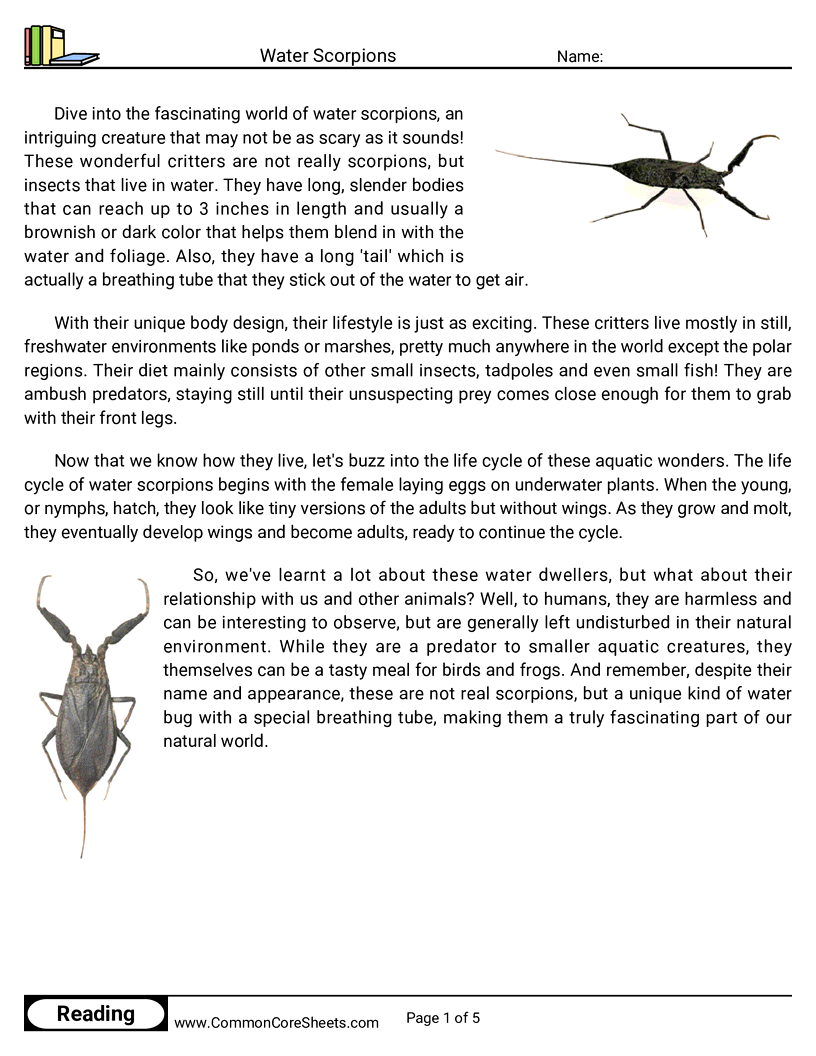
Dive into the fascinating world of water scorpions, an intriguing creature that may not be as scary as it sounds! These wonderful critters are not really scorpions, but insects that live in water. They have long, slender bodies that can reach up to 3 inches in length and usually a brownish or dark color that helps them blend in with the water and foliage. Also, they have a long 'tail' which is actually a breathing tube that they stick out of the water to get air.
With their unique body design, their lifestyle is just as exciting. These critters live mostly in still, freshwater environments like ponds or marshes, pretty much anywhere in the world except the polar regions. Their diet mainly consists of other small insects, tadpoles and even small fish! They are ambush predators, staying still until their unsuspecting prey comes close enough for them to grab with their front legs.
Now that we know how they live, let's buzz into the life cycle of these aquatic wonders. The life cycle of water scorpions begins with the female laying eggs on underwater plants. When the young, or nymphs, hatch, they look like tiny versions of the adults but without wings. As they grow and molt, they eventually develop wings and become adults, ready to continue the cycle.
So, we've learnt a lot about these water dwellers, but what about their relationship with us and other animals? Well, to humans, they are harmless and can be interesting to observe, but are generally left undisturbed in their natural environment. While they are a predator to smaller aquatic creatures, they themselves can be a tasty meal for birds and frogs. And remember, despite their name and appearance, these are not real scorpions, but a unique kind of water bug with a special breathing tube, making them a truly fascinating part of our natural world.
Have you ever heard of water scorpions? They are fascinating insects that live underwater and are not actually scorpions at all! These amazing creatures are also known as 'Nepidae' and can be found in ponds, lakes, and rivers. In this article, we will explore the wonderful world of water scorpions and learn about their unique characteristics.
First, let\'s take a look at what water scorpions eat. These insects are carnivorous, which means they eat other animals. Their diet mostly consists of other small aquatic creatures, such as tadpoles, small fish, and various larvae. They use their front legs to grab their prey and their sharp beak to inject a venom that helps them catch their meal.
Now, let\'s dive into the life cycle of water scorpions. Adult water scorpions mate and lay eggs in underwater plants, where the eggs will remain until they hatch into nymphs. These nymphs will go through a series of molts, or shedding of their exoskeleton, as they grow. Once they have molted several times, they will become adult water scorpions and the cycle begins again.
So, how do water scorpions interact with humans and other insects? These insects are generally harmless to humans, as they prefer to stay in their aquatic habitat. However, they can give a painful bite if they feel threatened, so it\'s best to observe them from a safe distance. As for other insects, water scorpions can be both predators and prey, depending on the size and type of insect they encounter.
Finally, let\'s explore some interesting facts and differences between water scorpions and other species. Although they are called water scorpions, they are actually more closely related to water bugs and water striders. One unique feature of water scorpions is their long, breathing tube, which they use to breathe while submerged underwater. This tube is sometimes referred to as their 'snorkel', and it sets them apart from other aquatic insects. In conclusion, water scorpions are fascinating creatures that can teach us a lot about the diverse world of insects in aquatic habitats.
Water scorpions are fascinating insects that you may not have heard of before. These intriguing creatures are not true scorpions, but get their name from their unique appearance. With their long, slender bodies and pincer-like front legs, they resemble their land-dwelling namesakes. They are also known as “needle bugs” due to their long, tube-like tails. Water scorpions are part of the Nepidae family, and there are around 14 different species found throughout the world.
These captivating creatures inhabit various freshwater environments. You\'ll find them in places like ponds, lakes, marshes, and slow-moving streams. Water scorpions prefer calm, shallow waters with plenty of vegetation for them to hide in. They are most commonly found in North America, Europe, and Asia. Their natural camouflage helps them blend in with their surroundings, making them difficult to spot.
The diet of water scorpions mainly consists of other aquatic insects and small creatures. They are ambush predators, which means they stay still and wait for their prey to come close. Once within reach, they quickly grab their victim with their powerful front legs. They then use their sharp, needle-like mouthparts to pierce their prey and inject digestive enzymes. This process liquefies the insides of their prey, making it easy for them to suck up the nutrients.
Water scorpions have a unique life cycle that begins with eggs. The female lays her eggs on underwater plants, usually during spring or early summer. After several weeks, the eggs hatch into nymphs, which go through a series of molts as they grow. As they mature, they develop wing buds, and after their final molt, they become fully-formed adults with functional wings. Adult water scorpions can fly, although they prefer to stay close to the water.
Although water scorpions may look intimidating, they don\'t pose a significant threat to humans. They can deliver a painful bite if handled, but it is not dangerous. Water scorpions play an essential role in their ecosystems by controlling the population of other aquatic insects. Interestingly, they can breathe underwater by sticking their long tail above the water\'s surface, which acts like a snorkel. This incredible adaptation allows them to remain hidden from predators while still getting the oxygen they need.
In conclusion, water scorpions are fascinating creatures with unique features and behaviors. They provide an essential service to their ecosystems by keeping the population of other aquatic insects in check. So the next time you\'re exploring a pond or lake, keep an eye out for these amazing underwater predators.
About this worksheet
Students read a passage about water scorpions and answer questions to show they understood the key details and information.
This worksheet is designed to enhance children's reading comprehension through understanding water scorpions. It features 20 multiple-choice problems, exploring the creature's physical characteristics, habitat, diet, and unique qualities. It's customizable for use as flashcards, adaptable for distance learning, and perfect for stimulating curiosity about the aquatic world.
Student objectives
- Read a nonfiction passage about water scorpions carefully
- Find and recall important facts from what you read
- Answer questions using details from the text
- Understand new vocabulary words about insects and their habitats
Everyday practice
- Read a fact sheet at an aquarium or nature center and remember what it said
- Answer a parent's questions after reading about an animal
- Look up information about a bug you found outside and explain it to someone
- Read a science article and pick out the main facts