Speckled Racer Snake Worksheet Download
Free reading worksheets on Speckled Racer Snake. Each worksheet has 20 problems with an answer key and are ideal for teachers and homeschooling. You can download the PDF, create a set of flash cards or set it up for online learning.
Select a Different Activity
>


Sheet Information >
Available at 2nd grade, 3rd grade, 4th grade, 5th grade and 6th grade reading levels.
Read the passage
Let\'s learn about the speckled racer snake, a fascinating creature with a unique appearance! These snakes have shiny scales with a mix of green, yellow, and black speckles, which help them blend into their surroundings. They are usually about 3 to 4 feet long, making them a medium-sized snake.
Speckled racer snakes live in a variety of habitats, from grasslands to forests, and are found in Central America and parts of North America. They are carnivorous, which means they eat other animals, including rodents, frogs, and even other snakes! These snakes are not harmful to humans, but they can be helpful by controlling the populations of pests, like mice and rats.
There are some interesting facts about speckled racer snakes and their behaviors. When they feel threatened, they can move quickly and shake their tails to scare away predators. In comparison to other snake species, they are more active during the day and prefer to hunt for food and explore their surroundings in the sunlight.
In summary, speckled racer snakes are fascinating creatures with their unique coloration, diverse habitat, and interesting behaviors. They are helpful to humans by controlling pest populations and are a great example of the incredible diversity found within the snake world.
Let\'s learn about the speckled racer snake, a unique and fascinating creature! These snakes are known for their beautiful colors, with a mix of green, yellow, and black spots that help them blend in with their surroundings. Speckled racer snakes can be found in Central America, Mexico, and even parts of the United States like Texas. Their habitat includes forests, grasslands, and rocky areas where they can easily hide and hunt for their favorite food, small animals like lizards, frogs, and insects.
Now, let\'s explore the life cycle of the speckled racer snake and their relationship with other animals and humans. These snakes lay eggs, and when the baby snakes, called hatchlings, are born, they\'re already great hunters! Although they may look a bit scary to some, speckled racer snakes are not dangerous to humans and prefer to avoid us. Their relationship with other animals is mostly as a predator, but they also serve as food for larger animals like birds of prey and mammals.
Finally, let\'s dive into the speckled racer snake\'s defenses and what sets them apart from other snakes. When threatened, these snakes will often flee or hide, but if they must defend themselves, they\'ll strike and bite. While their bite can be painful, they are not venomous, which means their bite isn\'t poisonous. Speckled racer snakes are different from other snakes because of their unique color pattern and their active hunting style, which involves chasing after their prey instead of ambushing it.
In conclusion, speckled racer snakes are fascinating creatures with their unique colors, interesting life cycle, and relationships with other animals and humans. They may look a bit intimidating, but they\'re an important part of the ecosystems they inhabit.
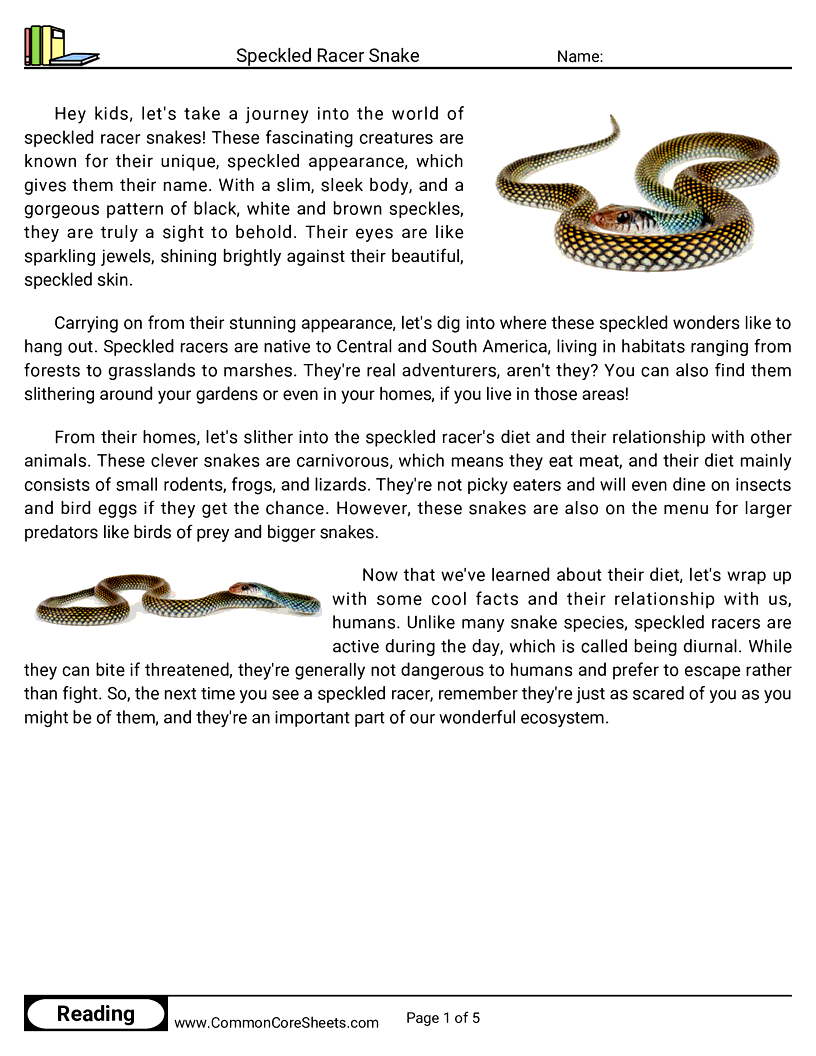
Hey kids, let's take a journey into the world of speckled racer snakes! These fascinating creatures are known for their unique, speckled appearance, which gives them their name. With a slim, sleek body, and a gorgeous pattern of black, white and brown speckles, they are truly a sight to behold. Their eyes are like sparkling jewels, shining brightly against their beautiful, speckled skin.
Carrying on from their stunning appearance, let's dig into where these speckled wonders like to hang out. Speckled racers are native to Central and South America, living in habitats ranging from forests to grasslands to marshes. They're real adventurers, aren't they? You can also find them slithering around your gardens or even in your homes, if you live in those areas!
From their homes, let's slither into the speckled racer's diet and their relationship with other animals. These clever snakes are carnivorous, which means they eat meat, and their diet mainly consists of small rodents, frogs, and lizards. They're not picky eaters and will even dine on insects and bird eggs if they get the chance. However, these snakes are also on the menu for larger predators like birds of prey and bigger snakes.
Now that we've learned about their diet, let's wrap up with some cool facts and their relationship with us, humans. Unlike many snake species, speckled racers are active during the day, which is called being diurnal. While they can bite if threatened, they're generally not dangerous to humans and prefer to escape rather than fight. So, the next time you see a speckled racer, remember they're just as scared of you as you might be of them, and they're an important part of our wonderful ecosystem.
Let\'s learn about the speckled racer snake, a fascinating creature that slithers its way through nature. These snakes are medium-sized, reaching lengths of up to four feet, and are known for their smooth, shiny scales with speckled patterns. Their colors vary from olive green to brown, with lighter spots on their bodies, making them masters of camouflage. You\'ll find these snakes to be quite agile and fast-moving, which is important for their survival in the wild.
Now, let\'s explore the habitat of the speckled racer snake. These snakes are native to Central America, Mexico, and the southern parts of the United States. They prefer living in areas with dense vegetation, such as forests, grasslands, and even agricultural fields. You might even find them near streams or rivers, as they are good swimmers and enjoy being close to a water source.
What do speckled racer snakes like to eat? These snakes are carnivorous, which means they primarily eat other animals. Their diet mainly consists of small mammals, like rodents, as well as frogs, lizards, and even other snakes. They use their speed and agility to catch their prey, often swallowing it whole.
Let\'s take a closer look at the life cycle of the speckled racer snake. These snakes are oviparous, which means they lay eggs to reproduce. Female speckled racer snakes lay around six to twelve eggs in a safe, hidden spot, and then leave them to incubate on their own. After about two months, the baby snakes hatch and start their journey in the wild, growing and learning to survive on their own.
Finally, let\'s discuss the relationship between speckled racer snakes, humans, and other animals. These snakes are generally non-venomous and pose little threat to humans, often choosing to flee rather than fight when confronted. In fact, they can be beneficial to humans by controlling rodent populations, which can cause damage to crops and property. As for other animals, speckled racer snakes are both predators and prey, playing an important role in the balance of their ecosystems.
In conclusion, the speckled racer snake is a fascinating and important part of the natural world. Learning more about these creatures can help us better understand and appreciate the amazing biodiversity of our planet.
Meet the speckled racer snake, a fascinating creature that is sure to grab your attention! This snake is known for its beautiful pattern of speckles, which helps it blend into its surroundings. The speckled racer snake can grow up to 4-5 feet long and has a slender, agile body. Their colors range from olive green to brown with black speckles, giving them their unique name. Some even have bright red or orange speckles, making them especially stunning.
Now, let\'s explore the habitat of the speckled racer snake. These snakes can be found in the southeastern United States, Mexico, and Central America. They enjoy living in a variety of environments, such as forests, grasslands, and wetlands. You might even find them in your backyard, as they often thrive in areas close to human activity. These adaptable creatures can make their home in trees, on the ground, or even in water.
Curious about what these snakes eat? Well, speckled racer snakes are carnivorous and mainly feed on small animals. Their diet includes frogs, lizards, small birds, and rodents, which they catch using their speed and agility. Their sharp teeth help them to grip onto their prey, while they swallow it whole. Interestingly, they also eat other snakes, making them quite the formidable predators!
Let\'s learn about the life cycle of the speckled racer snake. These snakes are oviparous, meaning they lay eggs rather than giving live birth. A female speckled racer snake will lay about 6 to 12 eggs, which will hatch after 60 to 75 days. Once hatched, the young snakes will grow and mature, eventually reaching their full size in 3 to 4 years. Speckled racer snakes have a lifespan of about 10 to 15 years in the wild.
Finally, let’s discuss the relationship between speckled racer snakes, humans, and other animals. These snakes are nonvenomous and pose no threat to humans, so there\'s no need to be afraid if you encounter one. In fact, they help control rodent populations, which benefits our environment. The speckled racer snake\'s main predators include birds of prey, larger snakes, and mammals like raccoons. Their speckled pattern acts as camouflage, protecting them from these predators and making them masters of disguise.
In conclusion, the speckled racer snake is a captivating and essential part of our ecosystem. Their unique appearance, adaptability, and varied diet make them a fascinating creature to learn about. So next time you\'re exploring nature, keep an eye out for these incredible snakes!
About this worksheet
Students read a nonfiction passage about the speckled racer snake and answer comprehension questions about its habitat, diet, and behavior.
This worksheet is designed to educate children about Speckled Racer Snakes, covering key facts about their appearance, diet, habitat, and interaction with humans. It offers a variety of 20 reading comprehension questions that can be personalized and used as flashcards or in distance learning scenarios. This resources extends beyond traditional learning, promoting in-depth understanding of these fascinating creatures.
Student objectives
- Read a short informational passage about an animal
- Find specific facts and details in the text
- Answer questions using evidence from what you read
- Learn new vocabulary related to snakes and their habitat
- Understand the main idea of a nonfiction passage
Everyday practice
- Read a fact sheet at the zoo or reptile house about an animal
- Look up information about a pet or wild animal in a book
- Explain to someone what a snake eats or where it lives
- Read a nature magazine article and share the interesting facts
- Answer questions after reading a science article for class