Polar Bear Worksheet Download
Free reading worksheets on Polar Bear. Each worksheet has 20 problems with an answer key and are ideal for teachers and homeschooling. You can download the PDF, create a set of flash cards or set it up for online learning.
Select a Different Activity
>
Sheet Information >
Available at 2nd grade, 3rd grade, 4th grade, 5th grade and 6th grade reading levels.
Read the passage
Hey there, curious kids! Let\'s talk about the amazing polar bear, an incredible creature that lives in the Arctic. These beautiful animals have thick, white fur to keep them warm and can grow to be really big - some even weigh as much as a small car! Polar bears are also great swimmers, and they use their huge paws to paddle through icy waters.
Now let\'s learn about what polar bears eat and their life cycle. These furry giants are carnivores, which means they mostly eat other animals, especially seals. Polar bears usually have two cubs at a time, and the mama bear takes care of them until they\'re about 2 years old and ready to explore the world on their own.
You might be wondering how polar bears get along with humans and other animals. While they usually keep their distance from humans, it\'s important for us to protect their habitat from climate change and pollution. As for other animals, polar bears are at the top of the food chain in the Arctic, which means they don\'t have many natural enemies.
In conclusion, polar bears are fascinating creatures that live in a unique environment. As we learn more about them, it\'s important to do our part in protecting their home and ensuring their survival. So next time you see a picture of a polar bear, remember how special they truly are!
Polar bears are amazing creatures that live in the Arctic. They have thick white fur to keep them warm in their freezing environment. Polar bears are great swimmers, and they use their large paws to paddle through the icy water. They can also smell their favorite food, seals, from miles away!
These fascinating animals have a unique life cycle. Polar bears usually mate and give birth on land, and the mother bear takes care of her cubs in a den made of snow and ice. Cubs stay with their mother for about two years before venturing out on their own. Polar bears can live for up to 25 years in the wild!
Humans and polar bears have a complex relationship. In some areas, people have learned to live alongside polar bears and appreciate their beauty. However, climate change and human activities like hunting have put polar bears at risk. It\'s important for us to learn more about these incredible animals and do our part to protect them.
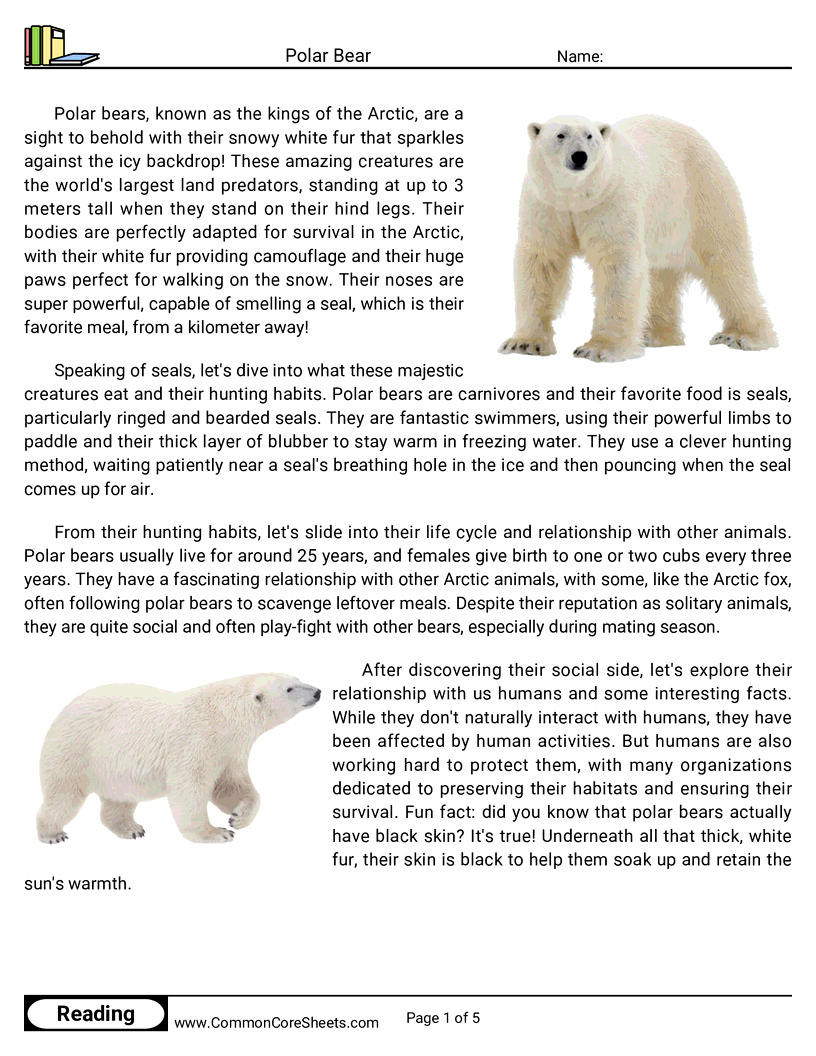
Polar bears, known as the kings of the Arctic, are a sight to behold with their snowy white fur that sparkles against the icy backdrop! These amazing creatures are the world's largest land predators, standing at up to 3 meters tall when they stand on their hind legs. Their bodies are perfectly adapted for survival in the Arctic, with their white fur providing camouflage and their huge paws perfect for walking on the snow. Their noses are super powerful, capable of smelling a seal, which is their favorite meal, from a kilometer away!
Speaking of seals, let's dive into what these majestic creatures eat and their hunting habits. Polar bears are carnivores and their favorite food is seals, particularly ringed and bearded seals. They are fantastic swimmers, using their powerful limbs to paddle and their thick layer of blubber to stay warm in freezing water. They use a clever hunting method, waiting patiently near a seal's breathing hole in the ice and then pouncing when the seal comes up for air.
From their hunting habits, let's slide into their life cycle and relationship with other animals. Polar bears usually live for around 25 years, and females give birth to one or two cubs every three years. They have a fascinating relationship with other Arctic animals, with some, like the Arctic fox, often following polar bears to scavenge leftover meals. Despite their reputation as solitary animals, they are quite social and often play-fight with other bears, especially during mating season.
After discovering their social side, let's explore their relationship with us humans and some interesting facts. While they don't naturally interact with humans, they have been affected by human activities. But humans are also working hard to protect them, with many organizations dedicated to preserving their habitats and ensuring their survival. Fun fact: did you know that polar bears actually have black skin? It's true! Underneath all that thick, white fur, their skin is black to help them soak up and retain the sun's warmth.
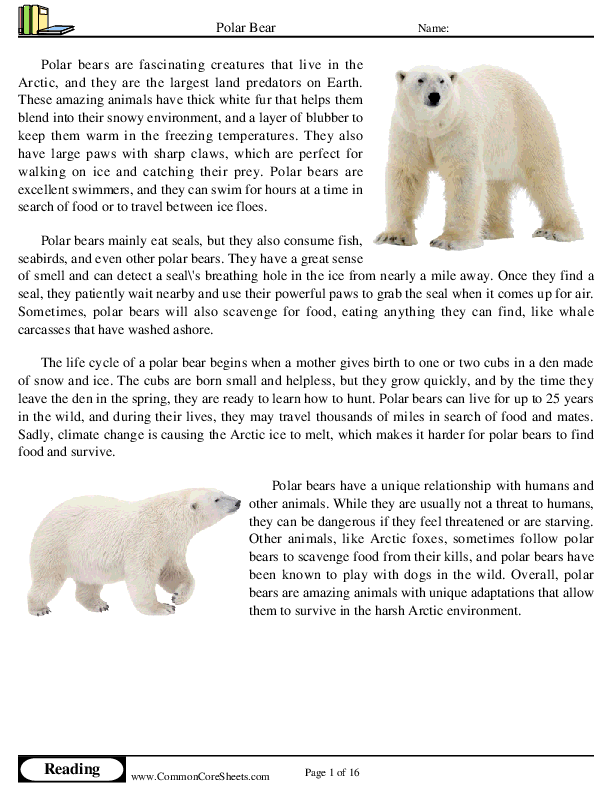
Polar bears are fascinating creatures that live in the Arctic. These large, white bears have thick fur and a layer of blubber to keep them warm in their icy home. They are known to be excellent swimmers, using their large front paws to paddle through the water. Polar bears are also great hunters and can smell seals, their favorite food, from miles away.
When it comes to their diet, polar bears are considered carnivores. Their main source of food is seals, which they catch by waiting near holes in the ice for them to come up for air. However, they will also eat fish, birds, and even small mammals if they can catch them. Sometimes, they even scavenge on the leftovers of other animals' meals.
The life cycle of a polar bear is quite interesting. Female polar bears usually give birth to one or two cubs in a den, where they stay for several months. The cubs grow quickly, learning to hunt and swim alongside their mother. Polar bears can live up to 25 years in the wild, but many face challenges such as hunting and climate change.
Humans and polar bears have a unique relationship. In some Arctic communities, polar bears are seen as a symbol of strength and wisdom. However, climate change and human activities pose threats to their survival, causing a loss of habitat and food sources. It is important for us to find ways to protect these amazing animals and their environment.
Lastly, let\'s look at some interesting facts about polar bears. Did you know that polar bears have black skin under their white fur to help absorb sunlight and keep them warm? They are also the largest species of bear, with adult males weighing up to 1,600 pounds! These incredible creatures serve as a reminder of the beauty and diversity of life on our planet.
In this multidimensional array, each paragraph is split into individual sentences, making it easy to access and use the content in a PHP script.
Polar bears are fascinating creatures that live in the cold Arctic region. These large, white bears are well adapted to their icy environment, with thick fur and a layer of blubber to keep them warm. They have large paws with a strong grip, which helps them walk on the slippery ice and snow. Their powerful sense of smell helps them find food from afar. Polar bears are known for their incredible strength, making them effective predators in their habitat.
The main food source for polar bears is seals, which they catch by waiting near breathing holes in the ice. They also eat fish, birds, and sometimes even other mammals like reindeer and walrus. They are expert swimmers, using their strong front legs to paddle through the freezing water. During the summer months, when the ice melts, they may eat plants and berries to supplement their diet. Their hunting skills and ability to adapt make polar bears excellent survivors in their harsh environment.
The life cycle of a polar bear is an interesting journey, starting with their birth in a snow den. Polar bear cubs are born small and helpless, relying on their mother for protection and warmth. As they grow, they learn to hunt and survive in the challenging Arctic conditions. Polar bears are solitary animals, and once they are old enough, they will venture out on their own to find a mate and establish their own territory. They can live up to 25 years in the wild, facing various challenges throughout their lives.
Polar bears have a unique relationship with humans and other animals in their environment. While they are generally not a threat to humans, they are known to be curious and may approach human settlements in search of food. In some Arctic communities, polar bears are respected and protected for their cultural and spiritual significance. Their relationship with other animals is often that of predator and prey, as they rely on other species for their survival. However, they also share their habitat with other animals, such as Arctic foxes and birds, which may scavenge leftover food from polar bear kills.
There are many interesting facts and differences between polar bears and other bear species. Polar bears are the largest species of bear, with males weighing up to 1,500 pounds and measuring up to 10 feet long. Unlike other bears, polar bears do not hibernate and are active throughout the year. Their fur is not actually white but made up of hollow, transparent hairs that appear white due to the reflection of light. Polar bears are a unique and important part of the Arctic ecosystem, and their survival depends on the preservation of their icy habitat.
About this worksheet
Students read a short passage about polar bears and answer comprehension questions about their habitat, diet, and behavior.
This worksheet is designed to enhance children's reading skills through the engaging topic of Polar Bears. With 20 problems, it educates kids about the creature's biology, habitat, diet, and other interesting facts. Its versatile format allows it to be customized, transformed into flashcards or implemented in distance learning environments. It's a fun, interactive tool promoting learning through curiosity!
Student objectives
- Read a nonfiction passage and understand the main idea
- Find specific facts about polar bears in the text
- Answer questions using details from the reading
- Learn new vocabulary related to animals and Arctic life
Everyday practice
- Understand facts when reading a book about animals at the library
- Talk about what you learned after watching a nature show about polar bears
- Answer questions a parent asks about something you just read
- Look up information about an animal for a school project