Pigeon Worksheet Download
Free reading worksheets on Pigeon. Each worksheet has 20 problems with an answer key and are ideal for teachers and homeschooling. You can download the PDF, create a set of flash cards or set it up for online learning.
Select a Different Activity
>
Sheet Information >
Available at 2nd grade, 3rd grade, 4th grade, 5th grade and 6th grade reading levels.
Read the passage
Pigeons are fascinating birds that you might see in your neighborhood or at the park. They come in many colors, like gray, white, and even green, and have short necks and small heads. Pigeons can live in cities, forests, and even on cliffs, which makes them very adaptable to different environments.
These birds have a very interesting life cycle and diet. Pigeons eat seeds, fruits, and sometimes insects, and they can even eat food that people drop on the ground. Baby pigeons are called squabs, and they grow up quickly, becoming adults in just a few months.
Pigeons have special relationships with humans and other animals. People have trained pigeons for centuries to carry messages, and they have even been used in important events like wars to deliver important information. Other animals like hawks might see pigeons as food, so pigeons have learned to fly fast and use their strong beaks to defend themselves.
In conclusion, pigeons are fascinating creatures that are adaptable to various environments, have an interesting life cycle, and have special relationships with both humans and other animals.
Pigeons are fascinating birds that can be found all over the world. They have a variety of colors, such as gray, white, black, and even a mix of these colors. Pigeons can live in cities or in the countryside, making their homes on buildings, bridges, and trees. In the wild, they prefer to live near cliffs, but they have adapted well to living with humans.
In their life cycle, pigeons go through several stages. They start as eggs, which hatch into baby pigeons called squabs after about 17 to 19 days. Squabs grow quickly and can fly in about a month, then they become adults and can live up to 15 years. Pigeons eat seeds, grains, fruits, and sometimes insects, and they have a special relationship with humans, often getting food from people in cities.
Pigeons share the world with many other animals and have their own unique features. They can fly very fast, up to 50 miles per hour, and have a great sense of direction, which is why they were used as messengers in the past. Their main defense against predators like hawks and cats is their ability to fly away quickly. One interesting fact about pigeons is that they can recognize themselves in a mirror, which is a sign of intelligence.
Now you know more about pigeons, their life cycle, and how they interact with humans and other animals. Keep an eye out for these fascinating birds next time you\'re outside!
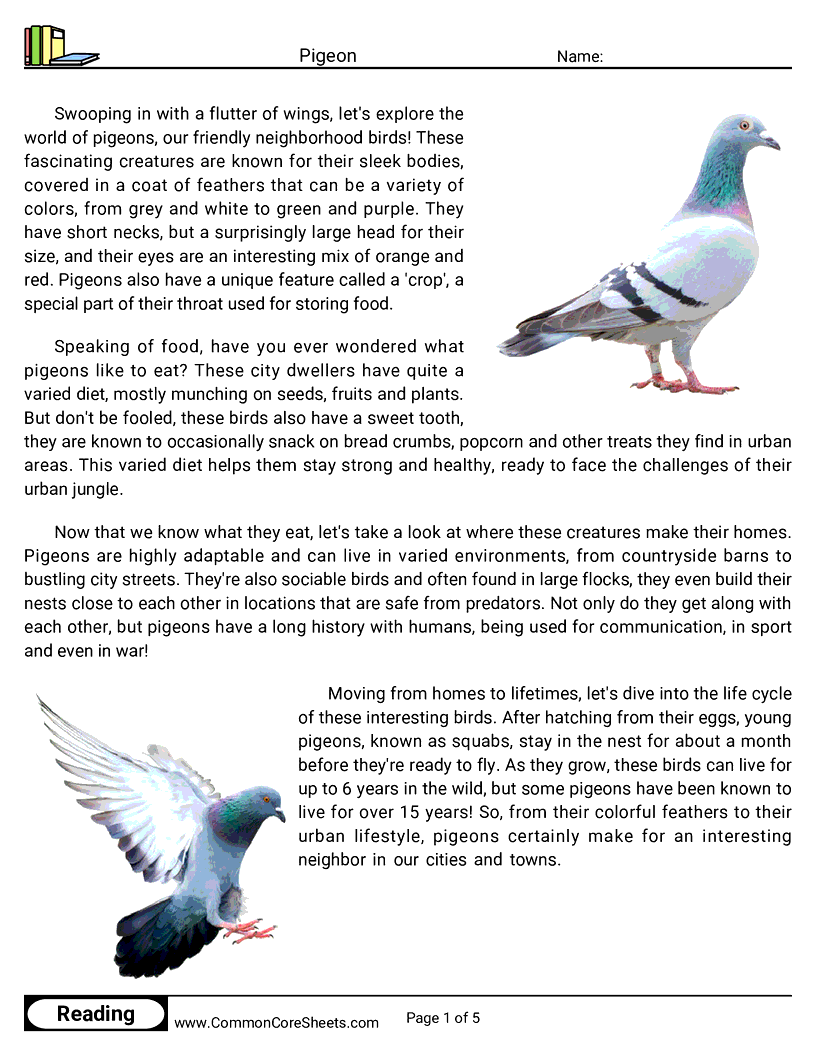
Swooping in with a flutter of wings, let's explore the world of pigeons, our friendly neighborhood birds! These fascinating creatures are known for their sleek bodies, covered in a coat of feathers that can be a variety of colors, from grey and white to green and purple. They have short necks, but a surprisingly large head for their size, and their eyes are an interesting mix of orange and red. Pigeons also have a unique feature called a 'crop', a special part of their throat used for storing food.
Speaking of food, have you ever wondered what pigeons like to eat? These city dwellers have quite a varied diet, mostly munching on seeds, fruits and plants. But don't be fooled, these birds also have a sweet tooth, they are known to occasionally snack on bread crumbs, popcorn and other treats they find in urban areas. This varied diet helps them stay strong and healthy, ready to face the challenges of their urban jungle.
Now that we know what they eat, let's take a look at where these creatures make their homes. Pigeons are highly adaptable and can live in varied environments, from countryside barns to bustling city streets. They're also sociable birds and often found in large flocks, they even build their nests close to each other in locations that are safe from predators. Not only do they get along with each other, but pigeons have a long history with humans, being used for communication, in sport and even in war!
Moving from homes to lifetimes, let's dive into the life cycle of these interesting birds. After hatching from their eggs, young pigeons, known as squabs, stay in the nest for about a month before they're ready to fly. As they grow, these birds can live for up to 6 years in the wild, but some pigeons have been known to live for over 15 years! So, from their colorful feathers to their urban lifestyle, pigeons certainly make for an interesting neighbor in our cities and towns.
Pigeons are fascinating birds that can be found all around the world. They come in various colors and sizes, with over 300 different species. Some common types of pigeons you might see include the rock pigeon, wood pigeon, and the band-tailed pigeon. Pigeons are known for their incredible homing abilities, which means they can find their way home from long distances.
These birds have a diverse diet, making them very adaptable to different environments. Pigeons mainly eat seeds, fruits, and plants, but they can also eat insects and small invertebrates if needed. In cities, pigeons often eat food scraps left by humans, which is why you can see them gathering around parks and outdoor cafes. It is important to note that feeding pigeons human food, like bread, is not healthy for them and can cause harm.
Pigeons can make their homes in a variety of places, both natural and man-made. They often build their nests in trees, cliffs, or on buildings using sticks, leaves, and other materials they find. In cities, pigeons commonly live on ledges, rooftops, and under bridges. Pigeons are social animals and usually live in groups called flocks.
The life cycle of a pigeon begins when they hatch from eggs as small, helpless chicks called squabs. Both parents take turns keeping the eggs warm and feeding the squabs after they hatch. After about 30 days, squabs grow feathers, learn to fly, and leave the nest to start their own lives. Pigeons can live for several years, with some reaching up to 15 years in the wild.
Humans and pigeons have a long history together, with both positive and negative aspects. Pigeons have been used as messengers, racing birds, and even in experiments to help scientists understand animal behavior. However, in urban areas, they can sometimes be considered pests due to their droppings and the damage they can cause to buildings. Despite this, pigeons remain fascinating creatures that continue to amaze us with their unique abilities and adaptability.
Pigeons are fascinating birds that you might see every day in cities and parks. They come in a variety of colors, from gray to white to even green and blue. Pigeons are actually quite intelligent and have been used by humans in the past for sending messages. They can recognize themselves in a mirror and can even learn to perform tasks for rewards. These amazing birds are more than just a common sight; they have a rich history and many interesting features.
In terms of their diet, pigeons are not very picky eaters. They mostly eat seeds, grains, fruits, and vegetables, but they have also been known to eat insects and small worms. In cities, pigeons often eat food scraps left behind by people, like bread crumbs or bits of snacks. It is important not to feed pigeons human food, as it can harm their health and encourage overpopulation. Instead, if you want to feed them, provide birdseed or other natural foods that are better suited for their dietary needs.
Pigeons can be found living in various environments all around the world. They are highly adaptable and can make their homes in cities, forests, and even deserts. In urban areas, pigeons often build their nests on window ledges, rooftops, and bridges. In more natural settings, they may choose to nest in trees or on cliffs. Wherever they live, pigeons are known to be social birds and often gather in large groups called flocks.
The life cycle of a pigeon begins when they hatch from eggs. Parent pigeons take turns keeping the eggs warm, and after about 18 days, the baby pigeons, called squabs, are born. Squabs are fed a special substance called pigeon milk, which both parents produce to nourish their young. After about a month, the squabs are ready to leave the nest and start learning to fly. Pigeons can live for several years, with some reaching up to 15 years of age in the wild.
Lastly, let\'s explore the relationship between pigeons and humans, as well as other animals. Throughout history, pigeons have been helpful to humans by carrying messages, and they have even been used in scientific research. On the other hand, some people consider pigeons to be pests because they can cause damage to buildings and spread diseases. In the animal world, pigeons have various predators, such as hawks and falcons, that they must always be wary of. Despite their sometimes-controversial status, pigeons are undeniably interesting creatures that play a unique role in our world.
About this worksheet
Students read a short passage about pigeons and answer comprehension questions about the main facts and details.
This worksheet is designed to enhance children's reading skills through engaging, pigeon-themed problems. Key concepts include pigeon anatomy, diet, lifestyle, human interaction, and more. Customizable to suit individual learning needs, this resource can be converted into flash cards or adapted for distance learning, serving as an adaptable educational tool.
Student objectives
- Read a nonfiction passage about pigeons and understand it
- Find and recall details stated in the text
- Answer questions using information from the reading
- Learn facts about pigeons and their habits
Everyday practice
- Read a short article about an animal at the library and remember key facts
- Answer questions from a parent about something you just read
- Look up information about a bird you saw outside
- Share interesting facts from a book with a friend