Panther Chameleon Worksheet Download
Free reading worksheets on Panther Chameleon. Each worksheet has 20 problems with an answer key and are ideal for teachers and homeschooling. You can download the PDF, create a set of flash cards or set it up for online learning.
Select a Different Activity
>


Sheet Information >
Available at 2nd grade, 3rd grade, 4th grade, 5th grade and 6th grade reading levels.
Read the passage
Panther chameleons are fascinating creatures that come in a variety of beautiful colors. These amazing reptiles are mostly found in the forests of Madagascar, a large island off the coast of Africa. They have unique features like their long, sticky tongue to catch insects and their ability to change colors to communicate with other chameleons or to blend in with their surroundings.
When it comes to their diet, panther chameleons love to eat insects like crickets, grasshoppers, and flies. They also eat fruits and leaves sometimes, but insects are their favorite food. Their life cycle begins as an egg, which hatches into a baby chameleon, and eventually grows into an adult chameleon that can live up to five years in the wild.
Panther chameleons are not dangerous to humans, but they do have some cool defenses to protect themselves from other animals. Their ability to change colors helps them hide from predators, and their strong, curled tail helps them to balance and move quickly through the trees. One interesting fact about panther chameleons is that they have eyes that can move independently from each other, which allows them to look in two different directions at the same time!
Panther chameleons are fascinating creatures with their amazing color-changing abilities and unique appearance. They have a long, curled tail, a triangular head, and large, bulging eyes that can move independently of each other. These reptiles come in various colors, including green, blue, red, and yellow, which they can change depending on their mood or surroundings. Panther chameleons can be found in the wild on the island of Madagascar, off the coast of Africa, where they live in trees and bushes in tropical rainforests and coastal areas.
In their natural habitat, panther chameleons have a diverse diet that helps them thrive. They primarily eat insects like crickets, grasshoppers, and flies, but they also enjoy the occasional treat of fruits and leaves. Panther chameleons have a unique way of catching their prey, using their long, sticky tongue that can shoot out of their mouth at incredible speeds. When it comes to their life cycle, these chameleons lay eggs and the young hatch after about 240 days, growing into adults within a year.
Panther chameleons have interesting relationships with humans and other animals. In the wild, they face threats from birds, snakes, and even other chameleons, but their ability to change colors helps them stay hidden from predators. As pets, they are popular among reptile enthusiasts, but they require specialized care, including a proper environment, diet, and attention to their health. Panther chameleons are a unique species, and their incredible abilities and captivating beauty make them a truly fascinating creature to learn about and observe.
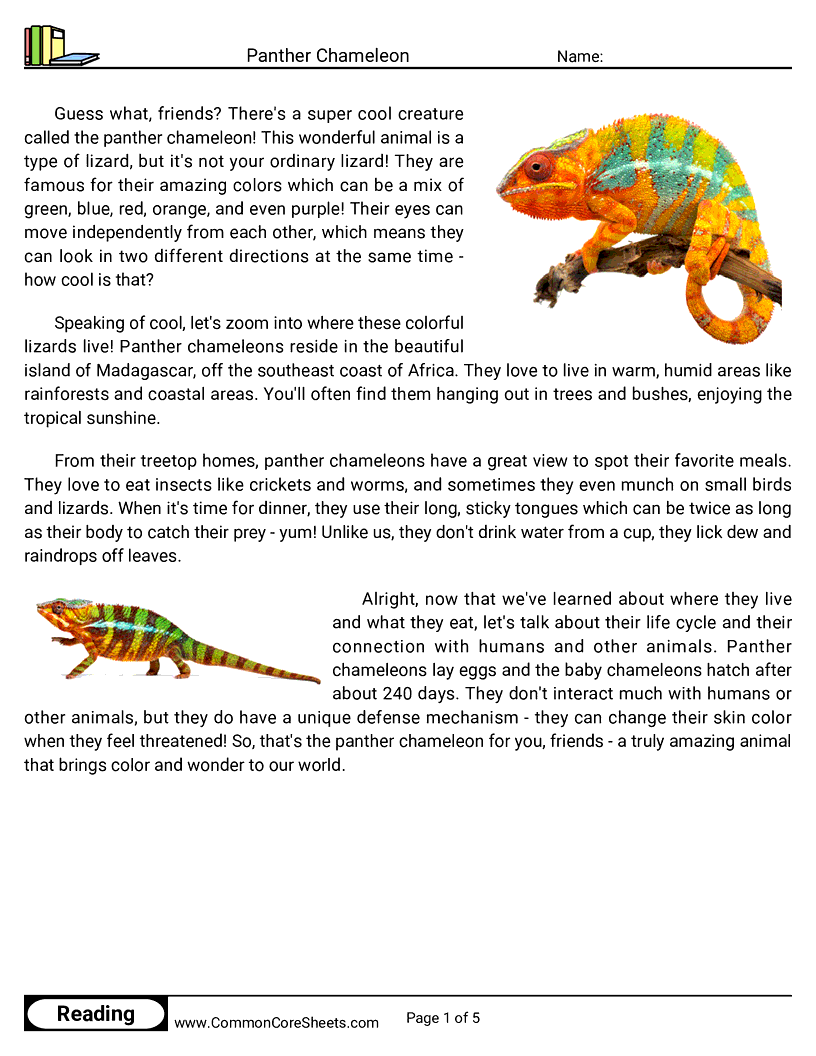
Guess what, friends? There's a super cool creature called the panther chameleon! This wonderful animal is a type of lizard, but it's not your ordinary lizard! They are famous for their amazing colors which can be a mix of green, blue, red, orange, and even purple! Their eyes can move independently from each other, which means they can look in two different directions at the same time - how cool is that?
Speaking of cool, let's zoom into where these colorful lizards live! Panther chameleons reside in the beautiful island of Madagascar, off the southeast coast of Africa. They love to live in warm, humid areas like rainforests and coastal areas. You'll often find them hanging out in trees and bushes, enjoying the tropical sunshine.
From their treetop homes, panther chameleons have a great view to spot their favorite meals. They love to eat insects like crickets and worms, and sometimes they even munch on small birds and lizards. When it's time for dinner, they use their long, sticky tongues which can be twice as long as their body to catch their prey - yum! Unlike us, they don't drink water from a cup, they lick dew and raindrops off leaves.
Alright, now that we've learned about where they live and what they eat, let's talk about their life cycle and their connection with humans and other animals. Panther chameleons lay eggs and the baby chameleons hatch after about 240 days. They don't interact much with humans or other animals, but they do have a unique defense mechanism - they can change their skin color when they feel threatened! So, that's the panther chameleon for you, friends - a truly amazing animal that brings color and wonder to our world.
Let\'s learn about the amazing panther chameleon! These colorful creatures are a type of lizard that can be found in the wild. They are known for their unique ability to change colors and their fascinating appearance. In this article, we\'ll explore their diet, habitat, physical features, life cycle, and relationships with humans and other animals.
First off, what do panther chameleons eat? These reptiles are carnivores, which means they love to munch on insects like crickets, grasshoppers, and flies. Sometimes, they will also eat small birds or rodents if they can catch them! In captivity, they are typically fed a diet of insects and sometimes fruits and vegetables.
Now, let\'s talk about where panther chameleons live. These reptiles are native to the island of Madagascar, off the coast of Africa. They prefer to live in warm, tropical forests where they can easily blend in with their environment. In the wild, they can be found hanging out in trees or bushes, waiting for their prey to come by.
Panther chameleons have a fascinating life cycle. Females lay their eggs in the ground, and after about eight months, the baby chameleons hatch and start their lives. As they grow, they develop their unique color-changing abilities and learn how to hunt for food. Panther chameleons can live up to seven years in the wild.
Lastly, let\'s explore their relationships with humans and other animals. While panther chameleons are not dangerous to humans, they are often kept as pets due to their fascinating appearance. In the wild, they use their color-changing abilities to communicate with other chameleons and to hide from predators. Their main defense mechanism is their ability to quickly change colors and blend in with their surroundings.
As you can see, panther chameleons are truly fascinating creatures with unique abilities and interesting lives.
Say hello to the panther chameleon, a unique and colorful creature! These fascinating reptiles come in a variety of eye-catching colors, including shades of green, blue, red, and orange. Native to Madagascar, they are known for their incredible ability to change colors, which is used for communication and camouflage. Panther chameleons are a popular choice for pet owners due to their interesting behaviors and beautiful appearance. Let\'s explore more about their diet, habitat, life cycle, and how they interact with humans and other animals.
First, let\'s talk about what panther chameleons eat. These reptiles are insectivores, which means they mainly eat insects like crickets, grasshoppers, and flies. Occasionally, they will also eat small vertebrates like lizards and geckos. In captivity, their diet is typically supplemented with fruits and vegetables to ensure they get all the nutrients they need. Feeding your panther chameleon a well-rounded diet can help them live a long and healthy life.
Now, let\'s explore their natural habitat and life cycle. Panther chameleons are found in the tropical forests, coastal areas, and mountain regions of Madagascar. Their life cycle begins when the female lays her eggs, which she buries in the ground to protect them from predators. After about six to eight months, the eggs hatch, and the baby chameleons emerge and start their journey to adulthood. Panther chameleons can live up to seven years in the wild, but they often live longer in captivity.
These amazing reptiles have some fascinating relationships with humans and other animals. As pets, they require special care, including proper lighting, temperature, and humidity to ensure their wellbeing. However, it\'s important to note that panther chameleons are not social creatures and should not be housed with other chameleons. Their relationship with other animals is primarily based on the predator-prey dynamic, with the chameleon hunting for insects and small vertebrates. Their ability to change colors and remain still helps them avoid predators like snakes and birds.
Finally, let\'s look at some interesting facts and differences between panther chameleons and other chameleon species. One unique feature of panther chameleons is their large size, as they can grow up to 20 inches in length! They also have a special organ called the parietal eye on top of their head, which can detect light and help them regulate their body temperature. Unlike some other chameleon species, panther chameleons are known for their vibrant colors and ability to change color rapidly. These fascinating creatures are truly a wonder of nature, captivating the hearts of animal lovers everywhere.
About this worksheet
Students read an informational passage about the panther chameleon and answer comprehension questions about its traits and habitat.
This worksheet is designed to enhance the reading skills of children with an intriguing focus on the Panther Chameleon. It offers 20 customizable questions about the creature's characteristics, natural habitat, and eating habits, enabling a deep dive into fascinating zoology. The worksheet, adaptable to flash cards, is perfectly suited for distance learning, promoting self-paced knowledge discovery in an engaging, interactive format.
Student objectives
- Read a nonfiction passage about the panther chameleon
- Find key facts and details in the text
- Understand new words about animals and their habitats
- Answer questions using information from the reading
Everyday practice
- Read a fact sheet at a zoo or reptile exhibit and share what you learned
- Look up information about a pet or animal you're curious about
- Explain to a friend why chameleons change color
- Pull out important facts when reading an article about wildlife