Magpie Worksheet Download
Free reading worksheets on Magpie. Each worksheet has 20 problems with an answer key and are ideal for teachers and homeschooling. You can download the PDF, create a set of flash cards or set it up for online learning.
Select a Different Activity
>


Sheet Information >
Available at 2nd grade, 3rd grade, 4th grade, 5th grade and 6th grade reading levels.
Read the passage
Hello, little explorers! Have you ever seen a magpie? Magpies are birds known for their striking black and white feathers and long tails. These fascinating creatures are found in many parts of the world including Europe, Asia, and North America.
Now, let's find out about what magpies eat and who they share their lives with. Magpies are pretty smart and adaptable, they eat a wide variety of food, from insects and seeds to fruit and small animals. They also have interesting relationships with other animals and humans, sometimes they can be a bit naughty by stealing shiny objects!
Finally, let's dive into the life cycle of a magpie and how they protect themselves. Magpies build large, dome-shaped nests in trees where they lay their eggs and the babies, called chicks, stay in the nest for about a month before they can fly. When in danger, magpies can make a loud chattering noise and they are known to be quite brave, often standing up to larger birds or animals.
Hello kiddos, let's talk about magpies, these amazing birds you might have seen in your backyard, the park, or in a nature documentary. Magpies are smart birds, with shiny black bodies and white bellies, and they have a long tail that changes color in sunlight from green to purple, how cool is that? They live all over the world, from the cold areas in Siberia to the warm spaces in Australia, and lots of places in-between. And guess what? They eat almost anything! Insects, fruits, seeds, and even food they find in our trash bins.
Now, let's dive into the life cycle of a magpie. After the mommy and daddy magpie make a nest, the mommy lays up to eight eggs which she keeps warm by sitting on them for about 21 days. Once the baby magpies hatch, they stay in the nest and are fed by their parents until they can fly and find food on their own. In a few years, these baby magpies grow up and start their own families too.
Magpies have a special relationship with humans and other animals. Sometimes, they can be a bit naughty and steal shiny objects, but they also help us by eating harmful insects. With other animals, magpies can play the role of the alarm bell, warning them when a predator is near, isn't that helpful? So, next time you see a magpie, remember they are not just black and white birds, but fascinating creatures with a whole life cycle and important roles in the environment.
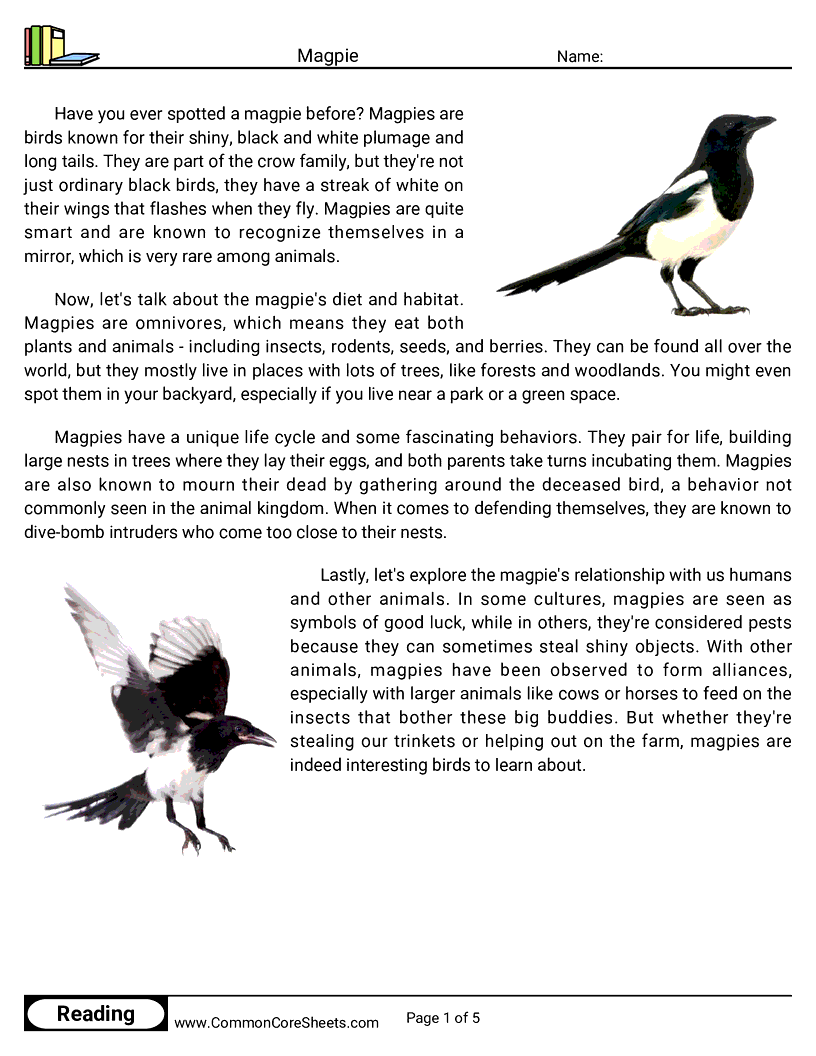
Have you ever spotted a magpie before? Magpies are birds known for their shiny, black and white plumage and long tails. They are part of the crow family, but they're not just ordinary black birds, they have a streak of white on their wings that flashes when they fly. Magpies are quite smart and are known to recognize themselves in a mirror, which is very rare among animals.
Now, let's talk about the magpie's diet and habitat. Magpies are omnivores, which means they eat both plants and animals - including insects, rodents, seeds, and berries. They can be found all over the world, but they mostly live in places with lots of trees, like forests and woodlands. You might even spot them in your backyard, especially if you live near a park or a green space.
Magpies have a unique life cycle and some fascinating behaviors. They pair for life, building large nests in trees where they lay their eggs, and both parents take turns incubating them. Magpies are also known to mourn their dead by gathering around the deceased bird, a behavior not commonly seen in the animal kingdom. When it comes to defending themselves, they are known to dive-bomb intruders who come too close to their nests.
Lastly, let's explore the magpie's relationship with us humans and other animals. In some cultures, magpies are seen as symbols of good luck, while in others, they're considered pests because they can sometimes steal shiny objects. With other animals, magpies have been observed to form alliances, especially with larger animals like cows or horses to feed on the insects that bother these big buddies. But whether they're stealing our trinkets or helping out on the farm, magpies are indeed interesting birds to learn about.
Let's embark on a fascinating journey to learn about magpies, a species of birds that are known for their intelligence and striking appearance. With their glossy black plumage that shimmers with iridescent blues and greens, and long, distinctive tails, magpies are easy to spot. They belong to the crow family, but they stand out due to their unique coloration and a chatty nature. Not to forget their reputation in folklore and superstitions!
Magpies are very adaptable and can be found in various habitats around the world. They can make their homes in forests, grasslands, and even in urban areas, making nests out of sticks and mud. Across Europe, Asia, and North America, you're likely to spot these smart birds chattering away in parks and gardens. So next time, don't forget to look out for them during your outdoor adventures!
When it comes to food, magpies aren't too picky and this is part of what makes them so successful in different environments. They are omnivores, which means they eat both plants and meat, munching on insects, seeds, berries, and even small mammals or the eggs of other birds. They are also known to eat food waste in urban areas, helping to keep our cities cleaner! That's quite a diverse diet, isn't it?
Magpies have a complex life cycle and social structure, which is fascinating to learn about. They pair for life, building nests together where they lay eggs that hatch into chicks after about three weeks. Both parents take care of their young, teaching them how to fly and find food. Magpies can live up to 20 years, which is pretty long for a bird!
Lastly, let's talk about how magpies interact with humans and other animals. Their bold and curious nature often leads them to interact with humans, sometimes stealing shiny objects or raiding garbage bins. While they are often friendly, they can defend their nests fiercely if they feel threatened, swooping down on intruders be it other animals or humans. So, while they are interesting to watch, it's best to admire these intelligent birds from a distance.
Hello there, young explorers! Have you ever spotted a bird with a long tail and flashy black and white feathers? That's a magpie! This bird is a part of the crow family, known for its intelligence and unique appearance. Magpies can be found all across the world, from the cold regions of Siberia to the hot deserts of Australia. In certain cultures, they're seen as a symbol of good luck, while in others, they're seen as a sign of misfortune. But no matter where you find them, there's no denying that magpies are fascinating creatures.
Now, let's dig in and learn what magpies munch on. Magpies are omnivores, which means they eat both plants and meat. They love to snack on insects, rodents, eggs, and even other small birds. However, they also eat seeds, berries, and fruits to balance their diet. During the autumn season, they're known to store food underneath the ground for later use - just like squirrels!
Let's now take a look at the life cycle of a magpie. Magpies mate for life, usually laying up to six eggs at once in a large nest made of twigs. The eggs hatch after about 20 days, and the parents take turns feeding the chicks until they're ready to leave the nest. Once they're old enough, the young magpies stay close to their parents for a while before setting off on their own. Magpies can live up to 20 years, which is quite long for a bird!
Magpies have quite an interesting relationship with humans and other animals. They're known to be very curious and are often found near human habitation, sometimes even stealing shiny objects! They can also mimic human speech and other sounds, similar to parrots. Magpies often warn other animals about approaching danger with their loud, chattering calls. However, they have a reputation for being aggressive towards other birds, especially during the nesting season.
Lastly, let's talk about some fascinating facts and defenses of magpies. Unlike other birds, magpies are known to recognize themselves in a mirror! They use their long tails for balance and their strong beaks for digging and picking up objects. When threatened, magpies can use their sharp beaks and claws in defense, often working together in groups to fend off predators. So there you have it, our feathered friend the magpie is a unique and intriguing creature indeed!
About this worksheet
Students read a passage about magpies and answer comprehension questions about the facts and details in the text.
This worksheet is designed to engage children in the subject of reading, focusing on the topic of magpies. It features 20 interactive questions, covering areas such as the physical characteristics, behaviors, and habitat of these fascinating birds. The content can be customized according to specific learning needs, utilized as flashcards, or incorporated into distance learning programs to stimulate curious minds.
Student objectives
- Read a nonfiction passage about magpies
- Find and remember key facts from what you read
- Answer questions using details from the text
- Understand new vocabulary words about birds
Everyday practice
- Read a fact sheet at a zoo or bird sanctuary and remember what it says
- Answer questions after reading an animal book
- Look up information about a bird you saw outside
- Share interesting facts you learned from a nature article