Grass Hoppers Worksheet Download
Free reading worksheets on Grass Hoppers. Each worksheet has 20 problems with an answer key and are ideal for teachers and homeschooling. You can download the PDF, create a set of flash cards or set it up for online learning.
Select a Different Activity
>


Sheet Information >
Available at 2nd grade, 3rd grade, 4th grade, 5th grade and 6th grade reading levels.
Read the passage
Grasshoppers are fascinating insects that you can find in many parts of the world. These amazing creatures come in various shapes, sizes, and colors, with some having wings that allow them to fly. Grasshoppers are known for their powerful back legs, which help them jump incredible distances.
Did you know that grasshoppers have a pretty interesting life cycle? They start as eggs, which then hatch into nymphs, and after several molts, they become adult grasshoppers. Grasshoppers are herbivores, which means they mostly eat plants, but sometimes they will eat other insects too.
Grasshoppers have some unique features that help them survive in their environment. One of their main defenses is their ability to camouflage themselves by blending in with their surroundings. Some grasshoppers can even make a loud noise to scare away predators or warn other grasshoppers of danger.
In this format, the three paragraphs are presented as a multidimensional PHP array where each paragraph is broken down into sentences.
Grasshoppers are fascinating insects that can be found all around the world! These incredible jumpers come in many different colors and sizes, making each one unique. They live in a variety of habitats, including grasslands, forests, and even our own backyards. Grasshoppers are known for their strong hind legs, which help them leap great distances to escape danger or move around.
Let\'s discover the amazing life cycle of grasshoppers and learn about their eating habits. These little critters go through three stages in their life: egg, nymph, and adult. As they grow, they shed their skin multiple times before reaching their full size. Being herbivores, grasshoppers enjoy munching on leaves, grass, and other plants, sometimes even causing problems for farmers.
Grasshoppers have interesting relationships with both humans and other insects. While they can be seen as pests to farmers, they\'re also a food source for many animals, like birds and spiders. Grasshoppers have some cool defense mechanisms, such as spitting a brown liquid called 'tobacco juice' to deter predators. So, next time you see a grasshopper, remember how unique and important they are to our ecosystem.
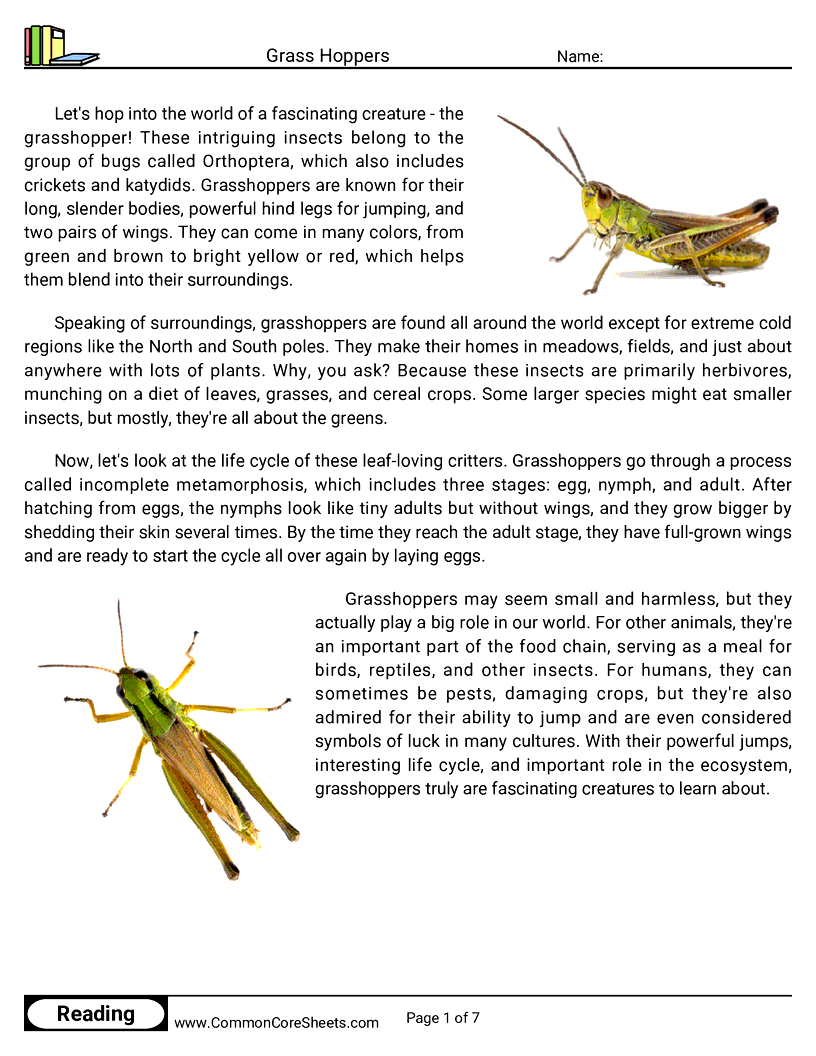
Let's hop into the world of a fascinating creature - the grasshopper! These intriguing insects belong to the group of bugs called Orthoptera, which also includes crickets and katydids. Grasshoppers are known for their long, slender bodies, powerful hind legs for jumping, and two pairs of wings. They can come in many colors, from green and brown to bright yellow or red, which helps them blend into their surroundings.
Speaking of surroundings, grasshoppers are found all around the world except for extreme cold regions like the North and South poles. They make their homes in meadows, fields, and just about anywhere with lots of plants. Why, you ask? Because these insects are primarily herbivores, munching on a diet of leaves, grasses, and cereal crops. Some larger species might eat smaller insects, but mostly, they're all about the greens.
Now, let's look at the life cycle of these leaf-loving critters. Grasshoppers go through a process called incomplete metamorphosis, which includes three stages: egg, nymph, and adult. After hatching from eggs, the nymphs look like tiny adults but without wings, and they grow bigger by shedding their skin several times. By the time they reach the adult stage, they have full-grown wings and are ready to start the cycle all over again by laying eggs.
Grasshoppers may seem small and harmless, but they actually play a big role in our world. For other animals, they're an important part of the food chain, serving as a meal for birds, reptiles, and other insects. For humans, they can sometimes be pests, damaging crops, but they're also admired for their ability to jump and are even considered symbols of luck in many cultures. With their powerful jumps, interesting life cycle, and important role in the ecosystem, grasshoppers truly are fascinating creatures to learn about.
Grasshoppers are fascinating creatures that can be found all around the world. These insects are known for their incredible jumping abilities, and they play an important role in nature. In this article, we will learn all about grasshoppers, including what they eat, where they live, and how they grow. We\'ll also explore their relationship with humans, other insects, and discover some interesting facts about these amazing creatures.
Grasshoppers are herbivores, which means they primarily eat plants. Their diet consists mainly of leaves, flowers, and stems, and they can consume large amounts of vegetation in a short period of time. This can be both helpful and harmful to the environment, as grasshoppers help control plant growth, but can also cause damage to crops and gardens. Some grasshopper species even have special enzymes in their stomachs that allow them to break down toxic plants that other animals can\'t eat.
Grasshoppers can be found in a variety of habitats, from grasslands and forests to deserts and wetlands. They prefer areas with plenty of vegetation, as this provides them with ample food and shelter. Grasshoppers undergo a simple metamorphosis during their life cycle, which consists of three stages: egg, nymph, and adult. Female grasshoppers lay their eggs in the soil, and the nymphs that hatch look like smaller versions of the adults, but without wings.
Although grasshoppers may appear harmless, they have several defense mechanisms to protect themselves from predators. One of their primary defenses is their powerful hind legs, which allow them to jump great distances to escape danger. Some species also have brightly colored wings that they can flash to startle predators, while others can produce a loud hissing noise or release a foul-smelling substance to deter attackers. Grasshoppers also have a unique relationship with other insects, as they sometimes serve as prey for creatures like spiders, praying mantises, and even other grasshoppers.
There are more than 11,000 species of grasshoppers worldwide, and they come in a wide range of colors and sizes. Some grasshoppers are only half an inch long, while others can grow up to four inches in length. One unique species of grasshopper, called the horse lubber, is known for its ability to spit a bitter-tasting liquid as a form of self-defense. Grasshoppers have been around for millions of years, and they are an important part of our planet\'s ecosystem.
Grasshoppers are fascinating insects that can be found all over the world. There are more than 11,000 different species of grasshoppers, each with unique features and characteristics. These amazing insects are known for their powerful jumping abilities, which allow them to leap up to 20 times the length of their own body. Grasshoppers come in various colors and sizes, ranging from about half an inch to over five inches long. Let\'s dive into the world of grasshoppers and discover what they eat, where they live, and other interesting facts about their lives.
Grasshoppers are primarily herbivores, which means they eat plants. Their diet mainly consists of leaves, stems, flowers, and seeds from a variety of plants. However, some species of grasshoppers have been known to eat other insects or even small animals when food is scarce. Grasshoppers have strong mandibles, or mouthparts, that allow them to easily chew through plant material. Because of their diet, grasshoppers can sometimes be considered pests by farmers, as they can cause damage to crops.
Grasshoppers can be found in various habitats, including grasslands, forests, and even urban areas. They prefer warm and sunny environments, as they are cold-blooded and rely on the sun\'s warmth to regulate their body temperature. Grasshoppers lay their eggs in soil or plant material, where they will hatch into nymphs after a few weeks. These nymphs look like miniature adult grasshoppers and go through several stages of growth, or instars, before reaching adulthood. The entire life cycle of a grasshopper, from egg to adult, typically takes about two to six months, depending on the species and environmental conditions.
Grasshoppers have some unique relationships with both humans and other insects. While they can be considered pests by farmers, they also serve as an important food source for many animals, such as birds, reptiles, and small mammals. Some species of grasshoppers even have a mutualistic relationship with ants, where the ants protect the grasshoppers from predators in exchange for a sugary substance produced by the grasshoppers. Grasshoppers have a variety of defense mechanisms to protect themselves, including camouflage, warning colors, and even the ability to produce a hissing sound to scare off predators. Additionally, some species of grasshoppers can release a foul-smelling substance to deter would-be predators.
There are many differences between grasshopper species, making each one unique and interesting. For example, the Eastern Lubber Grasshopper is known for its large size and brightly colored body, while the Desert Locust is a smaller, more plain-looking grasshopper that is infamous for its massive swarms. Some grasshoppers, like the Long-horned Grasshopper, have long antennae, while others have shorter ones. There are even grasshoppers that have wings and can fly, like the migratory locust, while others cannot. As you can see, grasshoppers are incredibly diverse insects with many fascinating features and abilities that make them an important part of our world.
About this worksheet
Students read a short passage about grasshoppers and answer questions to show they understood the key details and facts.
This worksheet is designed to enhance kids' reading skills and knowledge about grasshoppers. It offers 20 interactive multiple-choice problems covering aspects from their lifecycle to their cultural significance. Teachers can customize this learning resource to suit their lesson plans, convert it into flash cards for an engaging study experience, or incorporate it into their distance learning programs to facilitate continuous learning at home.
Student objectives
- Read a short informational passage and understand the main idea
- Find and recall specific facts from what you read
- Answer questions using details stated in the text
- Learn new facts about grasshoppers and how they live
Everyday practice
- Read a fact card at a bug exhibit and remember what it said
- Answer a friend's question about an animal after reading about it
- Pick out the important details when reading a nature magazine
- Explain to someone what a book or article was about