Daddy Long Legs Spider Worksheet Download
Free reading worksheets on Daddy Long Legs Spider. Each worksheet has 20 problems with an answer key and are ideal for teachers and homeschooling. You can download the PDF, create a set of flash cards or set it up for online learning.
Select a Different Activity
>


Sheet Information >
Available at 2nd grade, 3rd grade, 4th grade, 5th grade and 6th grade reading levels.
Read the passage
Daddy long legs spiders are fascinating little creatures that you might have seen crawling around your home or garden. These spiders have long, thin legs and small bodies, making them easy to recognize. They can be found in various places like corners of your house, in the garden, or even in the woods.
These friendly spiders help us by eating other insects and pests, like flies and mosquitoes. Daddy long legs spiders go through a life cycle that includes being an egg, a tiny spiderling, and then growing into an adult spider. Unlike some spiders, daddy long legs don\'t have venom and they don\'t bite humans, so they are harmless to us.
Daddy long legs spiders have interesting ways of protecting themselves from danger. One of their defenses is vibrating their bodies when they feel threatened, which makes it hard for predators to see them. These spiders are different from other species because they don\'t build webs to catch their prey; instead, they hunt and catch their food using their long legs. In conclusion, daddy long legs spiders are unique, interesting, and helpful friends that we can find in our homes and gardens. They may look a little strange, but they\'re harmless to us and do a great job of keeping other pesky insects away. So next time you see one, remember that they\'re just trying to help keep our environment clean and balanced.
Daddy long legs spiders are fascinating creatures that you may have seen in your garden or home. These spiders have long, skinny legs and a small body, making them look like they\'re walking on stilts. They can be found in various places such as gardens, forests, and even inside your house, usually in dark, damp areas like basements or under rocks. Daddy long legs spiders are not dangerous to humans and are actually helpful by eating other insects that could be pests.
One of the interesting things about daddy long legs spiders is their diet and life cycle. They mainly feed on small insects, like aphids and mites, and even other spiders! Their life cycle begins when the female spider lays her eggs, which then hatch into tiny spiderlings that grow and molt their skin several times before becoming adults. Adult daddy long legs spiders can live for about a year, which is longer than many other spider species.
Daddy long legs spiders have unique features that set them apart from other spiders and insects. One of their special defenses is the ability to release a leg if they are caught by a predator, which helps them escape and survive. Unlike other spiders, they don\'t have venom glands or silk-producing spinnerets, which means they can\'t create webs to catch their prey. Instead, they use their long legs to chase and catch their food, making them excellent hunters.
In conclusion, daddy long legs spiders are helpful, interesting creatures that play an important role in controlling insect populations. They may look a little strange with their long legs and small bodies, but they are truly fascinating and beneficial to our environment.
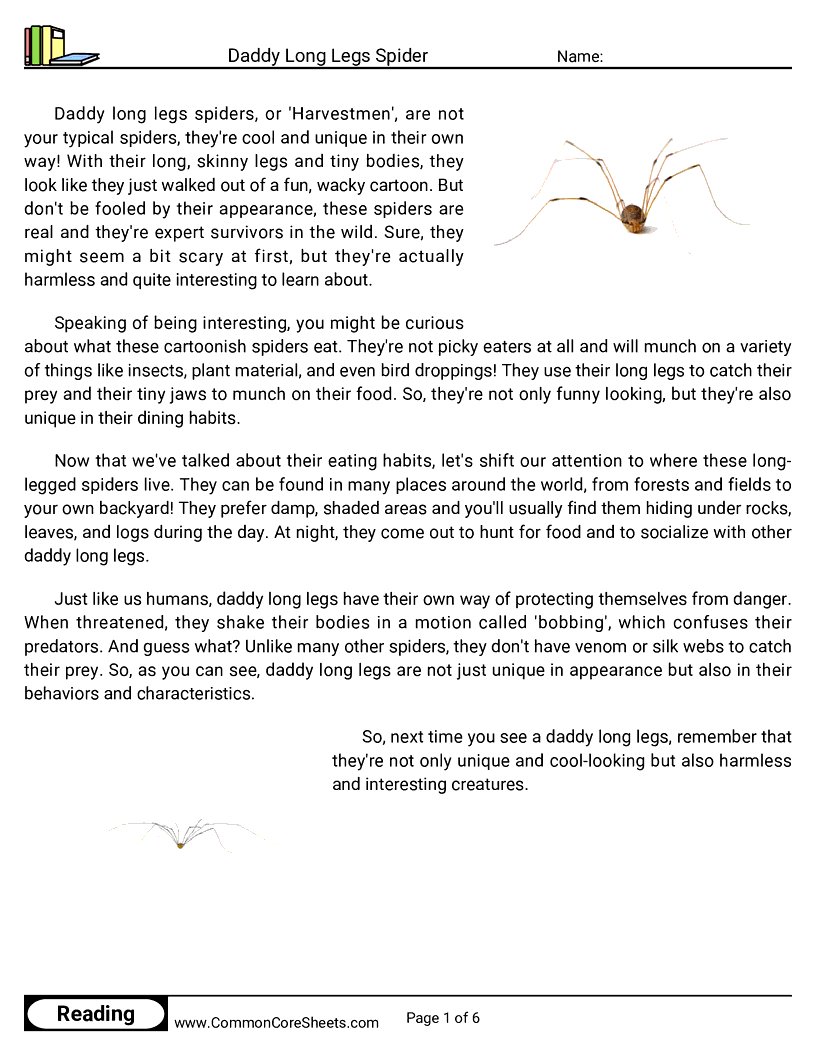
Daddy long legs spiders, or 'Harvestmen', are not your typical spiders, they're cool and unique in their own way! With their long, skinny legs and tiny bodies, they look like they just walked out of a fun, wacky cartoon. But don't be fooled by their appearance, these spiders are real and they're expert survivors in the wild. Sure, they might seem a bit scary at first, but they're actually harmless and quite interesting to learn about.
Speaking of being interesting, you might be curious about what these cartoonish spiders eat. They're not picky eaters at all and will munch on a variety of things like insects, plant material, and even bird droppings! They use their long legs to catch their prey and their tiny jaws to munch on their food. So, they're not only funny looking, but they're also unique in their dining habits.
Now that we've talked about their eating habits, let's shift our attention to where these long-legged spiders live. They can be found in many places around the world, from forests and fields to your own backyard! They prefer damp, shaded areas and you'll usually find them hiding under rocks, leaves, and logs during the day. At night, they come out to hunt for food and to socialize with other daddy long legs.
Just like us humans, daddy long legs have their own way of protecting themselves from danger. When threatened, they shake their bodies in a motion called 'bobbing', which confuses their predators. And guess what? Unlike many other spiders, they don't have venom or silk webs to catch their prey. So, as you can see, daddy long legs are not just unique in appearance but also in their behaviors and characteristics.
So, next time you see a daddy long legs, remember that they're not only unique and cool-looking but also harmless and interesting creatures.
Daddy long legs spiders are fascinating creatures that you might have seen crawling around your home or garden. These spiders, also known as cellar spiders, have long, thin legs and small bodies. Daddy long legs are not dangerous to humans, and they can even help us by catching and eating other insects. Let\'s learn more about these interesting spiders and their unique characteristics.
Daddy long legs spiders can be found in various places around the world, including North and South America, Europe, Australia, and Africa. They prefer to live in dark, damp environments such as basements, garages, caves, and the corners of houses where they can build their messy, irregular webs. These spiders can easily adapt to different environments, which is why they can be found both indoors and outdoors. Their long legs help them to move quickly and navigate through various terrains.
The life cycle of a daddy long legs spider starts as an egg, which the female lays in her web. After the eggs hatch, the baby spiders, called spiderlings, will begin to grow and molt, shedding their exoskeletons as they get bigger. Daddy long legs spiders can live for about a year, and they will continue to molt throughout their lives. Once they reach adulthood, these spiders will mate and start the life cycle all over again.
Daddy long legs spiders have a unique relationship with other insects and humans. They are known to be beneficial to humans because they eat insects that can be harmful or annoying, such as mosquitoes, flies, and ants. Although they might look scary, daddy long legs spiders are not harmful to humans and their venom is not dangerous. In fact, they are more likely to run away from humans or play dead if they feel threatened.
There are some interesting facts and differences between daddy long legs spiders and other spider species. One major difference is that daddy long legs have two separate body parts, while most other spiders have a single, fused body. Another fun fact is that, unlike many other spiders, daddy long legs do not have silk glands, which means they cannot produce the silk that other spiders use to create their webs. Instead, they use their long legs to create a vibrating motion in their webs to capture prey.
Daddy long legs spiders, also known as cellar spiders or harvestmen, are fascinating creatures that you might have seen in your home or garden. These spiders have eight long, thin legs that make them look quite unusual and are the reason for their name. While some people might find them a bit creepy, daddy long legs spiders are actually harmless to humans and can even be helpful in keeping other unwanted pests away. In this article, we\'ll explore some interesting facts about these unique spiders, including their appearance, habitat, and behaviors. So let\'s dive in and get to know our eight-legged friends a little better!
First, let\'s talk about where daddy long legs spiders like to live and what they like to eat. These spiders are found in many different parts of the world, including North America, Europe, and Asia. They prefer dark and damp places, such as basements, cellars, and caves, as well as under rocks and logs in gardens and forests. Daddy long legs spiders are carnivorous, which means they eat other insects like flies, mosquitoes, and even other spiders. This is one reason why having them around can be helpful, as they help to control the population of other pests.
Now let\'s take a closer look at the life cycle of the daddy long legs spider. The female spider lays her eggs in a small, silk-like sac that she attaches to a hidden surface. After a few weeks, the eggs hatch, and tiny spiderlings emerge, which look like miniature versions of the adults. These spiderlings will grow and molt, or shed their exoskeletons, several times before reaching full adulthood. The average lifespan of a daddy long legs spider is about one year, but some can live up to two years if they\'re in a safe environment.
Daddy long legs spiders have some interesting relationships with both humans and other insects. As mentioned earlier, these spiders are harmless to humans and can even be helpful in controlling other pests. However, they are also known to be cannibalistic, meaning they will sometimes eat their own kind if food is scarce. Additionally, they are prey for larger predators like birds, frogs, and lizards. Their long, thin legs are their primary defense, as they can quickly run away from danger or use their legs to vibrate their webs, making them appear larger and more threatening to potential predators.
Finally, let\'s discuss some differences between daddy long legs spiders and other spider species. One major difference is their appearance, as the daddy long legs spider has much longer legs compared to its body size than most other spiders. Another difference is that they don\'t spin traditional webs like other spiders, but instead create loose, irregular webs that they use for catching prey and resting. Daddy long legs spiders also have two eyes, while most spiders have eight. With all these unique characteristics, it\'s no wonder that daddy long legs spiders are such interesting creatures to learn about!
Now that we\'ve explored the world of daddy long legs spiders, it\'s clear that there\'s more to these fascinating arachnids than meets the eye. From their unique appearance and life cycle to their relationships with humans and other insects, these spiders are an important part of the ecosystems they inhabit. So the next time you spot a daddy long legs spider in your home or garden, remember that they\'re not only harmless friends but also helpful allies in the never-ending battle against pesky insects.
About this worksheet
Students read an informational passage about daddy long legs spiders and answer comprehension questions about the text.
This worksheet is designed to enhance children's reading comprehension featuring 20 engaging questions about the Daddy Long Legs Spider. Covering various aspects such as its appearance, behavior, and habitat, it encourages kids to learn in a fun, interactive way. The worksheet is customizable, perfect for conversion into flash cards, and easily utilized in distance learning environments.
Student objectives
- Read a nonfiction passage about daddy long legs spiders
- Find facts and details stated in the text
- Answer questions using information from the reading
- Learn new vocabulary related to spiders and insects
Everyday practice
- Read a fact about an animal you spot in the yard and tell someone what you learned
- Look up information about a bug you find and share the details
- Explain to a friend why daddy long legs are or aren't dangerous
- Answer questions about a nature article you read at the library