Cotton Mouth Snake Worksheet Download
Free reading worksheets on Cotton Mouth Snake. Each worksheet has 20 problems with an answer key and are ideal for teachers and homeschooling. You can download the PDF, create a set of flash cards or set it up for online learning.
Select a Different Activity
>


Sheet Information >
Available at 2nd grade, 3rd grade, 4th grade, 5th grade and 6th grade reading levels.
Read the passage
Cottonmouth snakes, also known as water moccasins, are fascinating creatures that live in the southern United States. These snakes love to hang out near water, like swamps, marshes, and slow-moving rivers. They have a distinctive triangular-shaped head and can grow up to 6 feet in length.
These slithery friends have a varied diet and play an important role in the ecosystem. Cottonmouths eat a variety of small animals, such as fish, frogs, birds, and even other snakes! Their venom helps them catch their prey, and they are also known to eat carrion (dead animals).
Humans and cottonmouth snakes can coexist, but it\'s important to give them space and respect. While they are venomous and can be dangerous if threatened, they usually try to avoid humans and other large animals. An interesting fact about cottonmouths is that they are one of the few snake species that give birth to live babies instead of laying eggs!
Have you ever heard of a cottonmouth snake? Also known as a water moccasin, this snake is quite interesting! Cottonmouth snakes are found in the southeastern United States, living in wet and swampy habitats like marshes, rivers, and ponds. These snakes are carnivorous, which means they eat other animals such as fish, frogs, rodents, and even other snakes! They have a unique way of catching their prey by waiting patiently in the water with their mouths open, ready to strike when the time is right.
Let\'s learn about the life cycle of a cottonmouth snake. These snakes lay eggs, but they don\'t leave them in a nest like some other animals do. Instead, the mother snake carries the eggs inside her body until they hatch, giving birth to live young! Cottonmouth snakes can live for up to 20 years in the wild, growing and shedding their skin multiple times throughout their lives.
Cottonmouth snakes have interesting relationships with humans and other animals. While they are known to be aggressive if threatened, they usually try to avoid humans and will only bite if they feel cornered or scared. Other animals, like birds and raccoons, are predators of the cottonmouth snake and will eat them if they get the chance. One cool fact about the cottonmouth snake is that it has a heat-sensing organ called the 'pit' that helps them locate their prey in the dark.
Cottonmouth snakes are fascinating creatures with their unique hunting techniques, life cycles, and relationships with other animals. Remember, it\'s always best to admire them from a safe distance and let them live peacefully in their natural habitats.
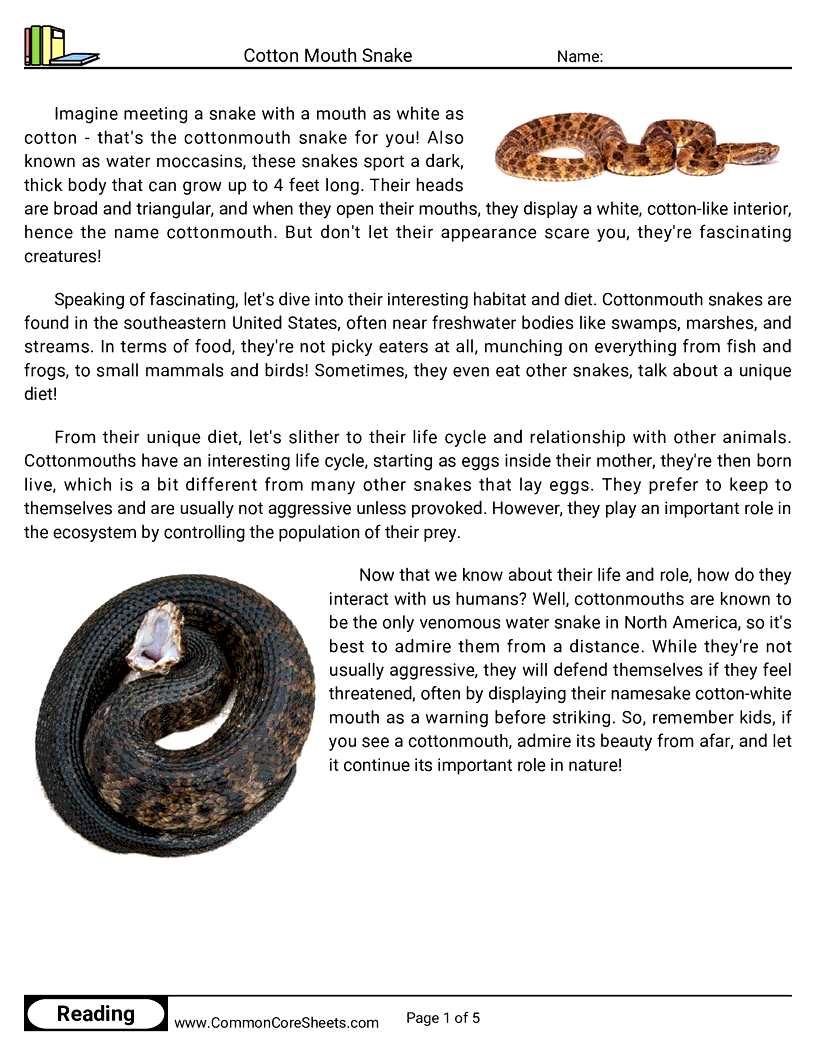
Imagine meeting a snake with a mouth as white as cotton - that's the cottonmouth snake for you! Also known as water moccasins, these snakes sport a dark, thick body that can grow up to 4 feet long. Their heads are broad and triangular, and when they open their mouths, they display a white, cotton-like interior, hence the name cottonmouth. But don't let their appearance scare you, they're fascinating creatures!
Speaking of fascinating, let's dive into their interesting habitat and diet. Cottonmouth snakes are found in the southeastern United States, often near freshwater bodies like swamps, marshes, and streams. In terms of food, they're not picky eaters at all, munching on everything from fish and frogs, to small mammals and birds! Sometimes, they even eat other snakes, talk about a unique diet!
From their unique diet, let's slither to their life cycle and relationship with other animals. Cottonmouths have an interesting life cycle, starting as eggs inside their mother, they're then born live, which is a bit different from many other snakes that lay eggs. They prefer to keep to themselves and are usually not aggressive unless provoked. However, they play an important role in the ecosystem by controlling the population of their prey.
Now that we know about their life and role, how do they interact with us humans? Well, cottonmouths are known to be the only venomous water snake in North America, so it's best to admire them from a distance. While they're not usually aggressive, they will defend themselves if they feel threatened, often by displaying their namesake cotton-white mouth as a warning before striking. So, remember kids, if you see a cottonmouth, admire its beauty from afar, and let it continue its important role in nature!
Cottonmouth snakes are fascinating creatures that can be found in the southeastern United States. These venomous snakes are also known as water moccasins, and prefer living in wet environments like swamps, marshes, and the edges of lakes and rivers. Cottonmouth snakes have a distinctive look, with a thick body, a triangular head, and a unique color pattern that ranges from brown and olive green to black. One interesting fact about the cottonmouth is that they get their name from the white, cotton-like lining inside their mouth, which they show when they feel threatened.
The diet of a cottonmouth snake is varied, as they are known to be opportunistic feeders. This means that they will eat whatever they can find, including fish, frogs, small mammals, birds, and even other snakes. Cottonmouth snakes are ambush predators, which means they wait patiently for their prey to come close before striking. They use their venomous bite to immobilize their prey and then swallow it whole.
The life cycle of a cottonmouth snake is relatively simple. They mate in the spring, and the female gives birth to live young in the late summer or early fall. Cottonmouths are unique among snakes because they give birth to live young instead of laying eggs like most other snakes. The young snakes are born with venom and are able to hunt for themselves shortly after birth.
Cottonmouths have a complex relationship with humans and other animals. While they are venomous and can be dangerous to humans, they also help control rodent populations, which can be beneficial to people. Cottonmouth snakes can also be prey for larger animals like birds of prey, alligators, and even other snakes. They are important members of the ecosystems they inhabit, playing a crucial role in maintaining balance.
One way cottonmouth snakes differ from other species is in their unique defense mechanisms. When threatened, they will often coil up and show off their white, cotton-like mouth lining as a warning to predators. This display, along with their venomous bite, helps deter potential threats from attacking. Cottonmouth snakes also have a distinctive way of swimming, with their head held high above the water, which sets them apart from other water snakes.
In conclusion, cottonmouth snakes are intriguing animals with a unique appearance, varied diet, and interesting behaviors. They play a vital role in their ecosystems, helping to control pest populations while also serving as prey for larger predators. As we learn more about these fascinating creatures, it\'s important to remember their significance in maintaining a balanced environment.
Cottonmouth snakes, also known as water moccasins, are fascinating creatures that can be found in the southeastern United States. These venomous snakes are known for their distinctive appearance, with dark, thick bodies and a white, cotton-like lining in their mouths. They can grow up to 6 feet in length, and they\'re usually found near bodies of water such as swamps, marshes, and rivers. Cottonmouth snakes can swim and climb trees, making them versatile predators in their habitats. In this article, we will explore their diet, life cycle, and how they interact with humans and other animals.
Cottonmouth snakes have a diverse diet that mainly consists of small animals found in their habitats. These snakes are carnivorous and will eat fish, frogs, rodents, and even smaller snakes. They have a unique way of hunting, as they can either ambush their prey or actively hunt them. Cottonmouth snakes are known to be opportunistic feeders, which means they will eat whatever they can find or catch. Their venom is strong enough to quickly immobilize their prey, making it easy for them to swallow it whole.
The life cycle of a cottonmouth snake is quite interesting, as they undergo several stages of development. They are born live, not from eggs like many other snakes, with their mother giving birth to a litter of 5 to 20 babies. The young snakes are born with a venomous bite and are ready to start hunting within a few days. As they grow, they shed their skin several times a year to accommodate their increasing size. Cottonmouth snakes can live up to 20 years in the wild, reaching maturity around the age of 4.
Cottonmouth snakes have a complex relationship with humans and other animals in their environments. While they are not typically aggressive towards humans, they will defend themselves if threatened or provoked. Their venomous bite can cause severe pain and swelling, but fatalities are rare thanks to modern antivenom treatments. As for their relationships with other animals, they are both predators and prey, with larger animals like birds of prey, alligators, and larger snakes known to eat them. Cottonmouth snakes also play an important role in controlling rodent and insect populations in their habitats.
There are several interesting facts that set cottonmouth snakes apart from other snake species. One key difference is their ability to vibrate their tails when threatened, similar to rattlesnakes, as a warning to potential predators. Another unique feature is their heat-sensitive pits, located between their eyes and nostrils, which allow them to detect warm-blooded prey in their environment. Cottonmouth snakes are also known for their strong swimming abilities, making them one of the few snake species that can be found both in water and on land. Understanding these fascinating creatures can help us appreciate their important role in the ecosystem and encourage their conservation.
About this worksheet
Students read a short informational passage about cotton mouth snakes and answer comprehension questions about the details they read.
This worksheet is designed to enhance children's reading comprehension through fascinating facts about the cottonmouth snake. Covering various aspects like its physical attributes, habitat, behavior, and role in the ecosystem, the worksheet consists of 20 engaging multiple-choice questions. Customizable for individual learning needs, it can be converted into flash cards or adapted for distance learning, offering a flexible, interactive learning tool.
Student objectives
- Read a nonfiction passage about cotton mouth snakes
- Find and remember key facts from what you read
- Answer questions using details from the text
- Learn new words and what they mean from context
Everyday practice
- Read a fact sheet at a zoo or nature center and remember what it said
- Look up information about an animal you saw outside
- Explain to a friend what a snake is like after reading about it
- Pick out important details from a science article or book