Common Loon Worksheet Download
Free reading worksheets on Common Loon. Each worksheet has 20 problems with an answer key and are ideal for teachers and homeschooling. You can download the PDF, create a set of flash cards or set it up for online learning.
Select a Different Activity
>
Sheet Information >
Available at 2nd grade, 3rd grade, 4th grade, 5th grade and 6th grade reading levels.
Read the passage
Let's dive into the world of Common Loons! These fascinating birds have a sleek, black head, white underbelly, and checkered black-and-white back. They're fantastic swimmers, diving deep underwater to catch their favorite foods like fish, shrimp, and even some aquatic plant life. However, unlike most birds, loons have solid bones which makes flying long distances very tough for them!
Now, let's explore where these loons call home and a bit about their life cycle. Common Loons live near lakes and other large bodies of water in Canada and the northern United States during the warm season, migrating to the coast for the colder months. They lay 1-2 eggs each year, and both parents help incubate the eggs and care for the chicks once they hatch. Loons live for about 30 years, and once they're all grown up, they have a wingspan of up to 5 feet!
It's interesting to note how loons interact with us humans and other animals. Loons are generally afraid of humans, but they can be very protective of their nests and might dive or make loud noises if they feel threatened. They don't have many natural predators, but they have to watch out for eagles, large fish, and turtles that might try to eat their eggs. Isn't it amazing how much we can learn about and from these special birds? Let's always remember to respect their space and admire them from a distance.
Hey there, kiddos! Let's learn about the amazing bird known as the common loon. These birds, with their black and white patterns and red eyes, are quite a sight to see! They live mostly in North America, particularly in Canada and the northern United States, where they find lakes and rivers to call home. Unlike many other birds, common loons prefer to stay on or near the water, where they are expert divers, often diving as deep as 200 feet to catch their food, like fish, frogs, and even crustaceans. Their life cycle is something to marvel at; they usually mate for life, and both parents share the parenting duties, from incubating the eggs to feeding the chicks. However, it's not always easy for them. They have to watch out for predators like eagles, large fish, and even other loons.
Common loons have a fascinating relationship with humans and other animals. To us humans, they are a symbol of wilderness and solitude, and their eerie, beautiful calls are a sound that many people associate with peaceful summer nights at the lake. But they also have to be careful around us, because things like fishing lines and boat traffic can be dangerous for them. With other animals, it's a bit of a mixed bag. They coexist peacefully with many species, but they can be quite territorial and will fiercely defend their nests from intruders. That's not to say they're mean or scary, though! They just want to protect their families, just like we do.
Now, you might be wondering, 'What makes loons different from other birds?' Well, there are a few things! First of all, they have solid bones, which is unusual for birds. This makes them heavier, but it's actually a good thing because it helps them dive deep into the water to catch their food. Another interesting fact is that they have four different calls, each with its own meaning. They can use these calls to communicate with each other across long distances. So, there you have it, the common loon: a fascinating bird with a unique lifestyle, a powerful symbol of the wild, and a testament to the beauty of nature. Here's hoping you get to see one in person someday!
Dive deep into the world of common loons, the amazing water birds with striking red eyes! Known for their black-and-white checkered backs and glossy black heads, these birds are real beauties. They have long, pointed beaks, perfect for catching their dinner, and their legs are set far back on their bodies which makes them excellent swimmers. But don't be fooled, though they look a bit like ducks, they're a completely different species!
Speaking of dinner, let’s dive into the underwater world where common loons love to feast. These birds are carnivores, meaning they eat meat, and their menu includes all sorts of fish, frogs, crustaceans and even some aquatic plants. They're like little underwater rockets, diving up to 200 feet to snag a tasty fish or two! So if you're a small fish, a loon might be the last thing you want to see.
From their watery feeding grounds, let’s fly to the places they call home. Common loons can be found in the wild, beautiful lakes and ponds of North America, especially in Canada and the northern United States. During winter, they migrate to the coast, trading in their freshwater homes for the salty sea. Their nests are usually made on the ground near water, where they lay one or two eggs each year.
From their unique homes and habits, let’s look at how common loons interact with others. These birds are generally peaceful and keep to themselves, but they can be quite territorial, especially when it comes to their nests. They interact with humans mostly through birdwatching and photography, as they're not typically kept as pets. And just like that, we've taken a fun journey into the world of common loons, the amazing and unique water birds.
"Hey there, have you ever wondered about the enchanting Common Loons?" These amazing creatures are a type of bird that's well known for their haunting and melodious calls. They have striking black and white plumage and red eyes that are simply captivating. Common Loons are quite large, ranging from 2 to 3 feet in length, and they have a wingspan of up to 5 feet.
"You might be curious about where these interesting birds live." Common Loons are residents of the northern parts of North America, Greenland, and Iceland, primarily sticking to freshwater lakes during the breeding season. In winter, they migrate to the coastal waters, where it's a bit warmer. These birds are excellent swimmers, thanks to their webbed feet and their bodies that are designed to move efficiently in water.
"Now, let's learn about their diet and relationship with other animals." Common Loons are carnivores and their diet mainly consists of fish, but they also eat crustaceans, insects, and even frogs. Their sharp beak helps them catch their prey and they often swallow it whole. They don't have many predators, but eagles, gulls, and humans can pose a threat to their eggs and young chicks.
"What about their life cycle and relationship with humans?" Common Loons are monogamous and usually mate for life, laying 1-2 eggs per year which are incubated by both parents. Humans love to watch and listen to these beautiful birds, but unfortunately, human activity can sometimes disrupt their habitats. It's important to keep our distance and respect their space for them to thrive.
"Finally, let's talk about the differences between Common Loons and other species, and some interesting facts." Unlike many other birds, Common Loons carry their young ones on their back for protection and warmth. And did you know that Loons can dive more than 200 feet below the surface of the water in search of food? In conclusion, Common Loons are fascinating creatures with a unique lifestyle that sets them apart from other birds."
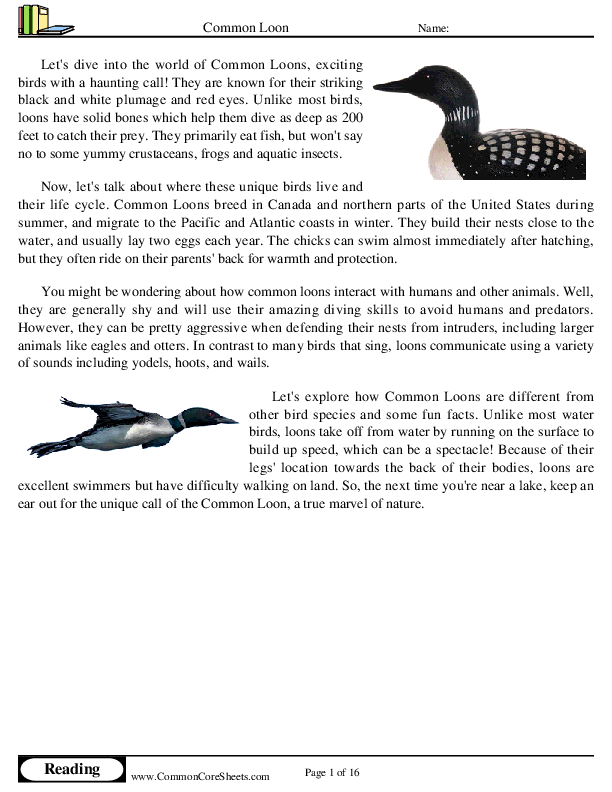
Let's dive into the exciting world of common loons, shall we? Common loons, known scientifically as Gavia immer, are large water birds that are most recognizable for their eerie, beautiful calls. They're quite the sight to behold with their sharp, pointed beaks, red eyes, and distinctive black and white feathering. Common loons can be found across Canada and the northern United States, nesting on quiet, secluded freshwater lakes. But during winter, they migrate to the coast, preferring the saltwater of the ocean where they blend in with the grey-blue water.
Now, let's talk about the diet and hunting habits of these fascinating birds. Common loons are carnivores, and they love dining on a variety of fish like pike, trout, and bass. They're excellent divers and can plunge into the water from the air to catch their prey. Apart from fish, they also eat crustaceans, snails, and even aquatic insects. Their sharp beaks are perfect for spearing their food, which they usually swallow whole.
The life cycle of the common loons is a unique journey. They start life in a nest on the ground near water, usually in a well-concealed location. Once they hatch, the baby loons, called chicks, stay with their parents for about three months before they become independent. Common loons live for about 30 years, and they usually mate for life, returning to the same breeding grounds year after year. It's a beautiful testament to their loyalty and longevity.
Common loons have a complex relationship with humans and other animals. With humans, their nesting sites are often disturbed due to land development and recreational activities, which can be harmful to their populations. They're generally peaceful birds but can be very defensive of their nests and chicks, especially around predators like raccoons, eagles, and large fish who pose a threat to their little ones. They're also different from other bird species in that they are excellent swimmers but are awkward on land due to their legs being placed far back on their bodies. This specialization helps them dive and swim underwater but makes walking difficult and flying requires a lot of effort.
Finally, let's uncover some fun facts about these intriguing birds. Did you know that the call of the common loon is considered one of the oldest bird calls in the world? Or that they can dive more than 200 feet underwater and stay there for up to five minutes? And unlike many birds, loons have solid bones which help them dive deep into the water. From their unique appearances to their incredible abilities, common loons certainly make our world a more interesting place, don't you agree?
About this worksheet
Students read an informational passage about the common loon and answer questions to show their understanding of the text.
This worksheet is designed to enhance children's reading skills through engaging content about the Common Loon bird. The worksheet contains 20 interactive Q&A exercises, testing their knowledge about loons' characteristics, behavior, and habitat. It's a highly adaptable educational tool that can be converted into flash cards or used in distance learning setups. The recall-based questions promote better fact retention for a comprehensive understanding of the topic.
Student objectives
- Read a nonfiction passage about the common loon
- Find facts and details stated in the text
- Answer questions using evidence from the reading
- Learn new vocabulary related to loons and birds
- Understand the main idea of an informational article
Everyday practice
- Read a fact sheet about an animal at a zoo or nature center
- Look up information about a bird you spotted at a lake
- Read a magazine article and tell someone the main points
- Answer questions from a friend about something you just read
- Compare facts about different birds you learn about in books