Blue Jay Worksheet Download
Free reading worksheets on Blue Jay. Each worksheet has 20 problems with an answer key and are ideal for teachers and homeschooling. You can download the PDF, create a set of flash cards or set it up for online learning.
Select a Different Activity
>


Sheet Information >
Available at 2nd grade, 3rd grade, 4th grade, 5th grade and 6th grade reading levels.
Read the passage
Have you ever seen a beautiful blue bird flying around in your backyard? That might be a Blue Jay, a colorful and intelligent bird found in North America. They are known for their vibrant blue feathers, white bellies, and the cool crest on their heads that looks like a little crown.
Blue Jays are quite the curious creatures, especially when it comes to their food and friends. These birds love to eat a variety of things like nuts, seeds, insects, and sometimes even small animals like baby mice. When it comes to other animals, Blue Jays can be both friendly and a bit bossy, often protecting their food and nests from squirrels and other birds.
Did you know there are some interesting facts about Blue Jays and their life cycle? They usually live in forests, parks, and even our own backyards, building their nests high up in trees. Blue Jays mate for life and can live up to 7 years, and although they can be noisy, they help humans by eating harmful insects and spreading seeds to grow new plants.
Blue jays are fascinating birds that are known for their beautiful blue feathers and unique personalities. These intelligent birds can be found in various parts of North America, living mostly in forests, suburban areas, and even in some cities. They are omnivores, which means they eat a mix of things like seeds, nuts, berries, insects, and even smaller animals like eggs or nestlings of other birds. Blue jays are also known to store food for later, hiding it in tree crevices or in the ground.
The life cycle of a blue jay is quite interesting, starting from when they\'re just eggs in a nest. The female blue jay lays between 3 to 6 eggs and sits on them for about 18 days until they hatch. Once the baby blue jays, called nestlings, are born, both parents work together to take care of them by bringing food and keeping them safe. After about 3 weeks, the young blue jays are ready to leave the nest and start their own journey.
Blue jays have a complex relationship with both humans and other animals. They are known to imitate the calls of other birds, including the hawks, to scare away predators or to trick other birds. While some people enjoy having blue jays visit their bird feeders, others consider them to be a nuisance due to their aggressive behavior. Despite these challenges, blue jays play an important role in the ecosystem by spreading seeds and controlling insect populations.
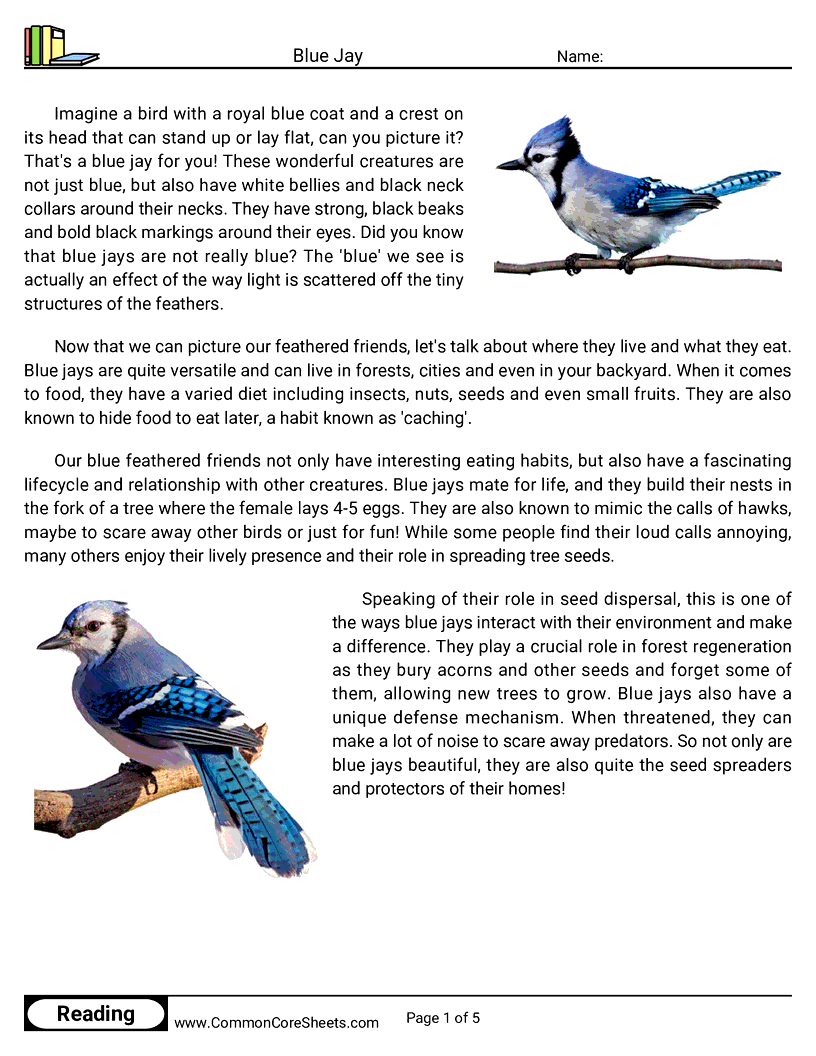
Imagine a bird with a royal blue coat and a crest on its head that can stand up or lay flat, can you picture it? That's a blue jay for you! These wonderful creatures are not just blue, but also have white bellies and black neck collars around their necks. They have strong, black beaks and bold black markings around their eyes. Did you know that blue jays are not really blue? The 'blue' we see is actually an effect of the way light is scattered off the tiny structures of the feathers.
Now that we can picture our feathered friends, let's talk about where they live and what they eat. Blue jays are quite versatile and can live in forests, cities and even in your backyard. When it comes to food, they have a varied diet including insects, nuts, seeds and even small fruits. They are also known to hide food to eat later, a habit known as 'caching'.
Our blue feathered friends not only have interesting eating habits, but also have a fascinating lifecycle and relationship with other creatures. Blue jays mate for life, and they build their nests in the fork of a tree where the female lays 4-5 eggs. They are also known to mimic the calls of hawks, maybe to scare away other birds or just for fun! While some people find their loud calls annoying, many others enjoy their lively presence and their role in spreading tree seeds.
Speaking of their role in seed dispersal, this is one of the ways blue jays interact with their environment and make a difference. They play a crucial role in forest regeneration as they bury acorns and other seeds and forget some of them, allowing new trees to grow. Blue jays also have a unique defense mechanism. When threatened, they can make a lot of noise to scare away predators. So not only are blue jays beautiful, they are also quite the seed spreaders and protectors of their homes!
Blue jays are fascinating birds that you might have seen flying around your neighborhood. They are known for their bright blue feathers and the distinctive crest on their heads. These beautiful birds can be found throughout the eastern and central parts of North America. Let\'s dive into learning more about these amazing creatures!
One interesting aspect of blue jays is their diet, which consists of a variety of foods. They enjoy eating insects, nuts, seeds, and even small vertebrates like frogs and baby birds. Blue jays are also known to store food for later, hiding it in trees or burying it in the ground. This behavior helps them survive during the winter months when food is scarce.
The life cycle of a blue jay is quite fascinating as well. In the spring, blue jays build their nests in trees, using twigs, leaves, and other materials. The female blue jay lays four to five eggs, which she incubates for about 18 days. Once the eggs hatch, both parents help to feed and care for the baby birds until they are ready to leave the nest.
Blue jays have a unique relationship with humans and other animals. While they can be friendly and curious around humans, they are also known to be aggressive towards other birds and animals. Their loud calls can be a warning to other birds in the area about potential danger, and they can mimic the calls of other birds to confuse predators. Blue jays also have a special relationship with oak trees, as they help to spread the tree’s acorns, which in turn helps new oak trees grow.
Lastly, let\'s explore some interesting facts about blue jays. Although they may appear to be just blue, their feathers actually contain no blue pigment. The blue color is a result of the way light reflects off the microscopic structure of their feathers. Another fun fact is that blue jays are known to be excellent mimics, sometimes even imitating the sounds of hawks to scare away other birds.
In conclusion, blue jays are fascinating birds with a diverse diet, an interesting life cycle, and unique relationships with humans and other animals. They have some truly remarkable features and behaviors that make them a wonder to observe and learn about.
Say hello to the vibrant and clever blue jay! These beautiful birds are known for their stunning blue and white feathers, as well as their intelligence. They belong to the Corvidae family, which also includes crows, ravens, and magpies. You can find them across North America, from Texas all the way to Canada. Their striking appearance and curious nature make them a fascinating subject to learn about.
Let\'s dive into the diverse diet of blue jays! They are omnivores, which means they eat both plants and animals. Their favorite foods include insects, nuts, seeds, and fruits, but they can also eat smaller animals like mice and frogs. Blue jays have been known to steal and eat eggs from other birds' nests as well. They use their strong beaks to crack open nuts and seeds, making it easy for them to access their delicious insides.
Now, let\'s explore the life cycle of these brilliant birds. Blue jays mate for life, forming strong bonds with their partners. During the breeding season, the female lays about 4-6 eggs in a nest made of twigs, leaves, and grass. Both parents take turns incubating the eggs for about 17-18 days before they hatch. The baby birds, or fledglings, leave the nest after about three weeks, but their parents continue to care for them until they are strong and independent.
Blue jays share an interesting relationship with humans and other animals. They are known to be quite bold and may even steal food from unguarded picnic tables! While some people see them as pests, others appreciate their beauty and enjoy having them in their gardens. As for their relationship with other animals, blue jays have been known to mimic the calls of hawks to scare off predators or trick other birds. This clever trick helps them protect their territory and food sources.
Lastly, let\'s look at some interesting facts and differences between blue jays and other birds. One unique feature is their ability to make a wide range of sounds, from melodious songs to harsh alarm calls. Unlike most birds, blue jays can also change the color of their feathers by rubbing them with substances like mud or berries. This can help them blend in better with their surroundings. With their beautiful appearance, versatile diet, and cunning behavior, blue jays are truly one-of-a-kind creatures in the world of birds.
About this worksheet
Read a short passage about blue jays and answer comprehension questions about the bird's traits, habits, and habitat.
This worksheet is designed to enrich children's reading skills through the engaging topic of Blue Jays. Consolidating knowledge about these fascinating creatures, students answer 20 questions focused on their habits, diet, characteristics, and roles in the ecosystem. The worksheet can be customized, transformed into flashcards, or leveraged in distance learning, offering adaptable support for diverse learning methods.
Student objectives
- Read a nonfiction passage about blue jays and understand the main idea
- Find specific facts about the bird in the text
- Answer questions using details from what you read
- Learn new words related to birds and nature
Everyday practice
- Spot a blue jay in the yard and know what to look for
- Talk about birds you see at a park or feeder
- Look up facts about an animal you're curious about
- Explain what you learned about a bird to a friend or family member