2nbt1a×Description:
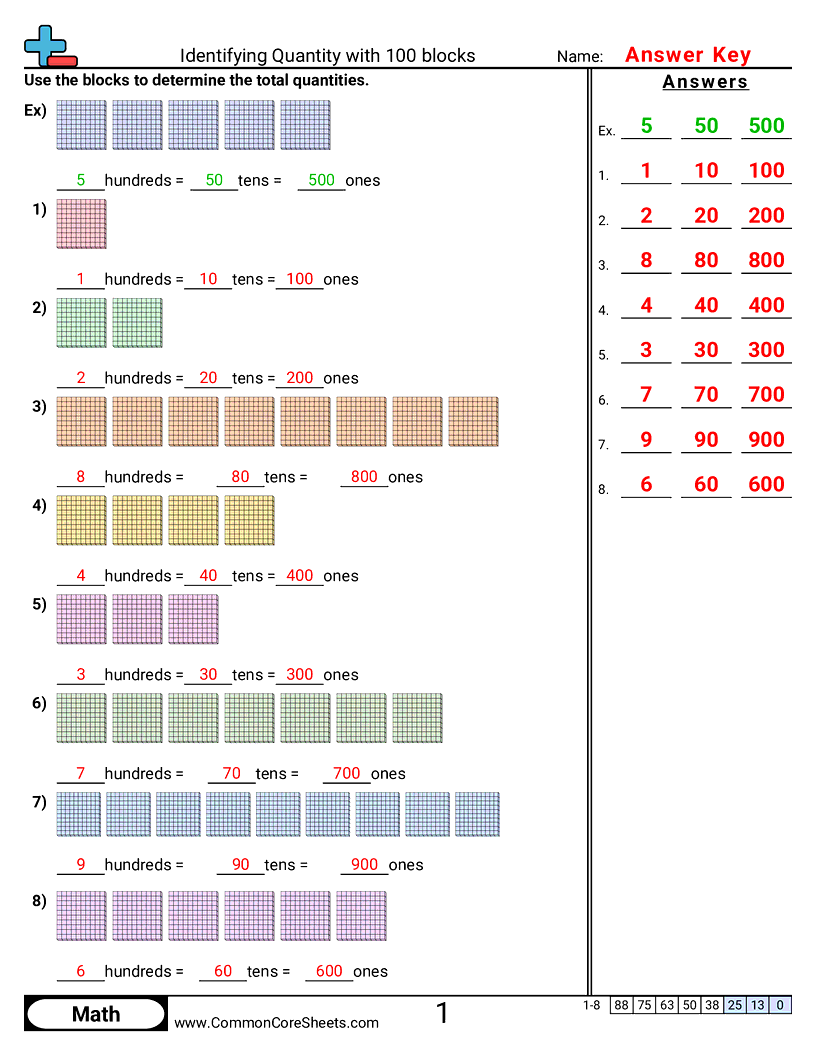
"This worksheet is designed for children to enhance their math skills by creating groups of 100. Comprising of 9 unique problems, it simplifies numerical concepts into engaging tasks. Featuring customization, it can be transformed into flash cards, serving as an effective tool for distance learning. With its flexibility and interactivity, this resource promotes fun while learning mathematics."
×Student Goals: ComprehensionBy completing this worksheet, students should have developed an understanding of how to create groups of 100. This fundamental mathematical concept enables them to subdivide large numbers into easily manageable groups, greatly improving their numeric comprehension skills. They would also have developed mental math strategies for dealing with numbers, making it easier for them to perform quick calculations in their heads.Critical ThinkingStudents should showcase an enhanced ability to solve problems. They would be able to strategize, deduce, and sift through various possibilities to determine the correct groupings of numbers. This critical thinking capability is not exclusive to math alone. Properly cultivating it can transfer seamlessly into other subjects or areas where problem-solving abilities are needed. This worksheet helps in tackling complex problems by breaking them down into smaller, manageable parts.Number FluencyThe completion of this worksheet should correlate to increased numerical fluency. That is, they would demonstrate a strong familiarity with numbers, and their proficiency in manipulating them should be evident. Participating in exercises, where they need to create groups of 100, would have effectively reinforced the concept of the base-10 number system, thereby ameliorating their numerical agility.Confidence and EncouragementBy completing these tasks, students would have taken steps towards improved confidence in their mathematical abilities. The sense of accomplishment found in successfully creating groups of 100 would serve as a motivational boost, encouraging them to engage further with mathematical problem-solving activities. This can be crucial in setting a robust foundation for more complex mathematical theories and numerical applications in the future.Integration of KnowledgeBeyond gaining familiarity with numbers, students would learn how to integrate different parts of knowledge in a cohesive manner. They would understand number operations, connections among numbers, and how they can break down and group numbers in varied ways for different purposes, thus showing evidence of considerable cognitive growth in number sense. This worksheet stands as a stepping stone in the journey to develop sophisticated numerical capabilities that are the backbone of higher-level mathematic comprehension.