3g1×Description:
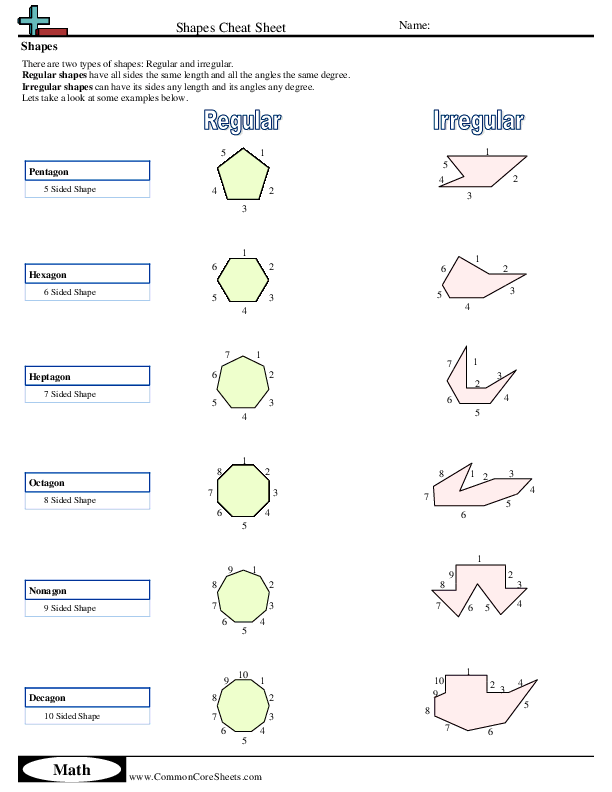
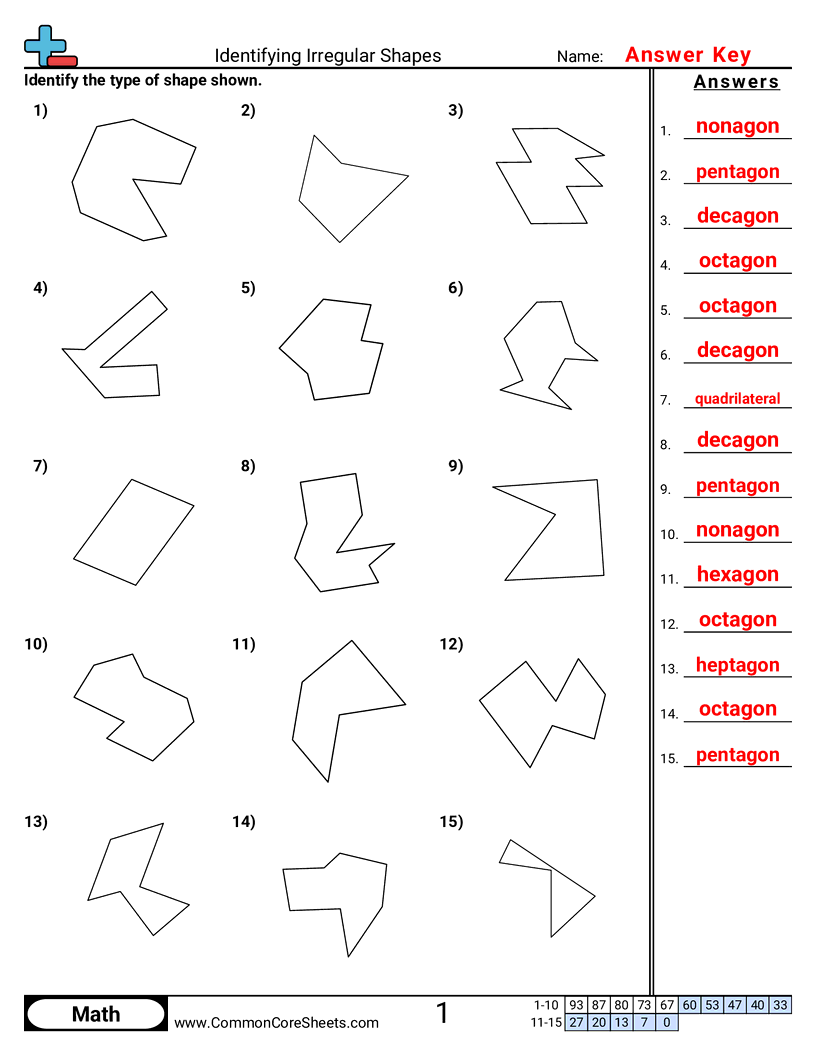
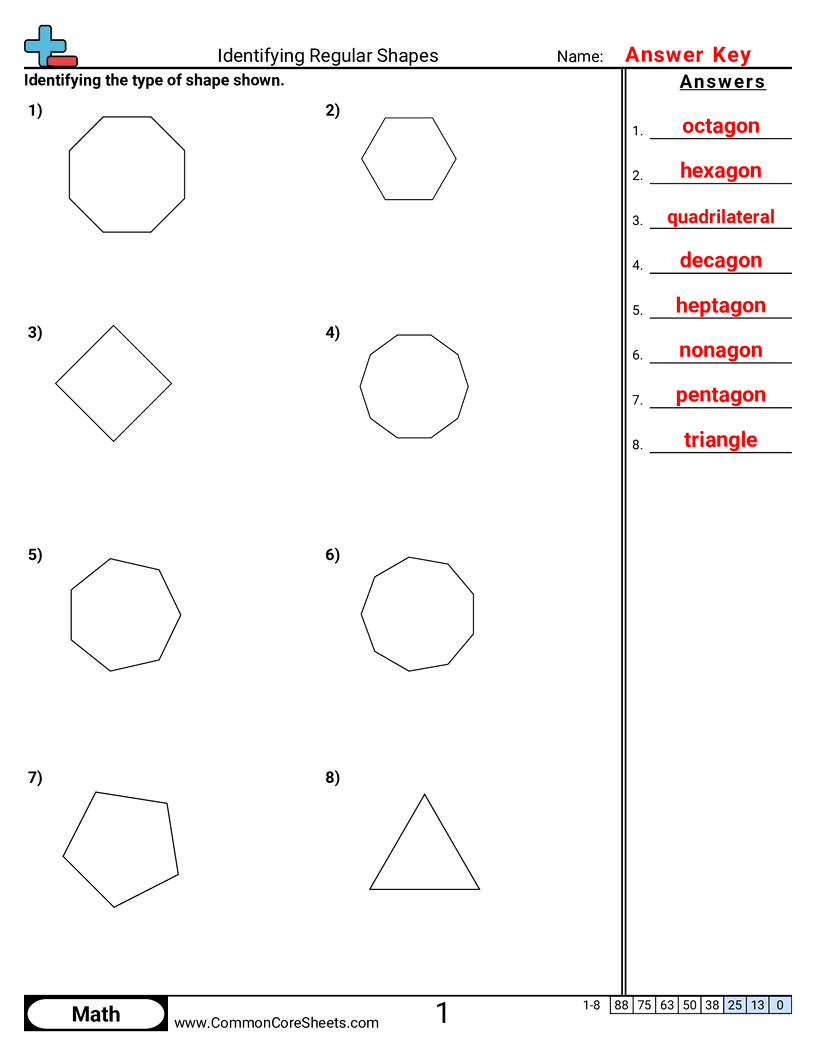
"This worksheet is designed to help children enhance their knowledge in math, particularly in identifying shapes based on the number of sides. Covering a range of 15 practical problems involving real-life scenarios, it encourages comprehensive geometry learning. It can be customized according to learner's needs, adapted into flash cards for more interactive learning or seamlessly integrated into distance learning programs."
×Student Goals: Shape RecognitionBy the end of this worksheet, students should have developed improved recognition skills for identifying various shapes by their unique characteristics, such as the number of sides each shape has. This foundational geometric understanding will prove useful across a variety of math and everyday contexts.Knowledge on Geometric PropertiesThe students are expected to be able to relate real-life objects with geometric shapes and their properties — an important step in spatial awareness. This can help them to see and understand the geometry that is embedded in our world, which could inspire them to be more creative in their thinking.Application of KnowledgeAfter successfully completing the worksheet, students should be able to apply their knowledge of shapes to practical scenarios. This could range from predicting the shape of a given object based on the number of sides described, to identifying the name of a shape by its properties. These skills can deepen their understanding of how shapes are associated with everyday items.Enhanced Problem-solving SkillsThe worksheet will help to enhance problem-solving skills. By relating shapes based on the number of sides, students are required to recall and apply geometric knowledge to solve various problems. This is a fundamental skill in mathematics that also applies in complex problem-solving scenarios.Vocabulary EnhancementPost completion, students are expected to have an extended vocabulary of specific geometric terms such as heptagon, nonagon, decagon, etc. This can enhance their communication skills especially when it comes to expressing mathematical concepts and ideas. Overall, this facilitates in making them confident in using geometry-specific terminologies in their academic pursuits as well as everyday interactions.Increased Critical ThinkingThe worksheet significantly contributes to enhancing the students' ability to critically analyze and come up with viable results. This ability will prove helpful in numerical and spatial reasoning, arming learners with the necessary skills for more advanced geometric studies. Hence, students can develop a keen eye for details which is key for solving mathematical problems.