6rp1×Description:
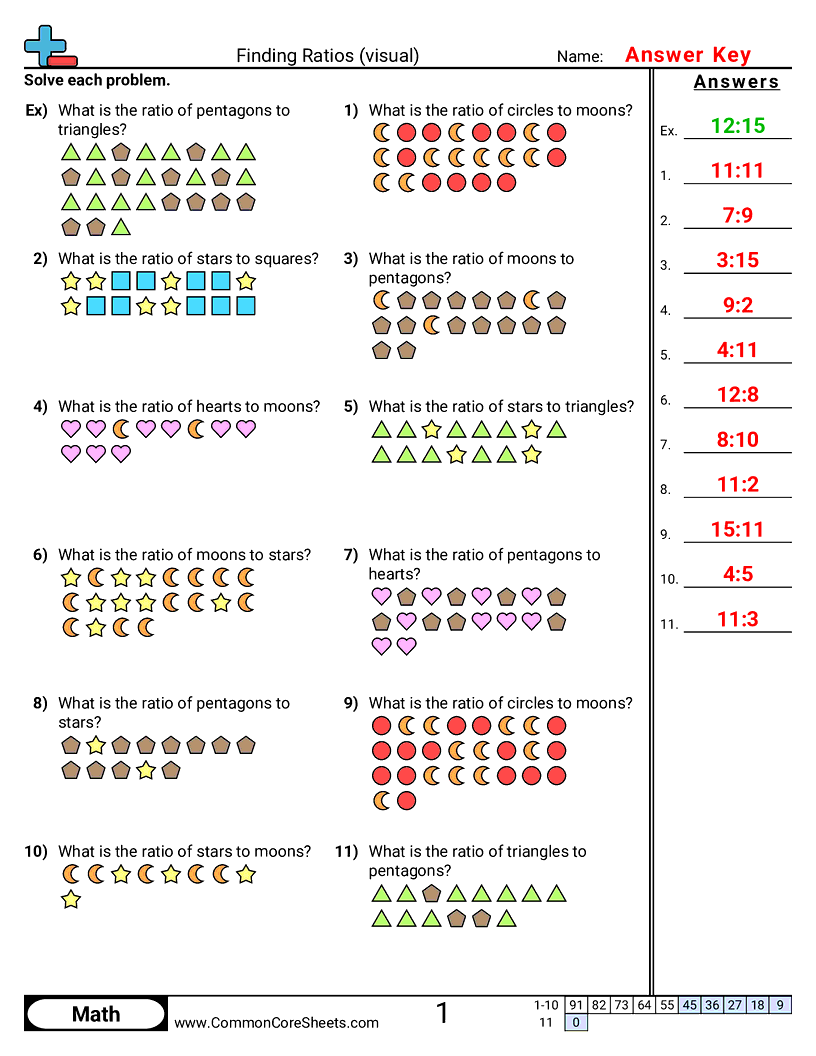
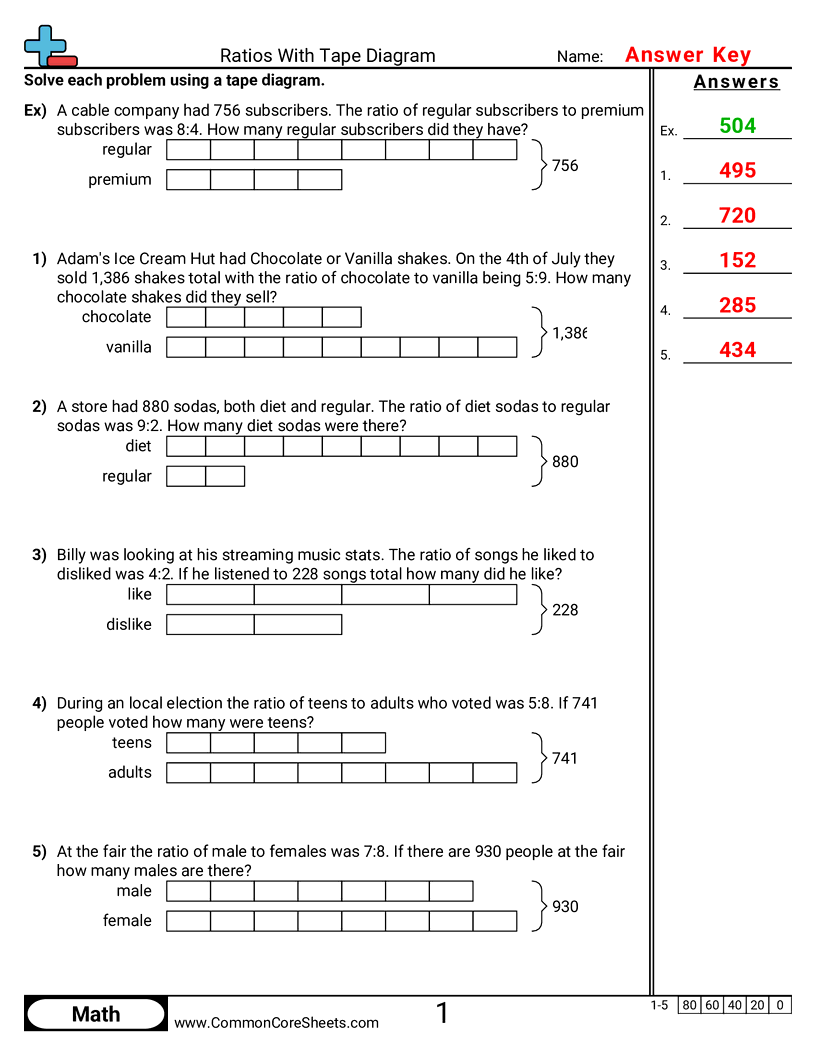
"This worksheet is designed to give children a visual approach to understanding ratios in math. Through 11 customizable problems, it uses various shapes like moons, squares, hearts, triangles, circles, and stars to teach the concept of ratios. Suitable for distance learning, this worksheet can also be converted into flashcards for easier recall and practice."
×Student Goals: Ratio Comparison SkillsAfter completing the worksheet, students should have developed and improved their ability to understand and apply ratio comparison skills. They should be well-versed with the concept of ratios, the relation it establishes between two quantities of the same kind, and the representation of this relationship. The problems in the worksheet encourage students to create a visual image and provide an understanding that a ratio is a comparison of two quantities. This could be a powerful tool for them to tackle practical problems involving comparisons.Critical Thinking and Problem SolvingStudents should be capable of handling situations that demand critical thinking. The math problems given make them analyze and establish a quantitative relationship between different shapes. This competency not only enhances their counting skills but also develops their problem-solving abilities. They should be able to apply these analytical skills in real life scenarios.Mathematical Language ProficiencyBy engaging with the worksheet, students should have improved their mathematical vocabulary and language proficiency. Terms like ratios, pentagons, squares, and triangles would become a part of their regular vocabulary, which will facilitate further mathematical learning. Gains in such a specific language domain can benefit students in their daily communication about quantities, numbers, and shapes.Confidence and IndependenceAfter solving all of the problems in the worksheet, the students should have gained confidence and become independent in tackling similar math problems on their own. This progression to independence signifies that they can handle such math problems in their exams or homework without needing constant assistance.Application of KnowledgeAfter completion, students should be in a position to apply their acquired knowledge to other mathematical problems and real-life scenarios. The understanding of ratios can be extended to varied contexts, such as determining proportions in cooking recipes, understanding scales on maps, or comparing statistical data. Therefore, the application of this knowledge will be far-reaching and quite practical.