3nf3c×Description:
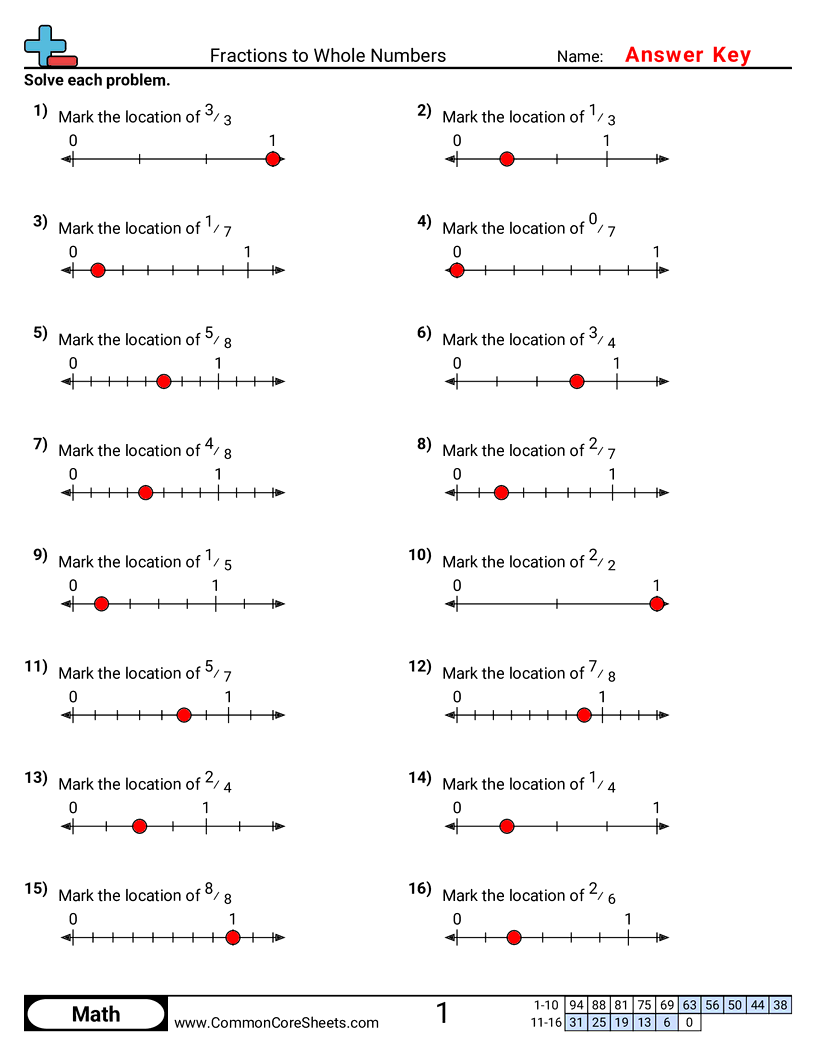
"This worksheet is designed to enhance a child's understanding of converting fractions to whole numbers, helping to solidify their base in math. Containing 16 diverse fraction problems, it allows students to visualize numbers and conceptualize fractions. This versatile tool can be customized to suit any learner's needs, converted into flashcards for interactive learning or adopted in long-distance learning scenarios. The perfect adjunct to any math curriculum, empowering smarter and efficient learning."
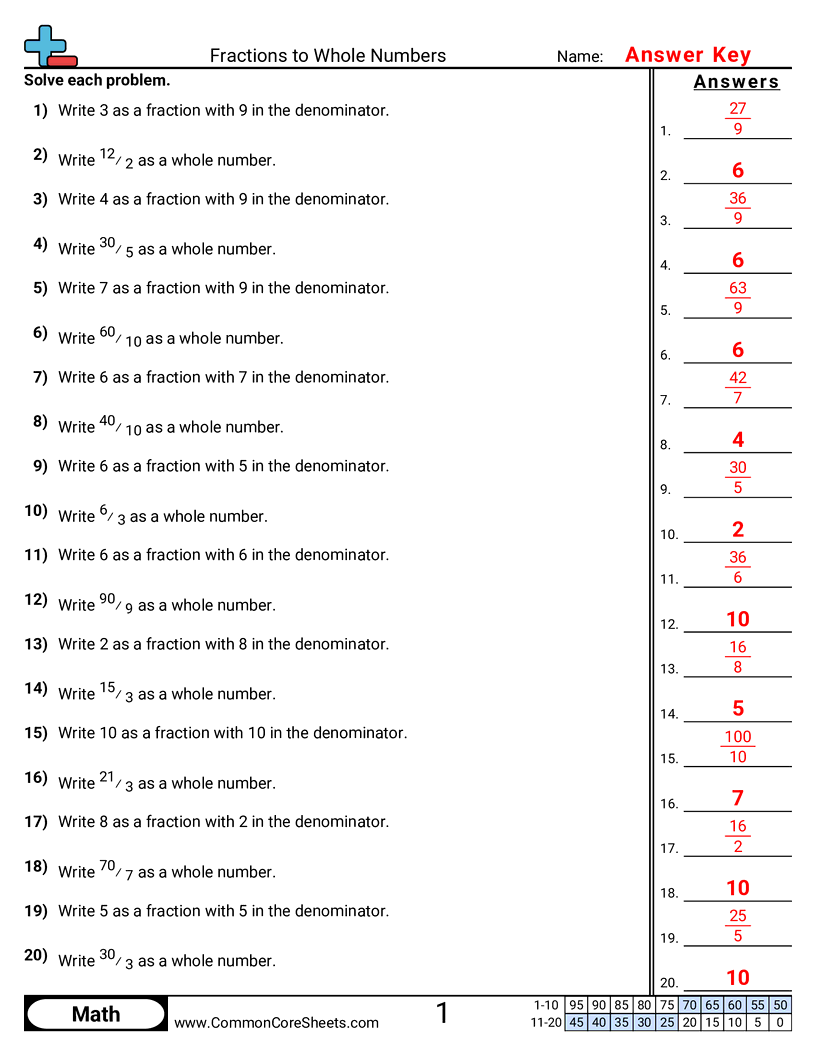
×Student Goals: Understanding of FractionsAfter completing this worksheet, students should have a strengthened comprehension of fractions as expressions of whole numbers. They would gain the ability to recognize and mark fractions on a numerical scale, understand their relative proportions, and visualize their equivalence to certain whole numbers. This solidifies their fundamental grasp on the concept of fractions, laying the groundwork for more complex mathematical computations.Ability to Convert Fractions to Whole NumbersStudents will develop the skill to convert fractions into whole numbers. They will learn that when the numerator and the denominator of a fraction are the same, the fraction amounts to the whole number one. This skill will be integral to their progression within the subject of math as they progress to more complex topics, like algebra.Mathematical ReasoningBy working through the problems on this worksheet, students will enhance their mathematical reasoning skills. They will make logical deductions to decipher the location of fractions along a number line, thus building their aptitude in quantifying fractions of a whole. Their ability to think critically, reason logically, and make accurate mathematical judgments will be greatly improved.Competence in Numerical RepresentationThis worksheet will train students to efficiently translate numerical data into visual formats. They will mark the location of various fractions on a number line, thereby converting abstract numbers into concrete, visual representation. This not only helps in enhancing their comprehension but also promotes their skills in data representation, an important competency in various academic and professional fields.Confidence in Handling FractionsLastly, by successfully completing this worksheet, students will have gained the necessary confidence to approach fraction-based problems. Fear or hesitation towards fractions is a common phenomenon among young learners. However, with practice and subsequent mastery of the topic, this anxiety can be mitigated. By building their knowledge and understanding, this worksheet will help foster the students' confidence, influencing not just their performance on future worksheets and exams, but also their enthusiasm towards learning.