3nf1×Description:
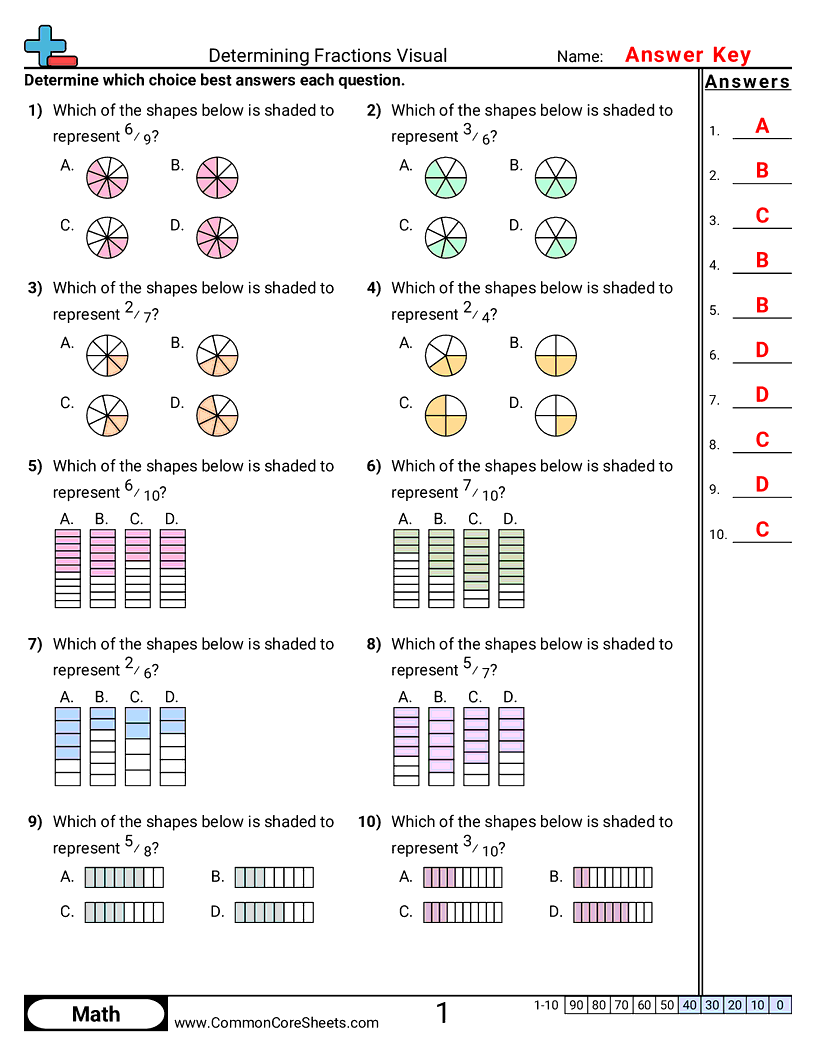
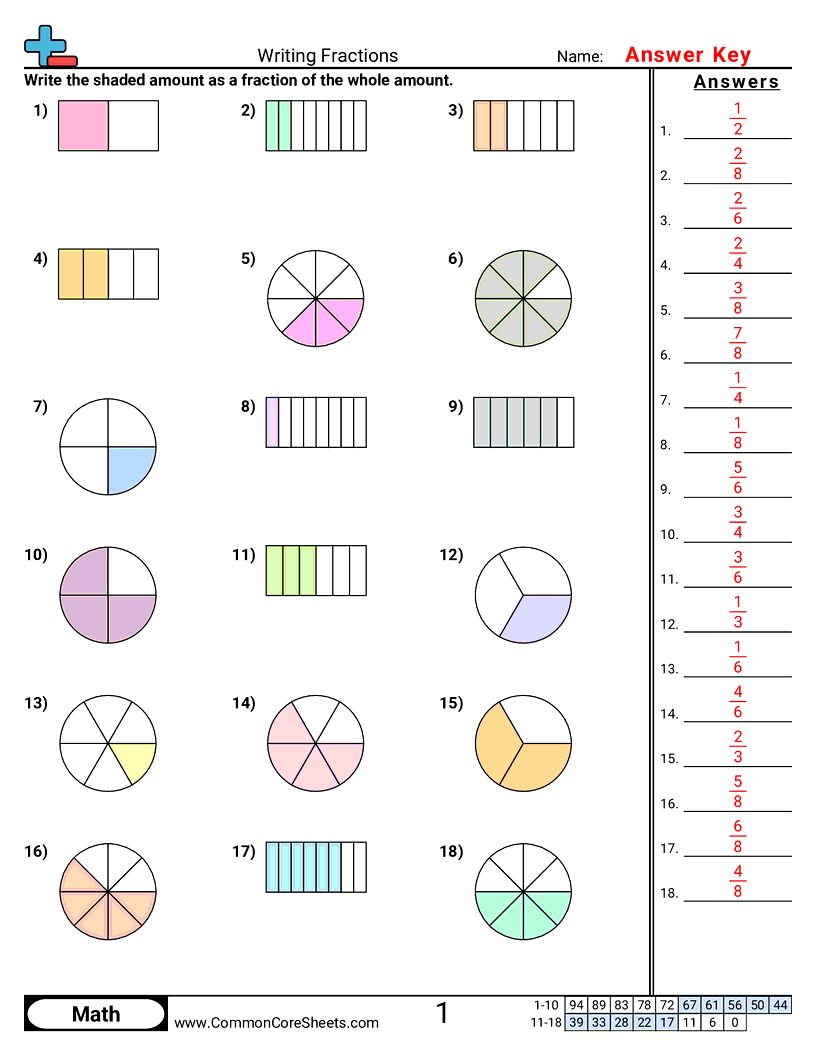
"This worksheet is designed to teach children about fractions through visualization. With ten interactive problems, students are asked to identify the shape that correctly represents certain fractions. Every problem can be customized to meet individual learning needs. Notably, its dynamic nature makes it suitable for use in distance learning, and each problem can also be transformed into fascinating flashcards."
×Student Goals: Conceptual Understanding of FractionsUpon the completion of this worksheet, students should have a firm understanding of fractions - the basic concept and how they represent parts of a whole. They will be able to identify and determine fractions in a visual and intuitive manner, strengthening their grasp on the subject.Mastery in Fraction VisualizationStudents will master the technique of visualizing fractions as part of a shape. They will be confident in identifying which part of a shape represents certain fractions. This skill significantly helps in comprehending more complex mathematical problems as they progress in their coursework.Problem-Solving AbilityBy solving a variety of fraction problems, students sharpen their problem-solving abilities, critical thinking, and analytical skills. They should be able to apply these skills not only to similar math problems but to real-life situations as well, demonstrating a practical understanding of fractions.Comparison of FractionsAfter completing the worksheet, students will be able to compare different fractions visually. This skill makes it easier for them to grasp the concept of fraction equivalency, simplification, and comparison - foundational skills in further mathematical education.Fosters Independent LearningThis self-guided exercise bolsters independent learning. The confidence earned from successfully solving the problems promotes self-reliance in their learning journey, fostering a willingness to tackle new, more demanding topics autonomously.Enhanced Numeracy SkillsWith each fraction problem, the pupil refines their numeracy skills. The ability to determine fractions visually aids cognitive development, enhances numeric literacy, and lays a formidable foundation for more complex mathematical computations.