×Description:
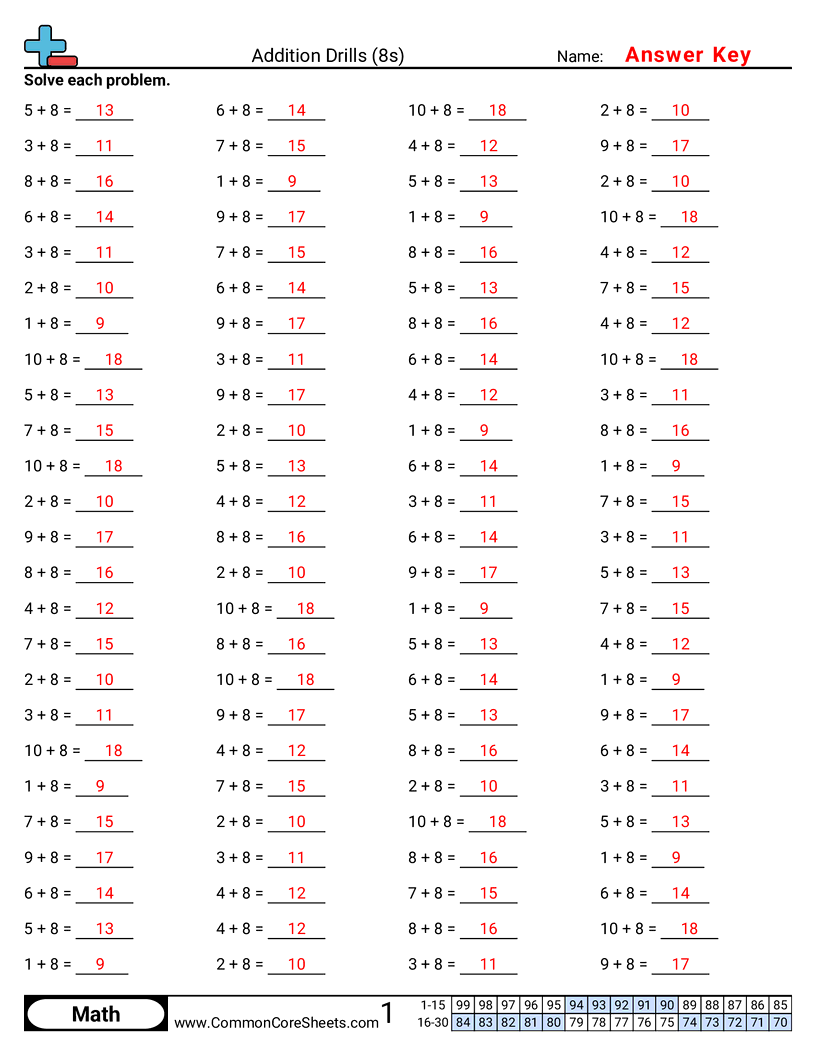
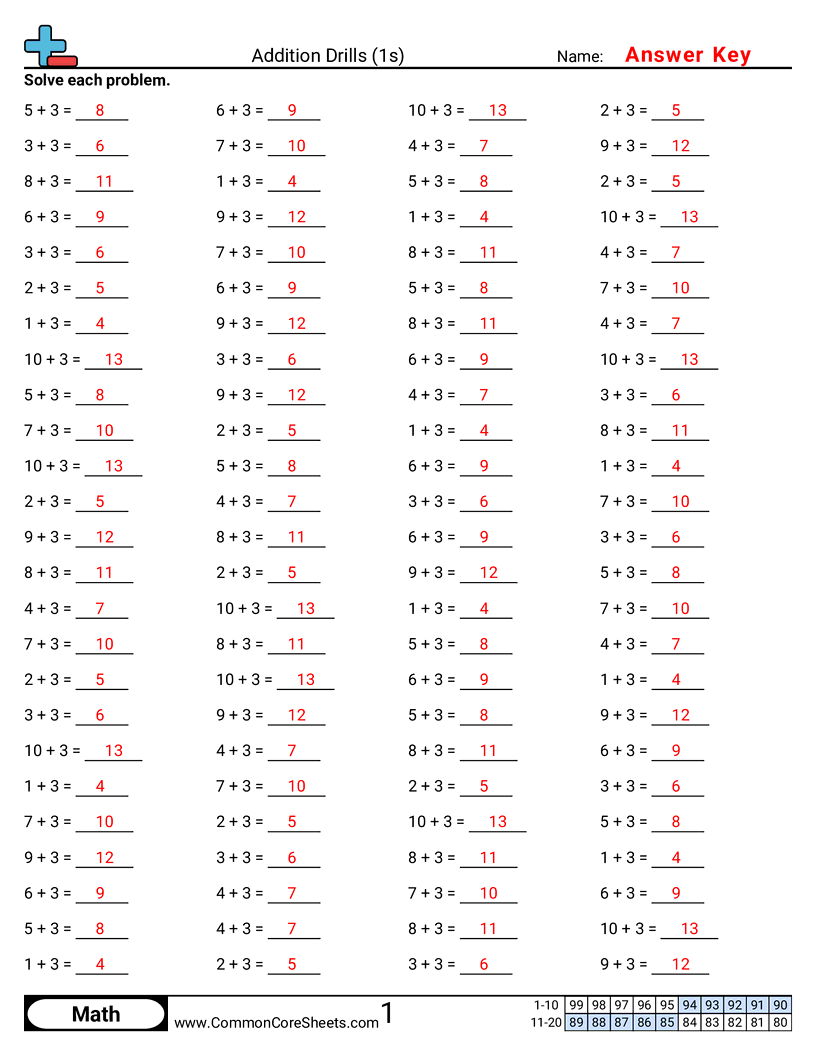
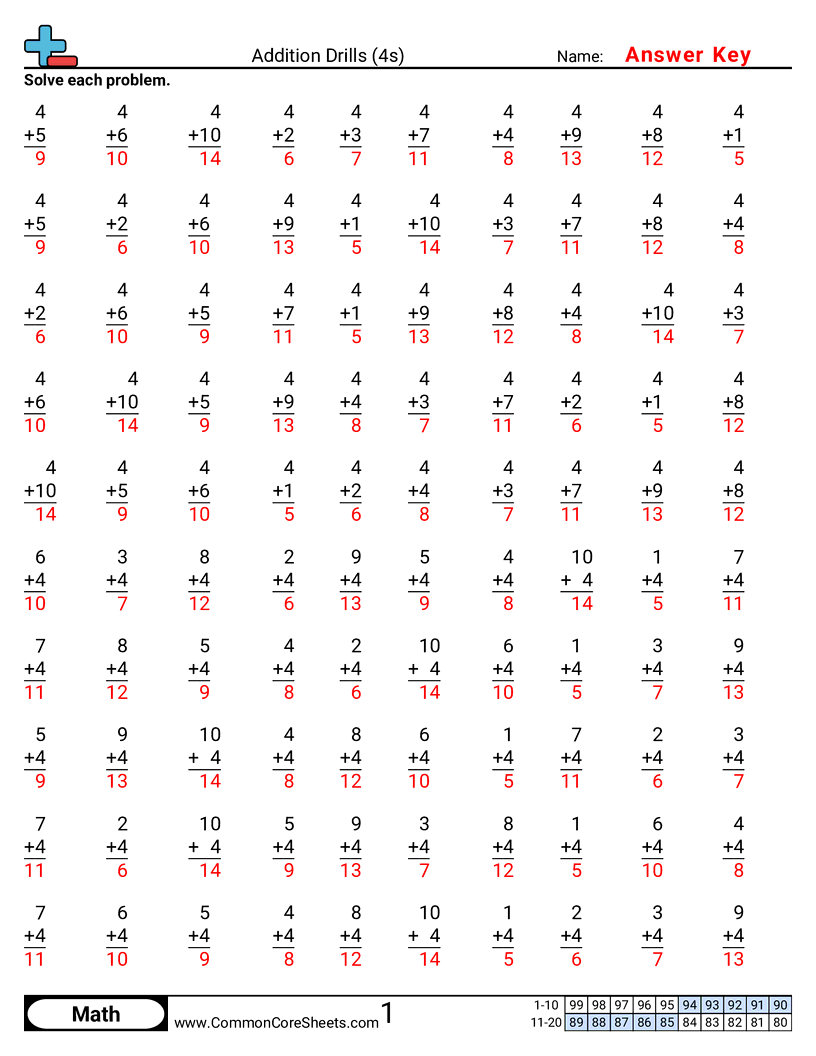
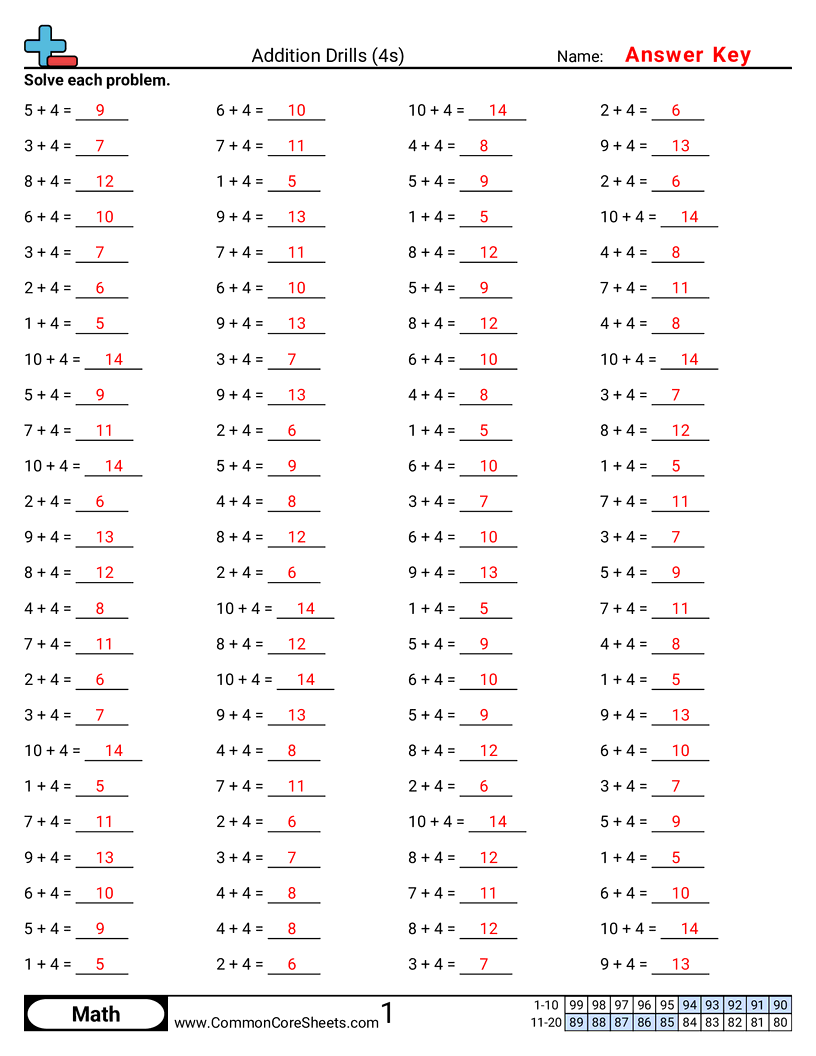
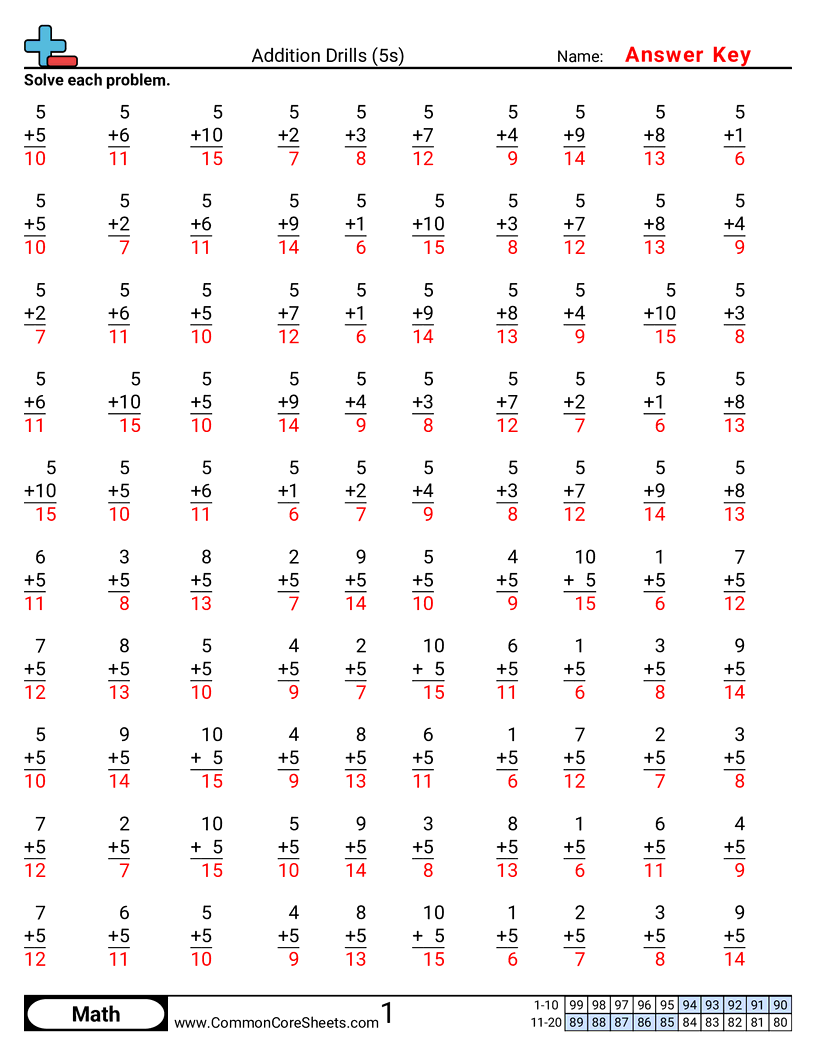
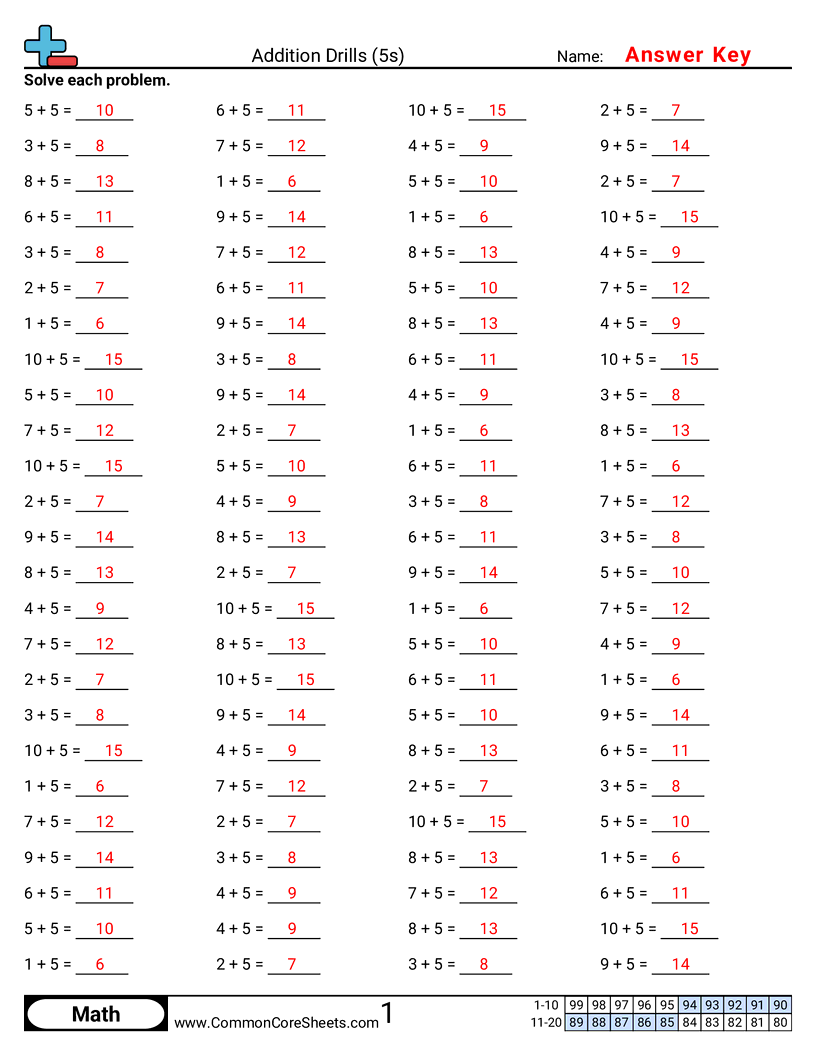
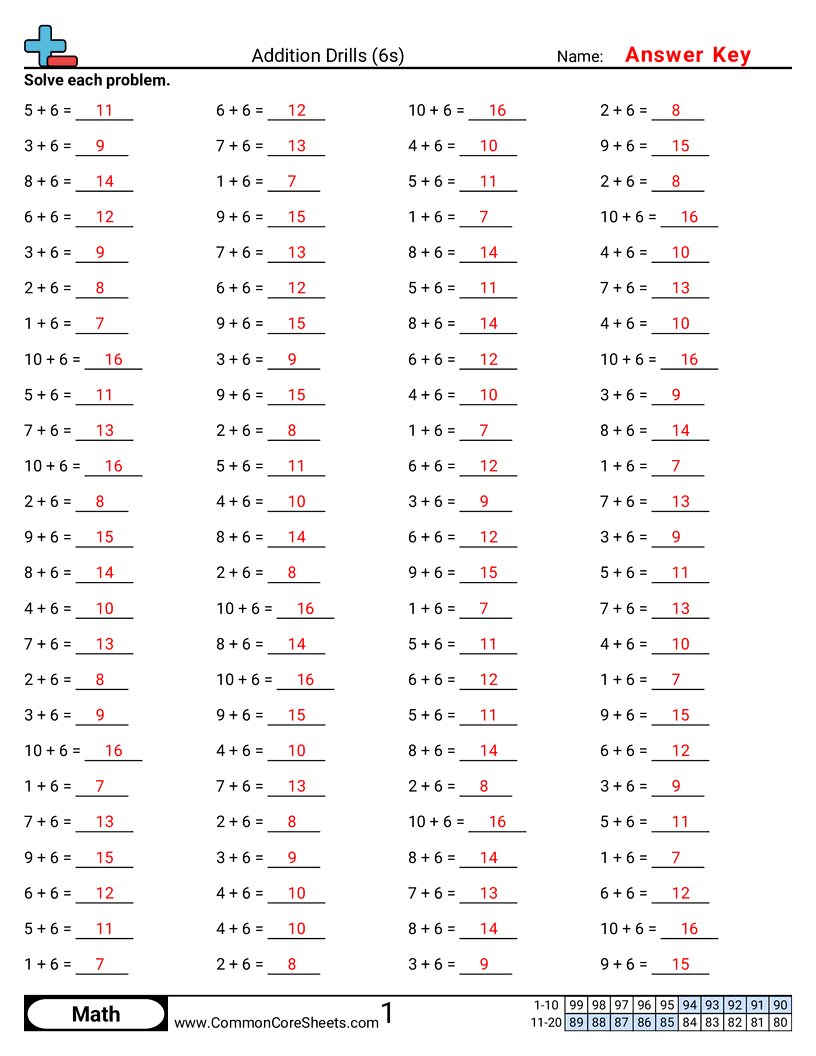
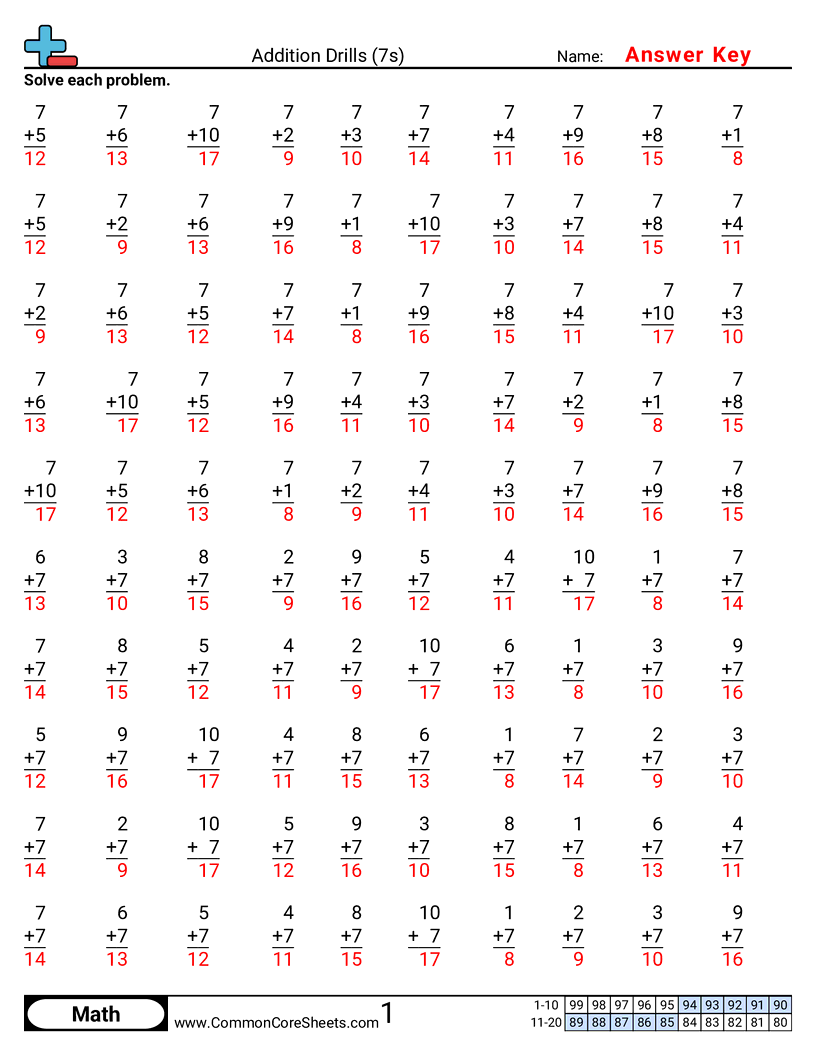
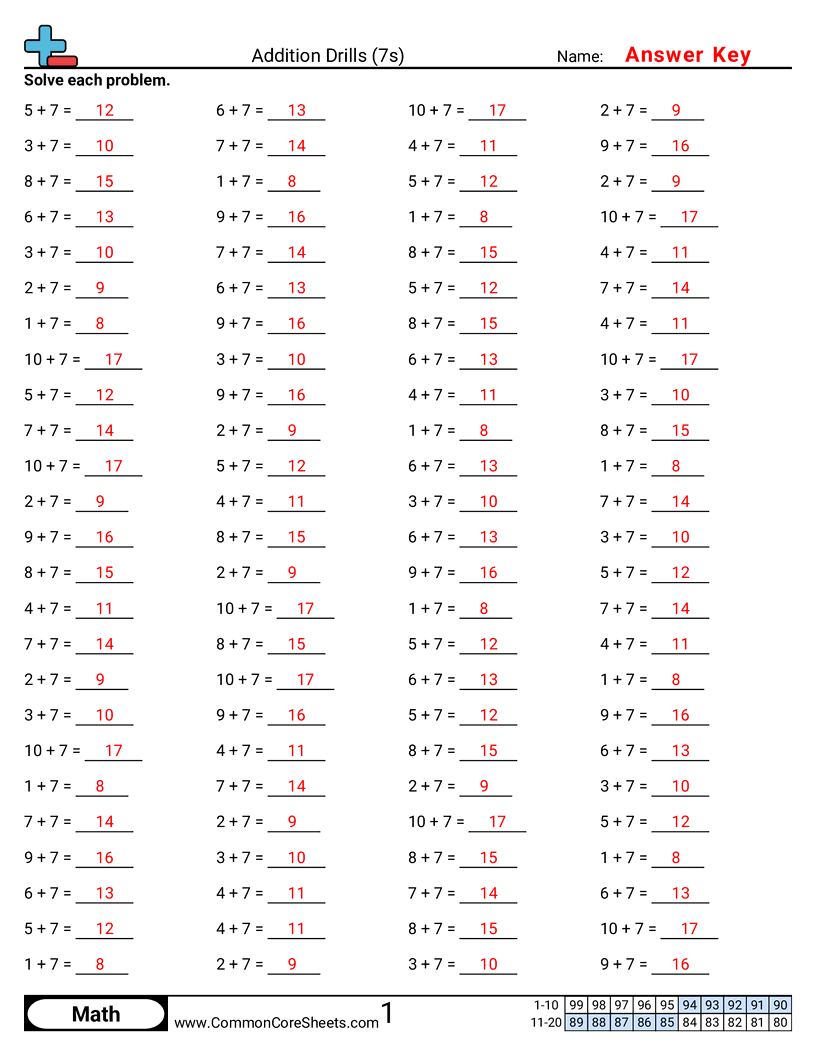
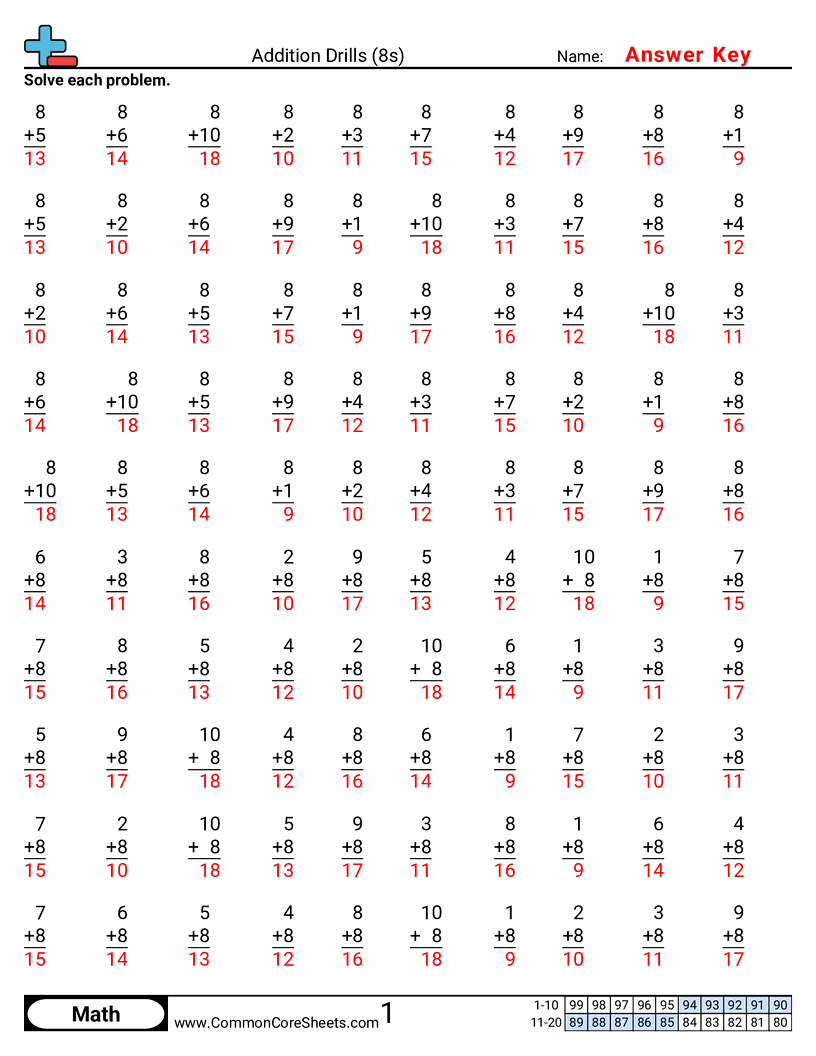
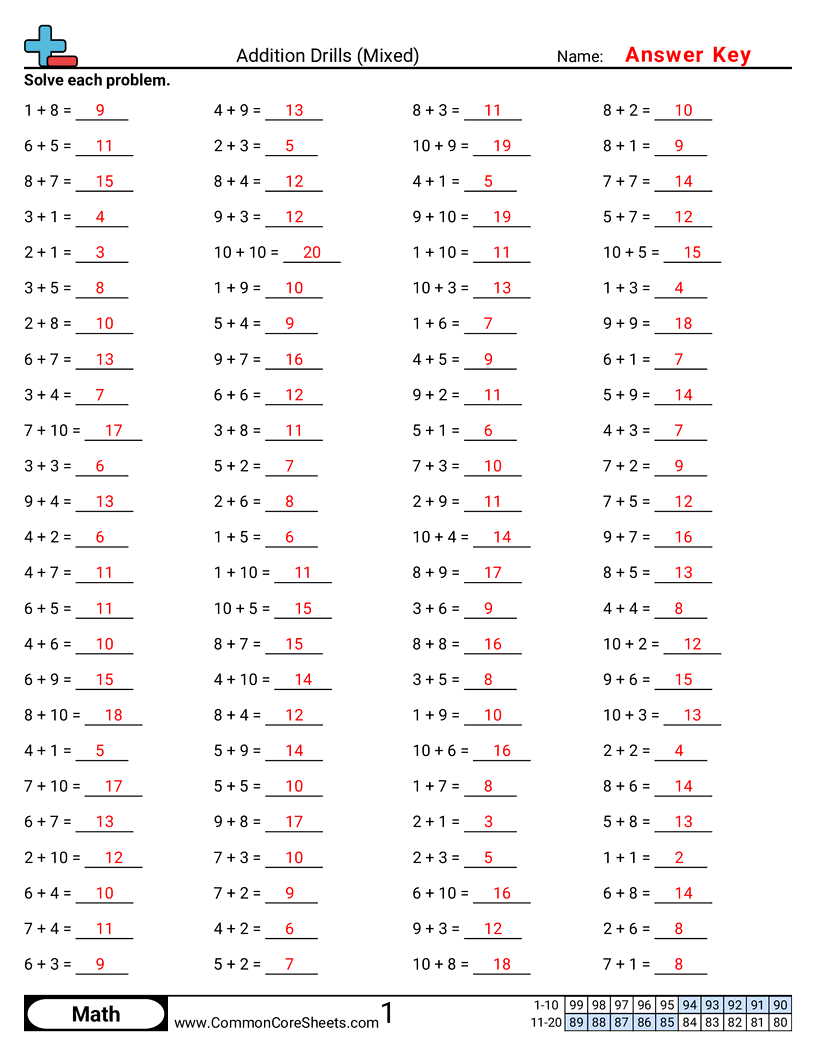
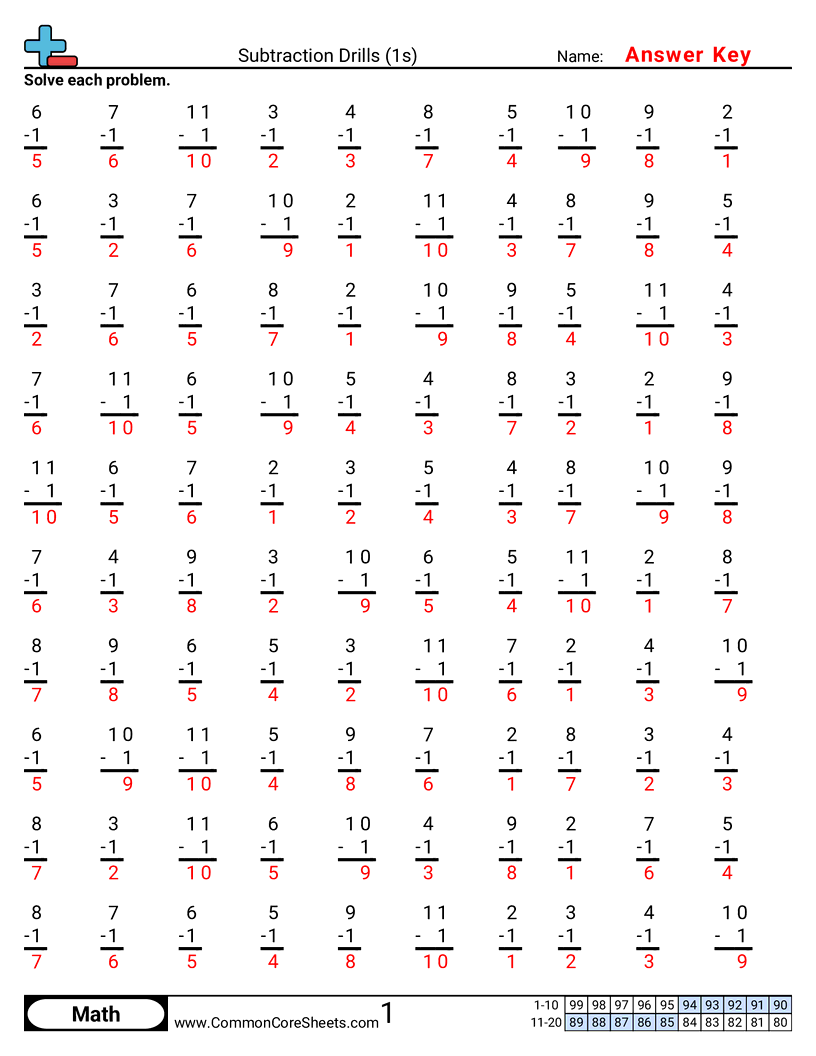
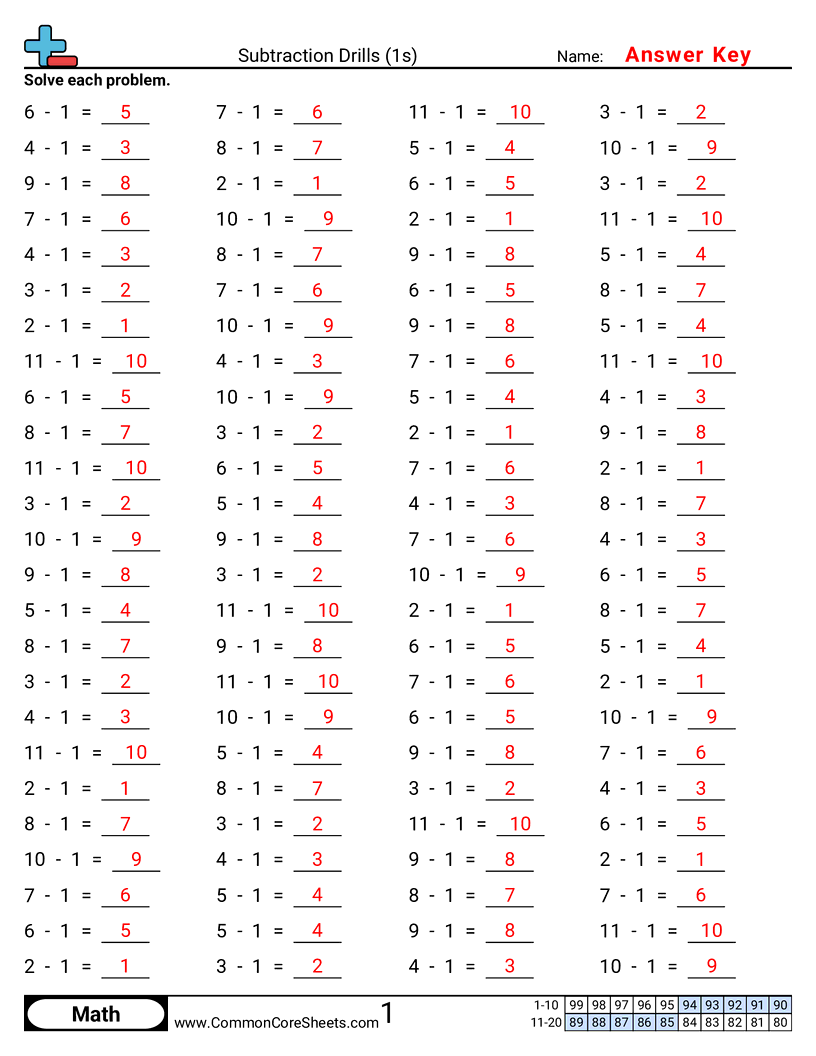
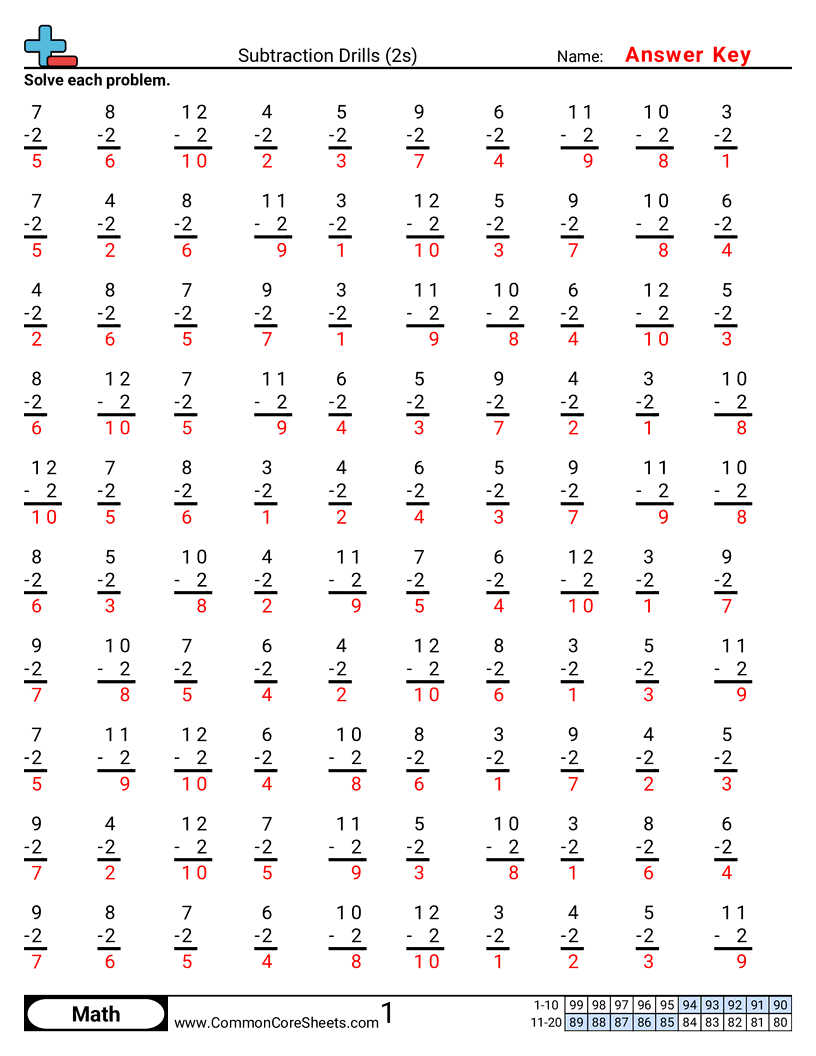
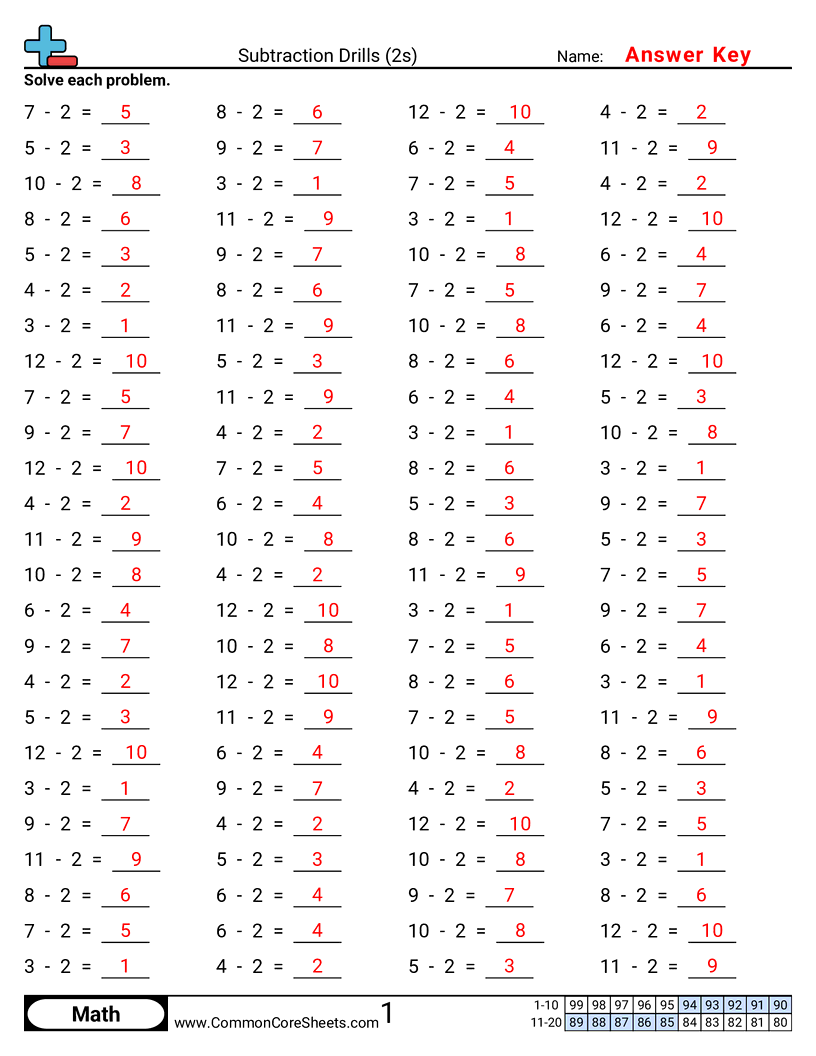
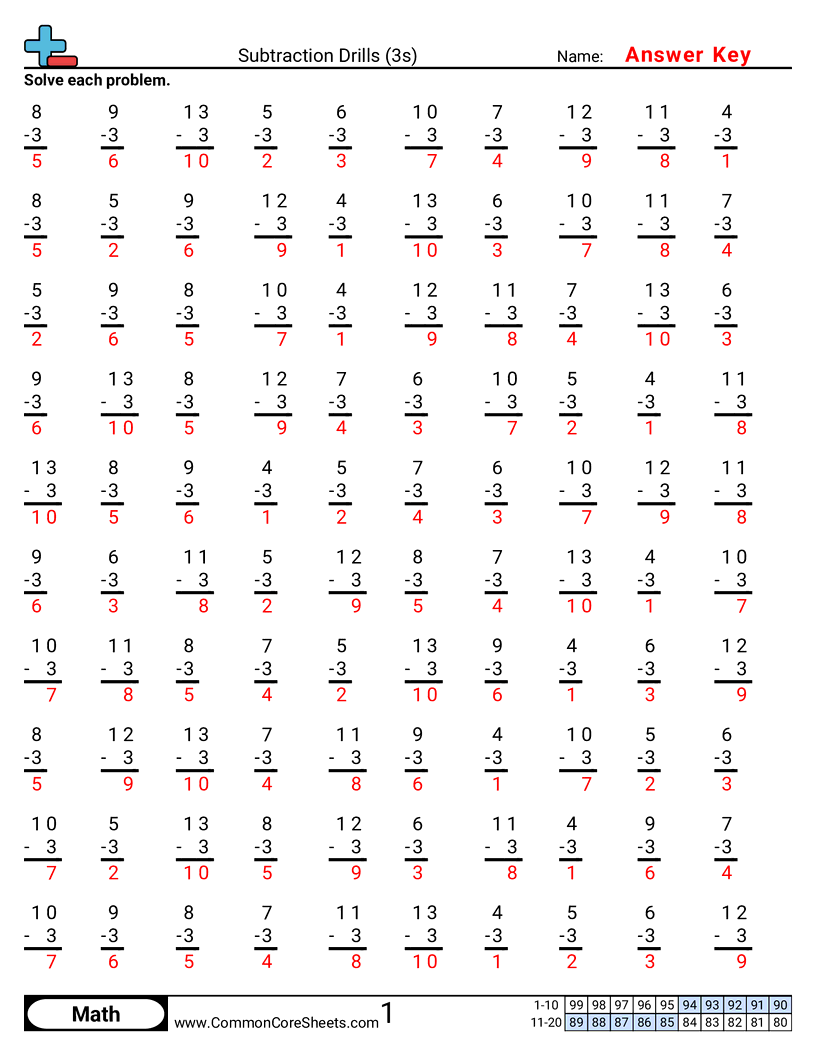
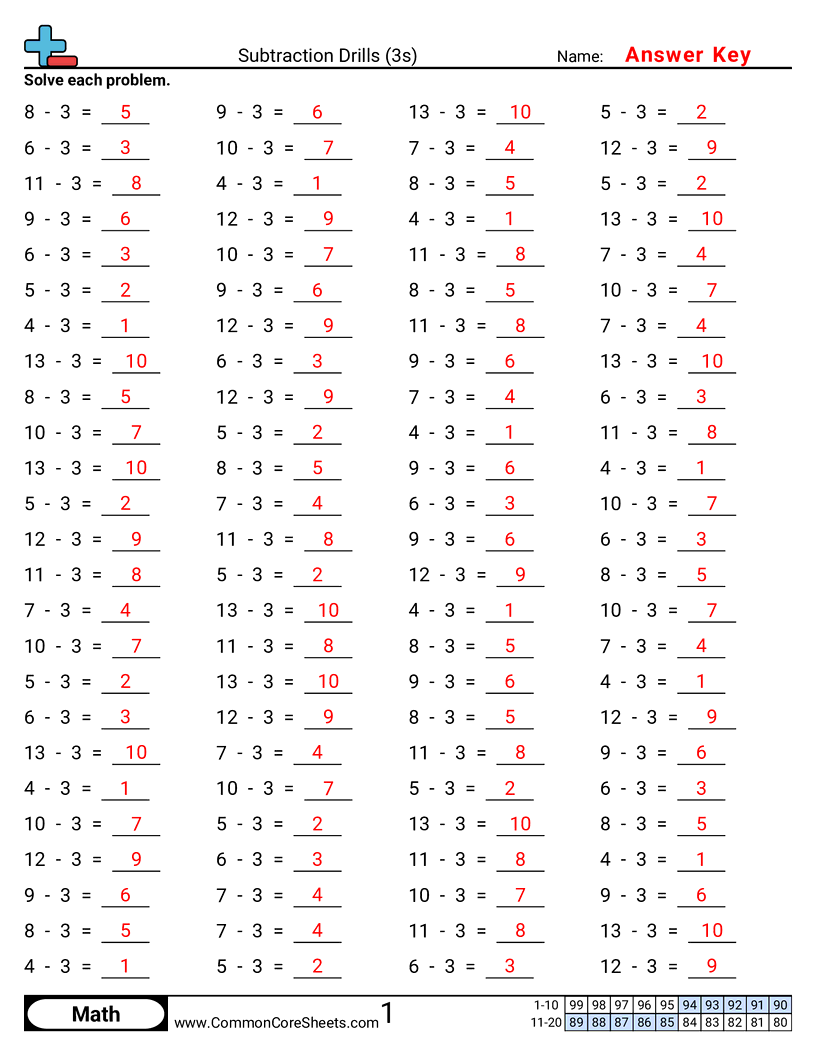
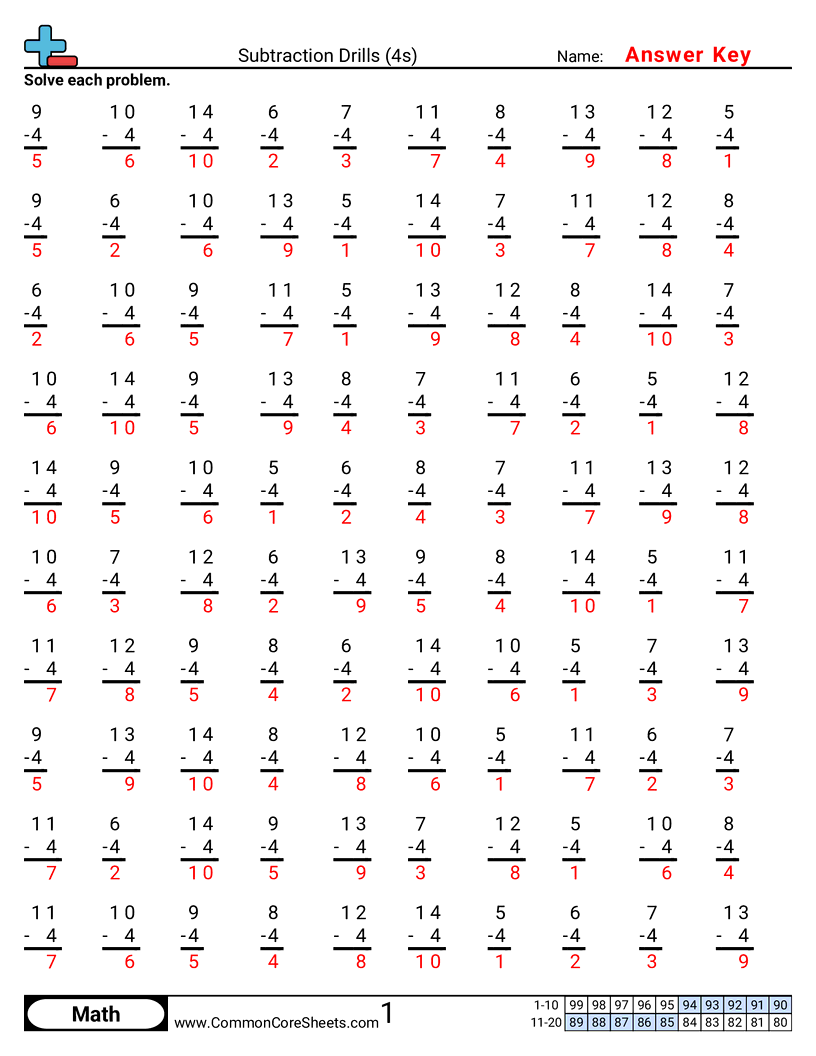
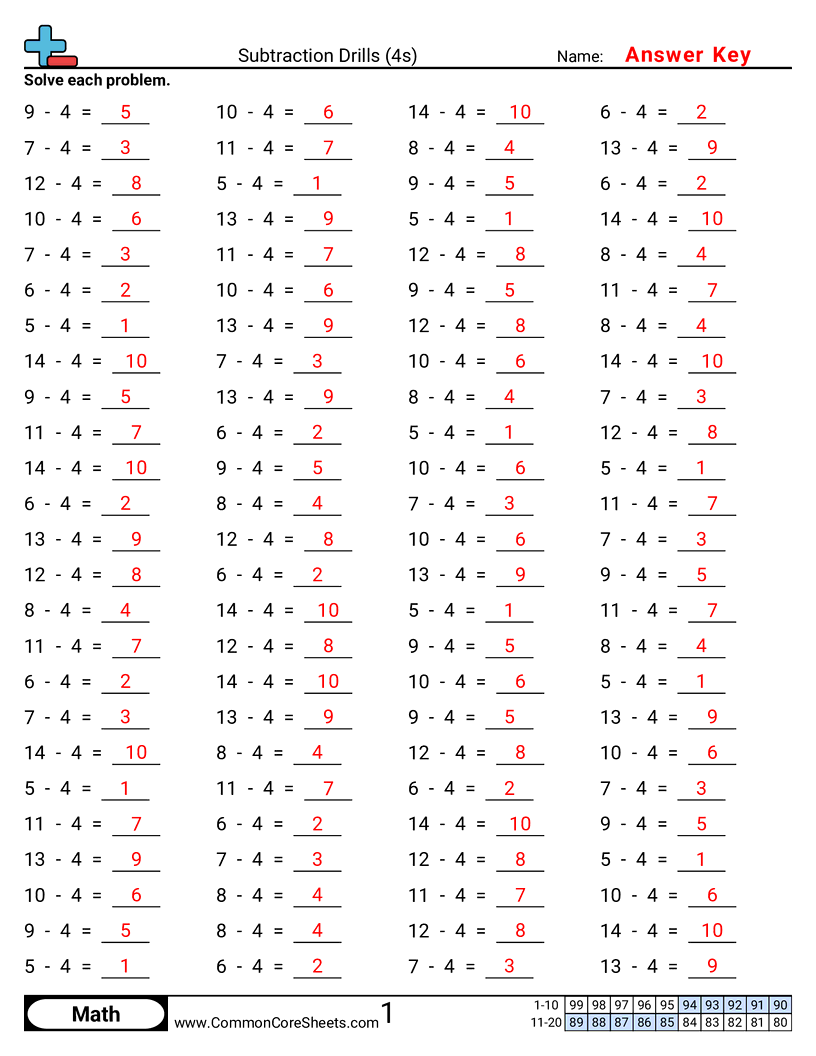
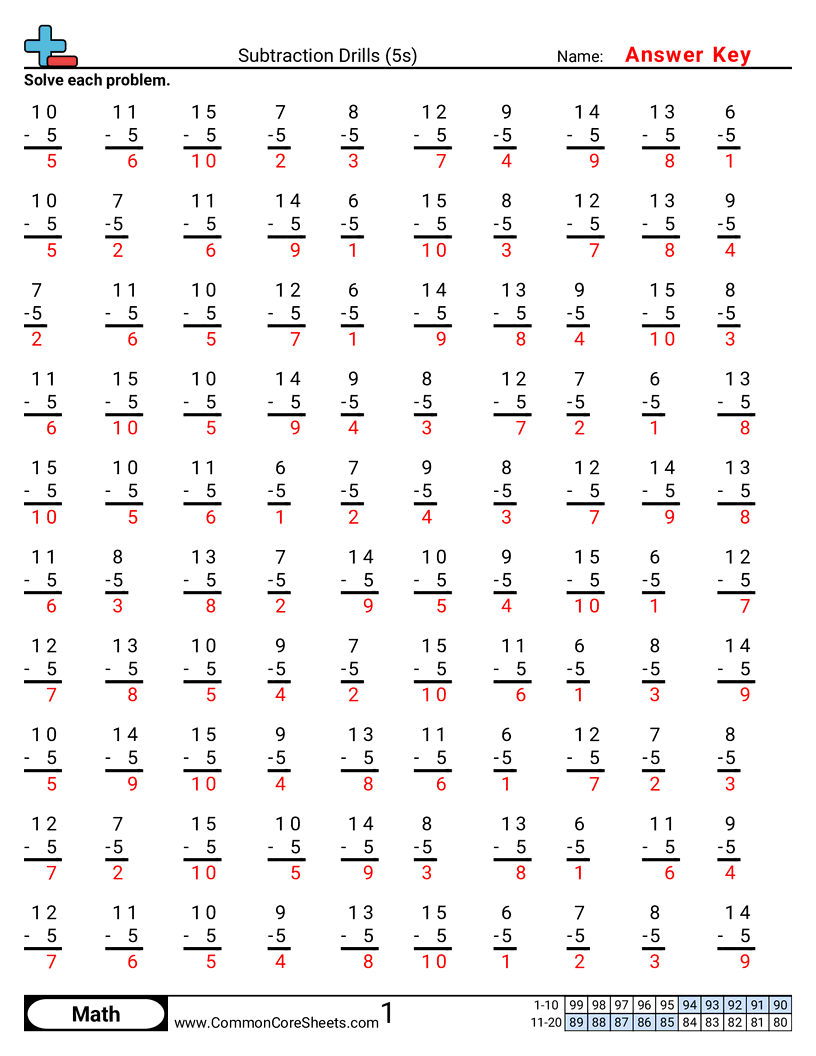
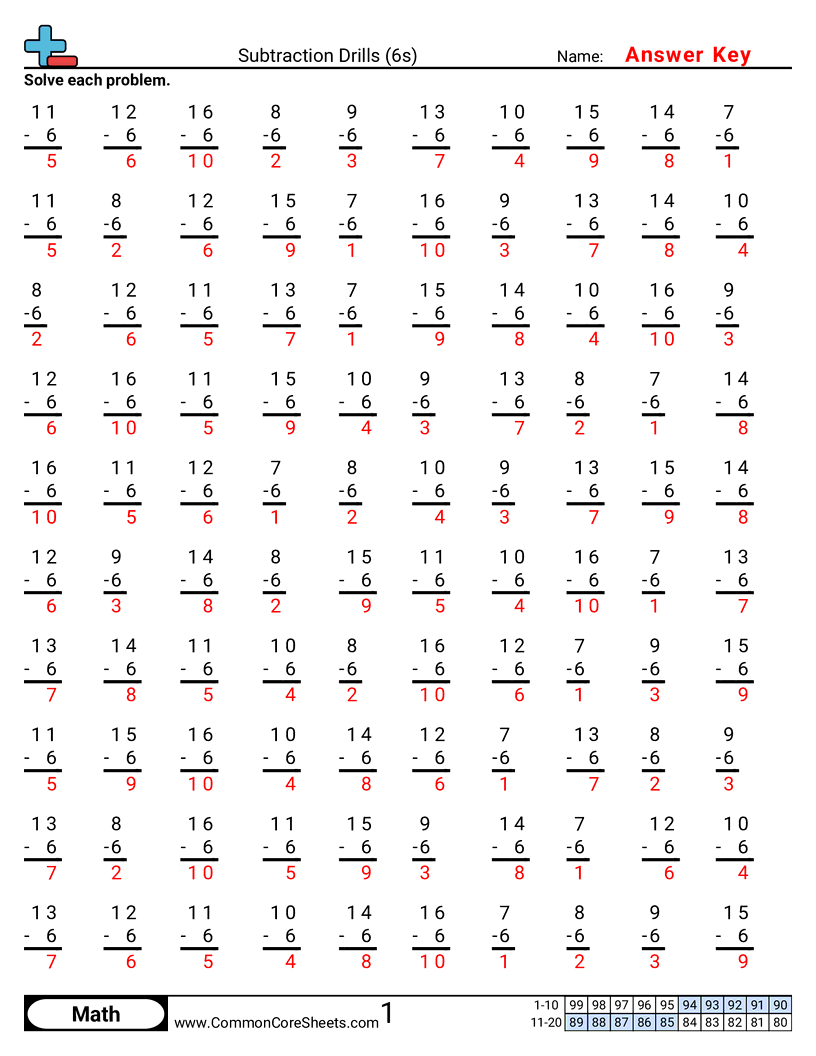
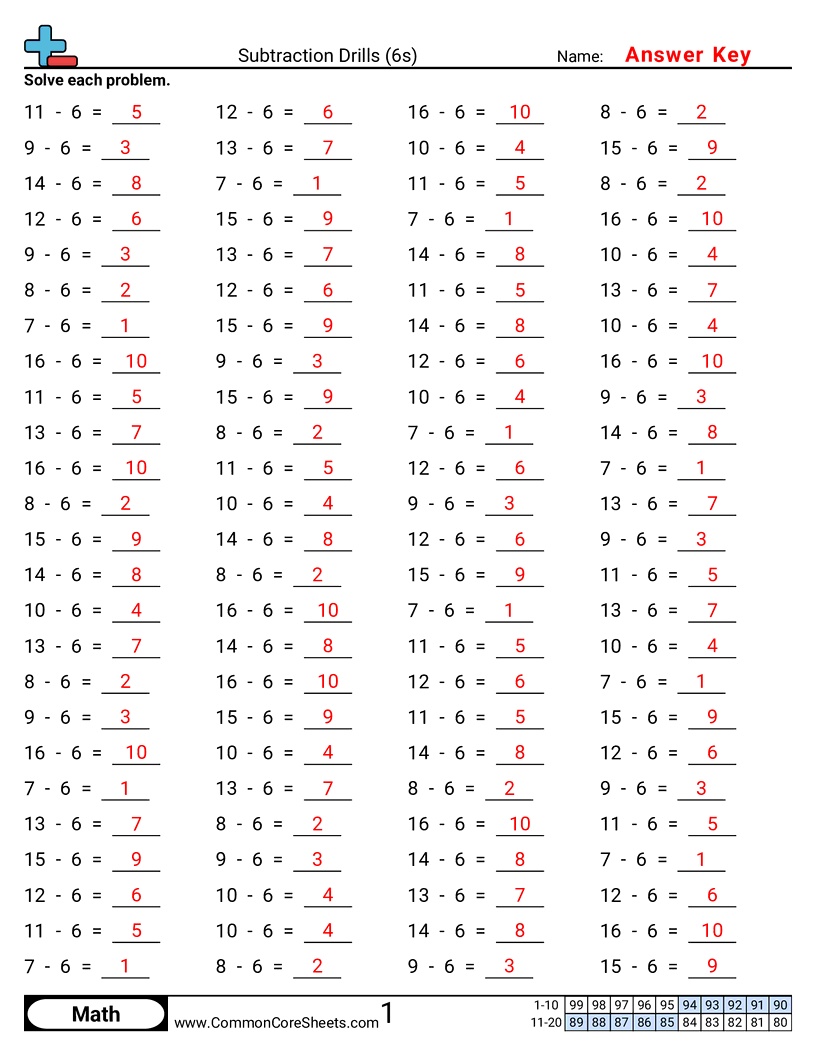
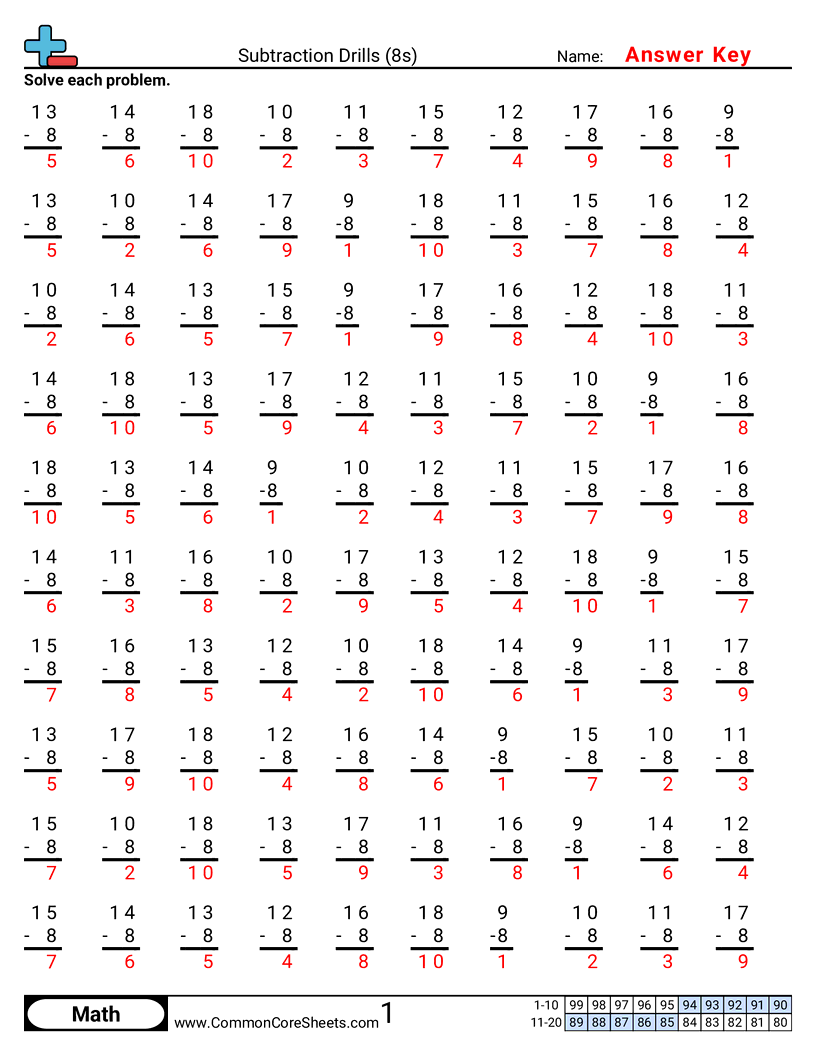
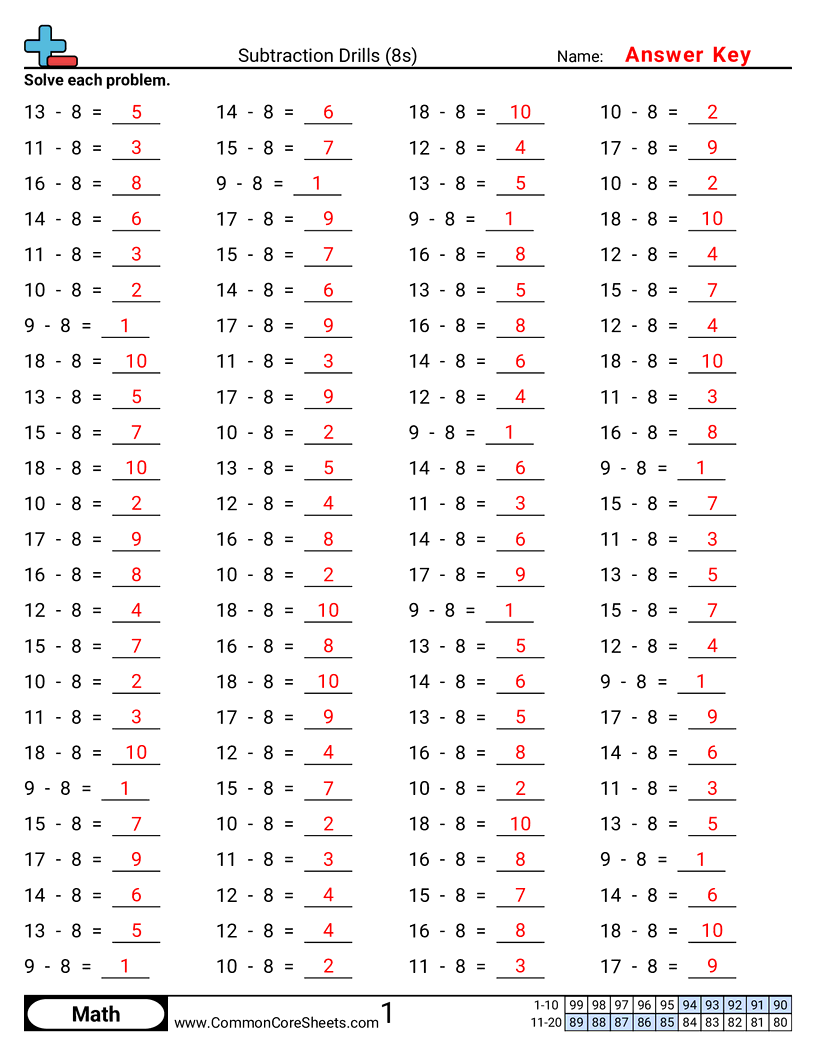
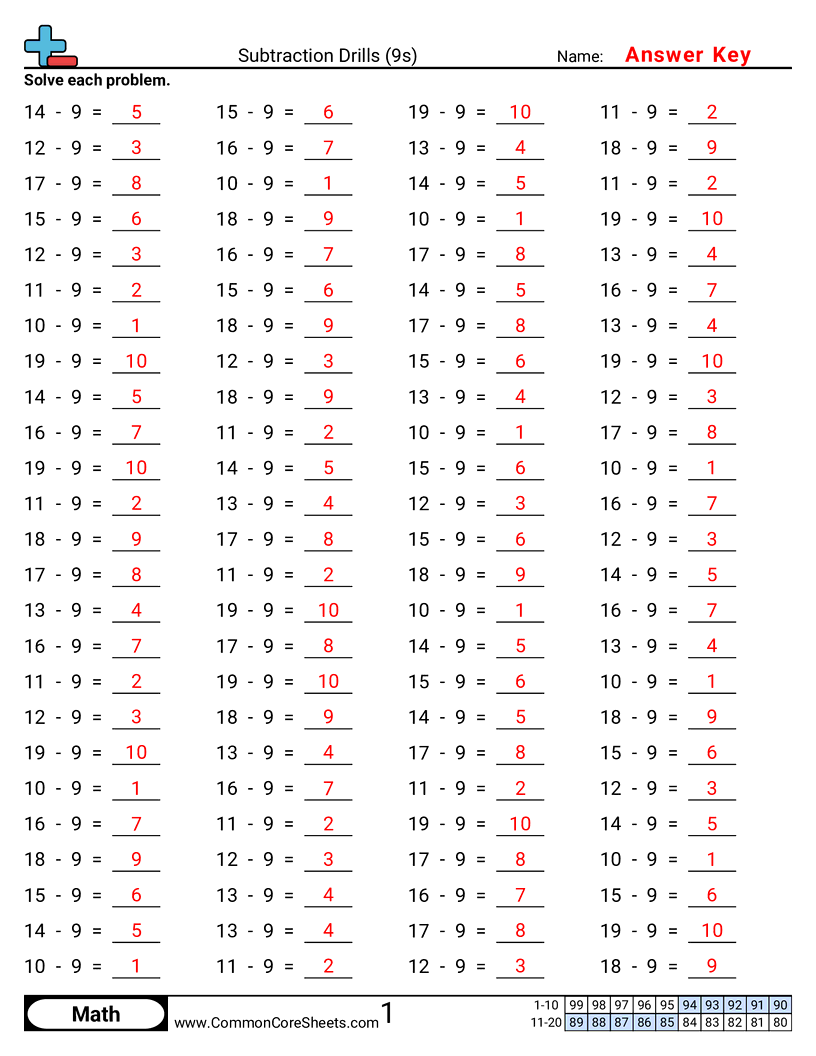
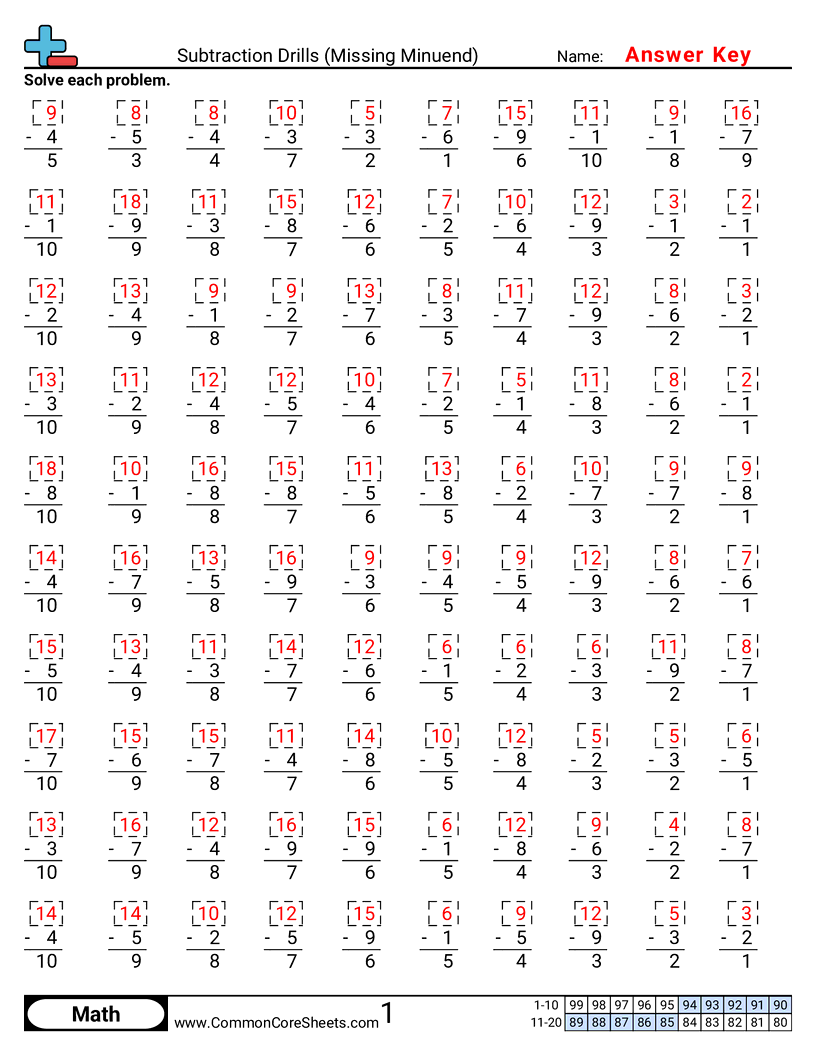
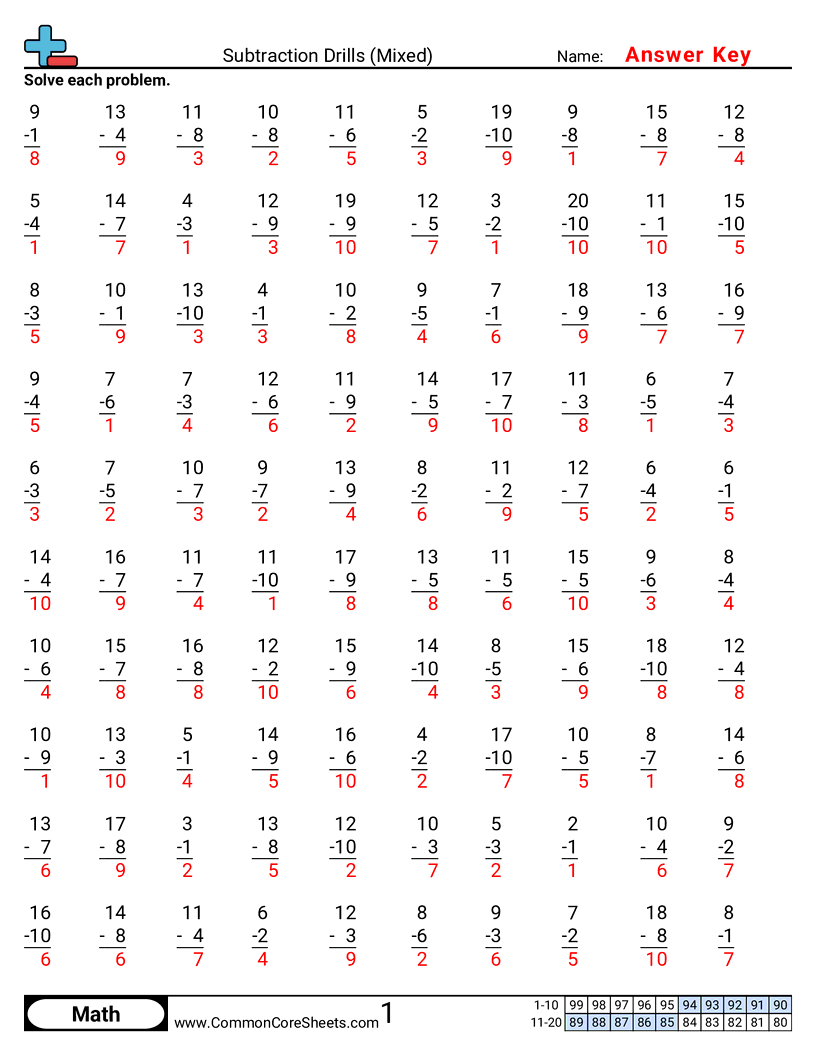
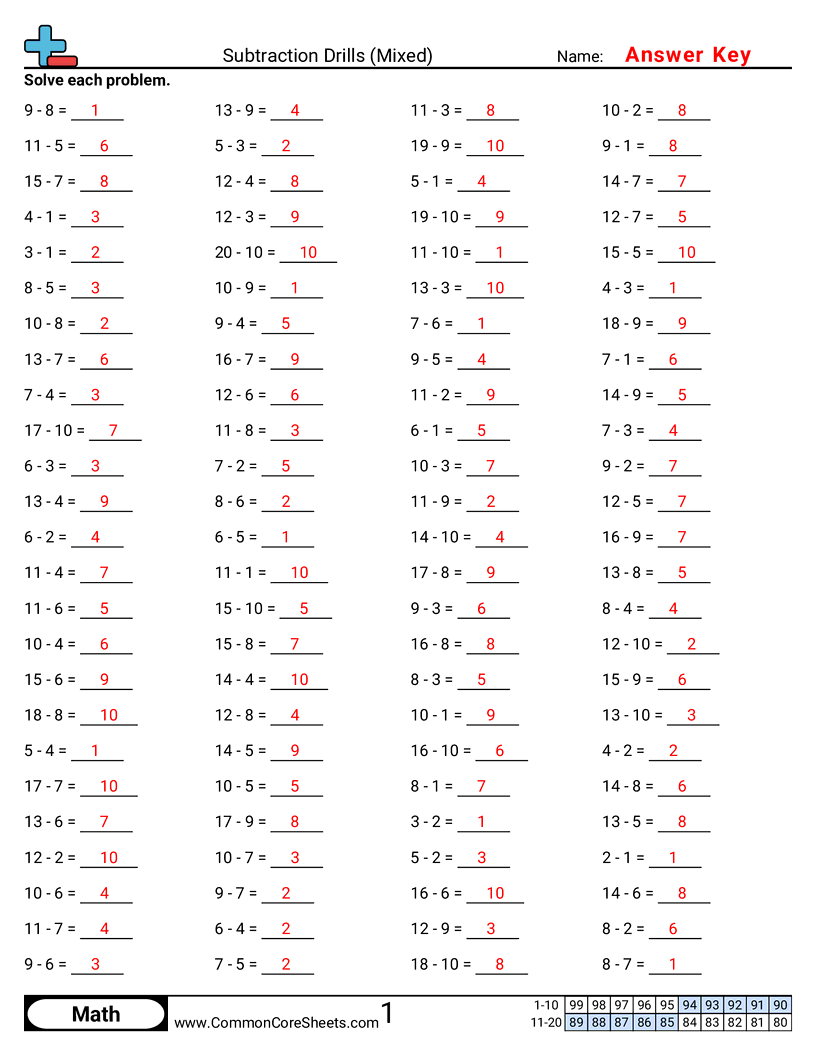
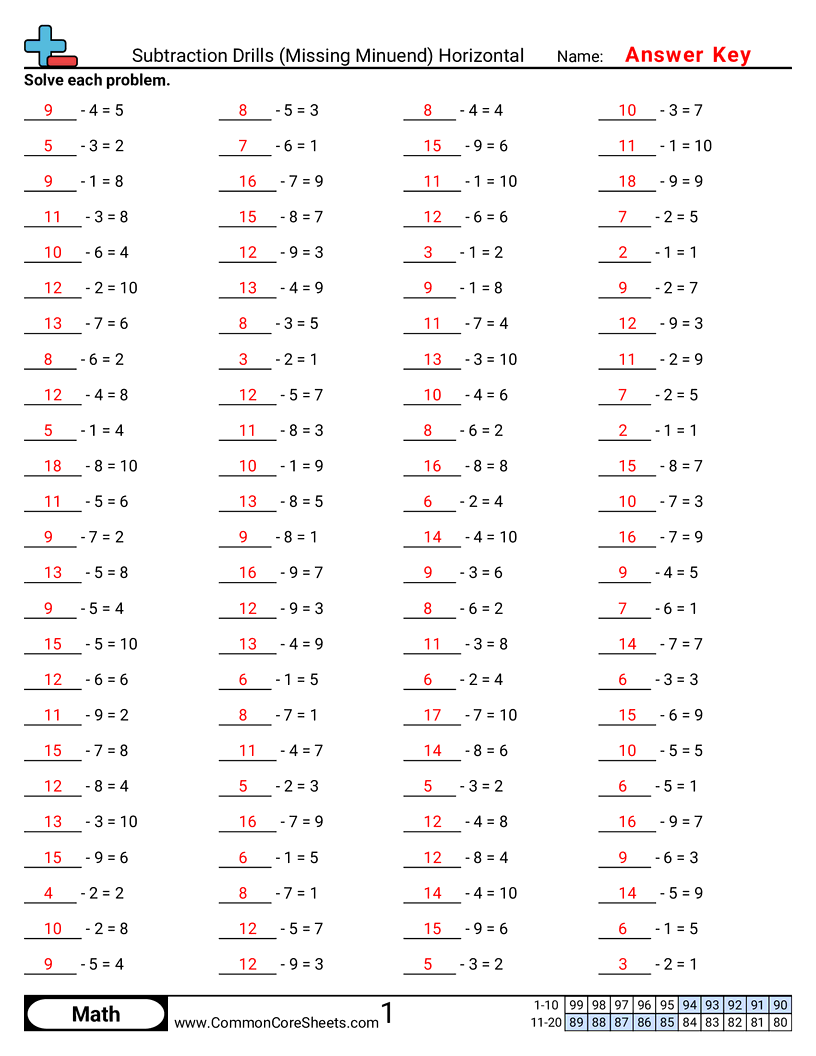
"This worksheet is designed to improve math skills with a focus on addition using the number 8. It contains 100 problems, providing plentiful practice for mastering the concept. This worksheet is flexible; customize to match learning pace, convert it into flashcards for engaging study sessions, or integrate into distance learning. Ideal for fostering numeracy skills in a dynamic way."
×Student Goals: Master Basic AdditionAfter completing the worksheet, students should have significantly improved their foundational addition skills. They should be able to confidently comprehend and execute addition problems, particularly those involving the digit 8. This strengthens their overall basic number sense and computational fluency.Develop Mental Math SkillsThe completion of the worksheet fosters the development of mental math skills. This will provide them with the ability to add numbers swiftly without the aid of a calculator or other tools. This also reinforces the concept of quick recall, essential in enhancing responsiveness in solving math problems.Understand Number PatternsStudents should begin to notice and understand the patterns involved in adding 8 to other numbers. This insights into number patterns help students predict results and further understand mathematical relationships, further simplifying complex problems.Improve Problem-Solving SkillsBy successfully finishing the worksheet, students will not only learn how to solve given math problems accurately but also boost their overall problem-solving skills. It assists in cultivating a logical and methodical approach to tackling various kinds of problems.Enhance Concentration and PersistenceCompleting a large number of problems, such as those on the worksheet, will improve the student's mental stamina. They'll be able to concentrate for longer periods of time and continue working on tasks even when they're challenging.Boost Confidence and AchievementFinishing the worksheet can give students a sense of accomplishment, which boosts their confidence in their math skills. This confidence can encourage them to tackle more complex tasks in math. Ultimately, this sets the stage for future academic success, both in math and other subjects that require quantitative thinking.