×Description:
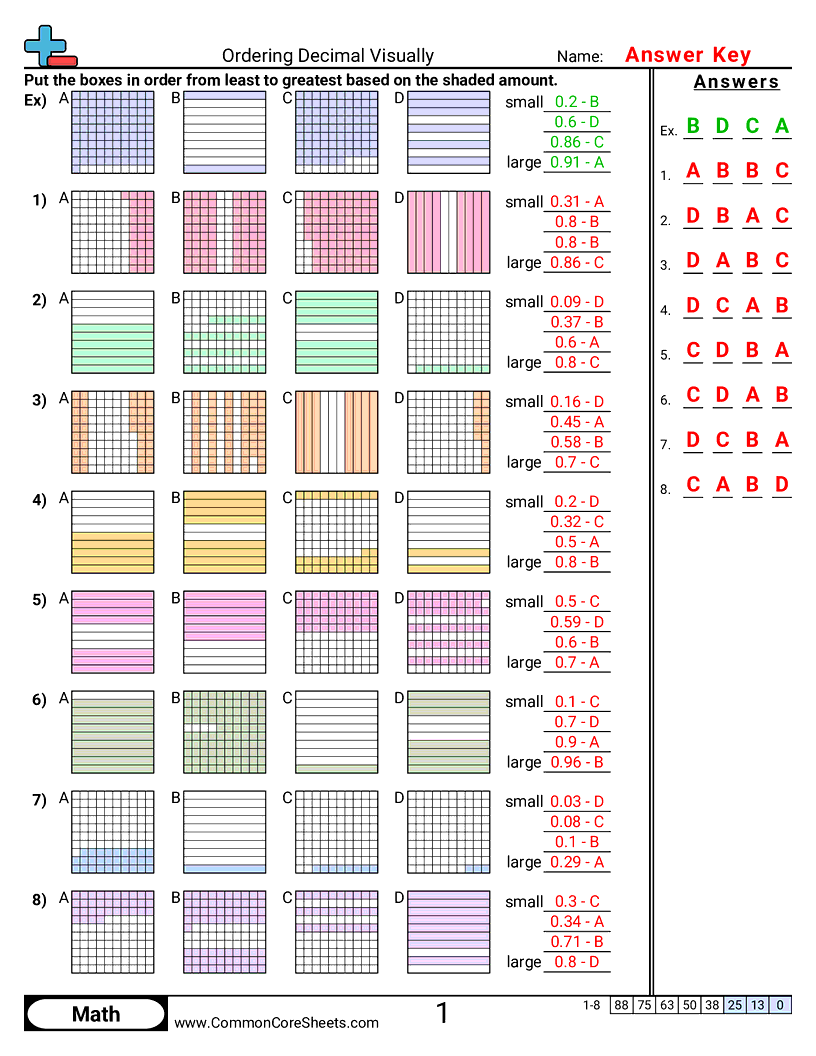
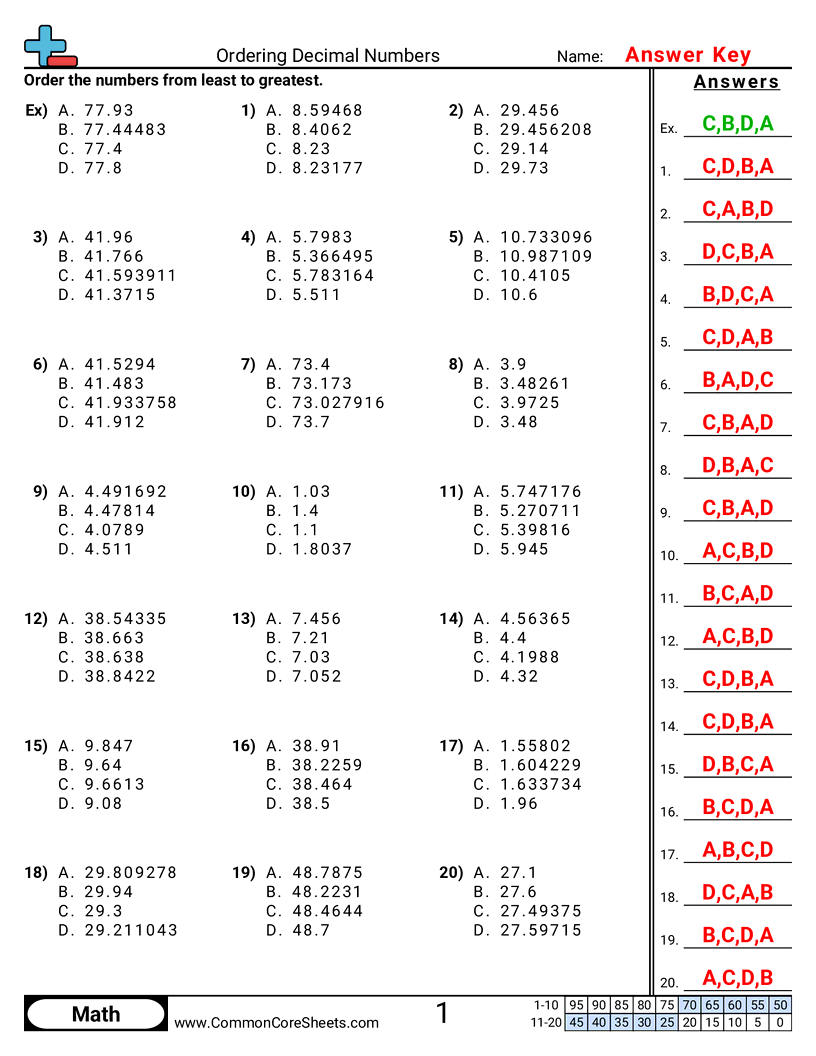
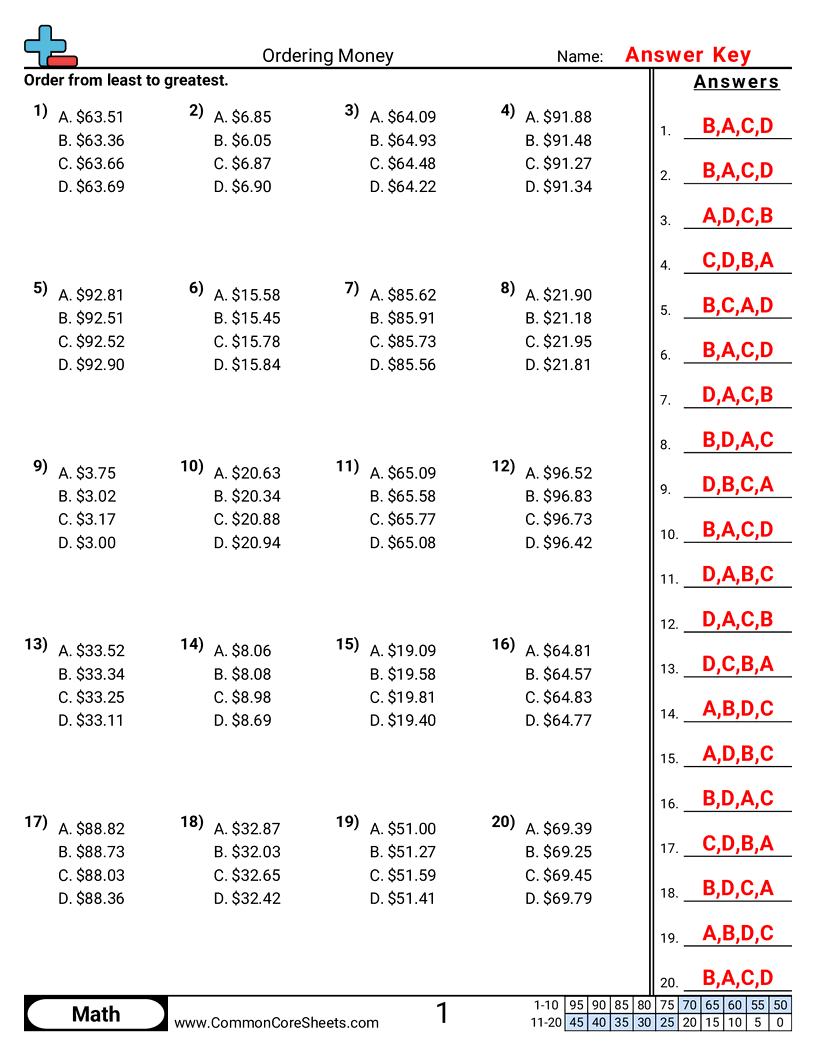
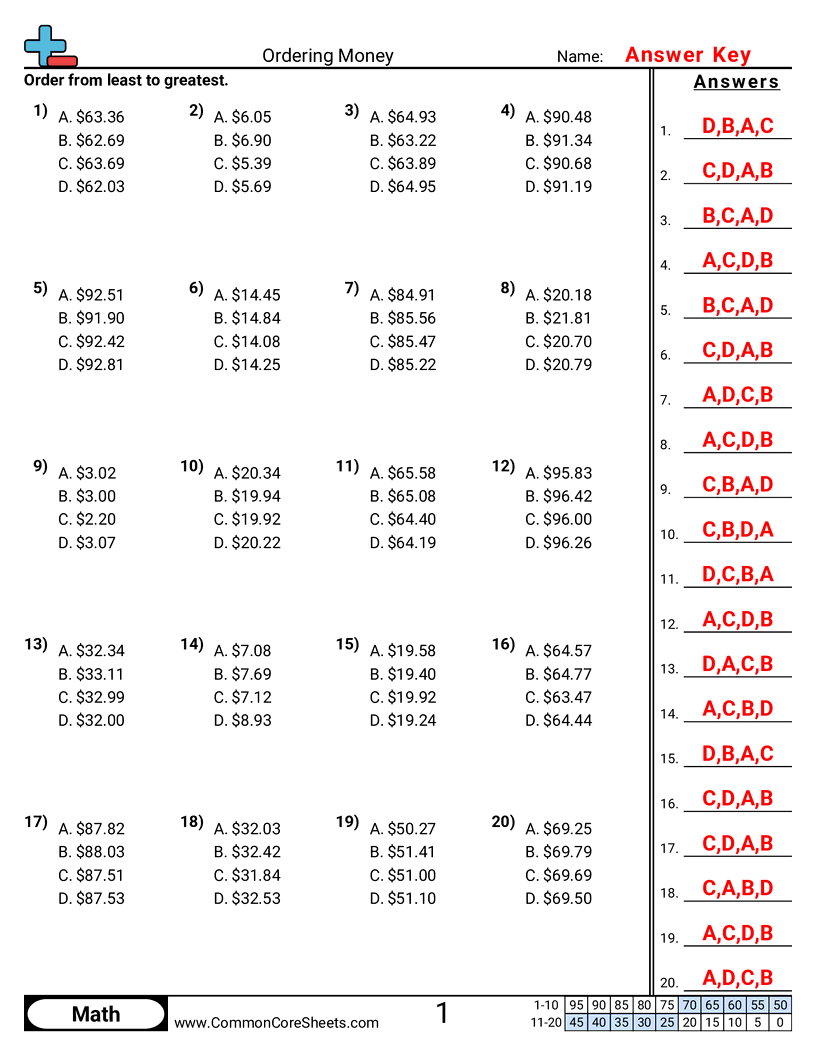
"This worksheet is designed to facilitate students' understanding of decimals and their order of magnitude. Through eight diverse problems, children are tasked with visually identifying and ordering decimals at small to large scales. The worksheet offers flexibility and adaptability by being customizable, while its content can also be transformed into flashcards or employed in a distance learning scenario. It's an engaging and interactive tool for mastering an integral aspect of Math."
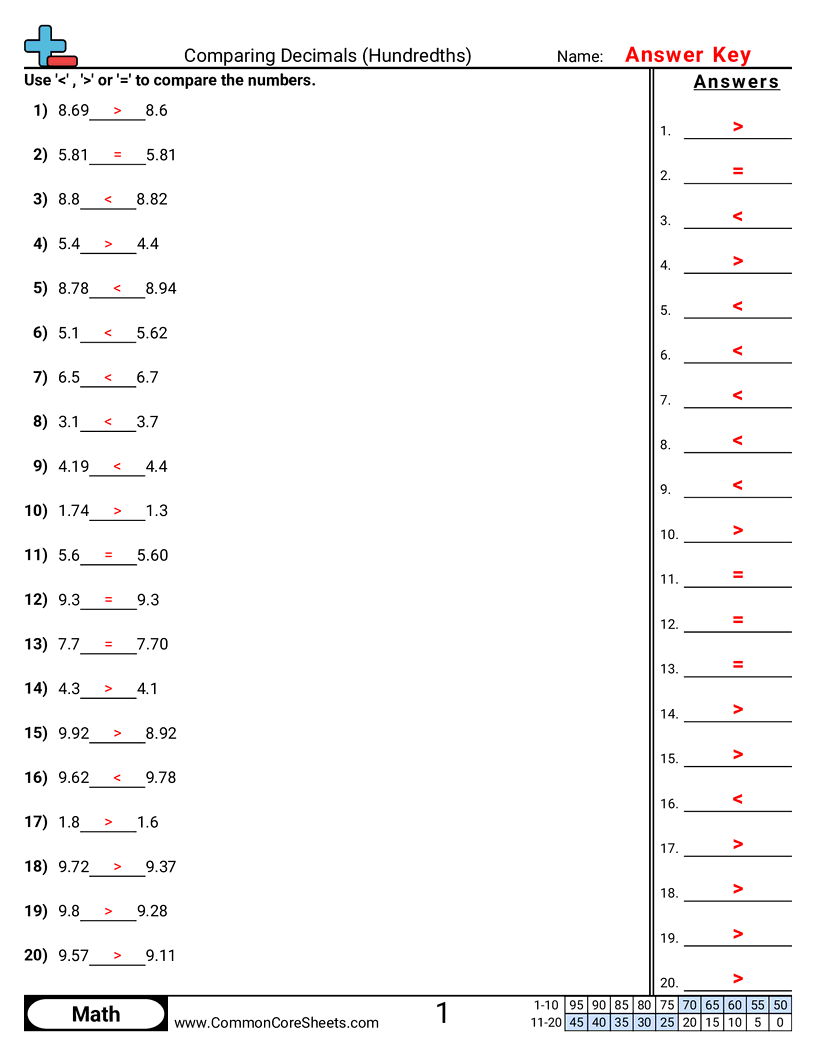
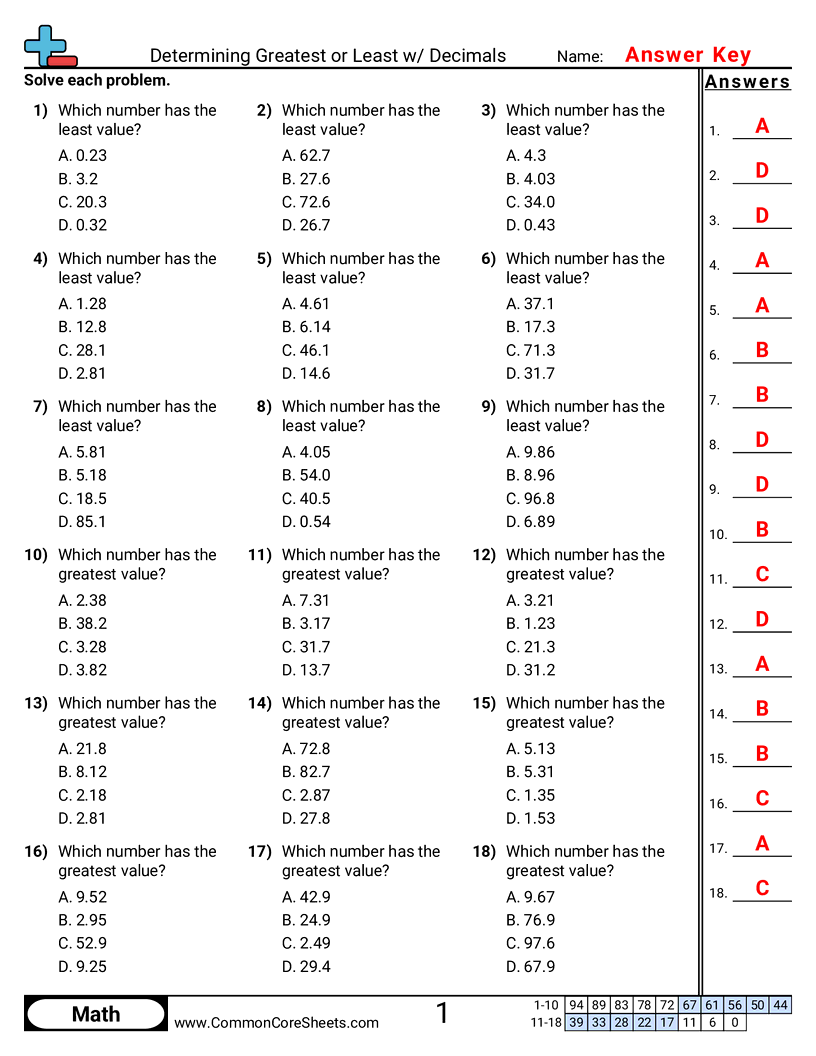
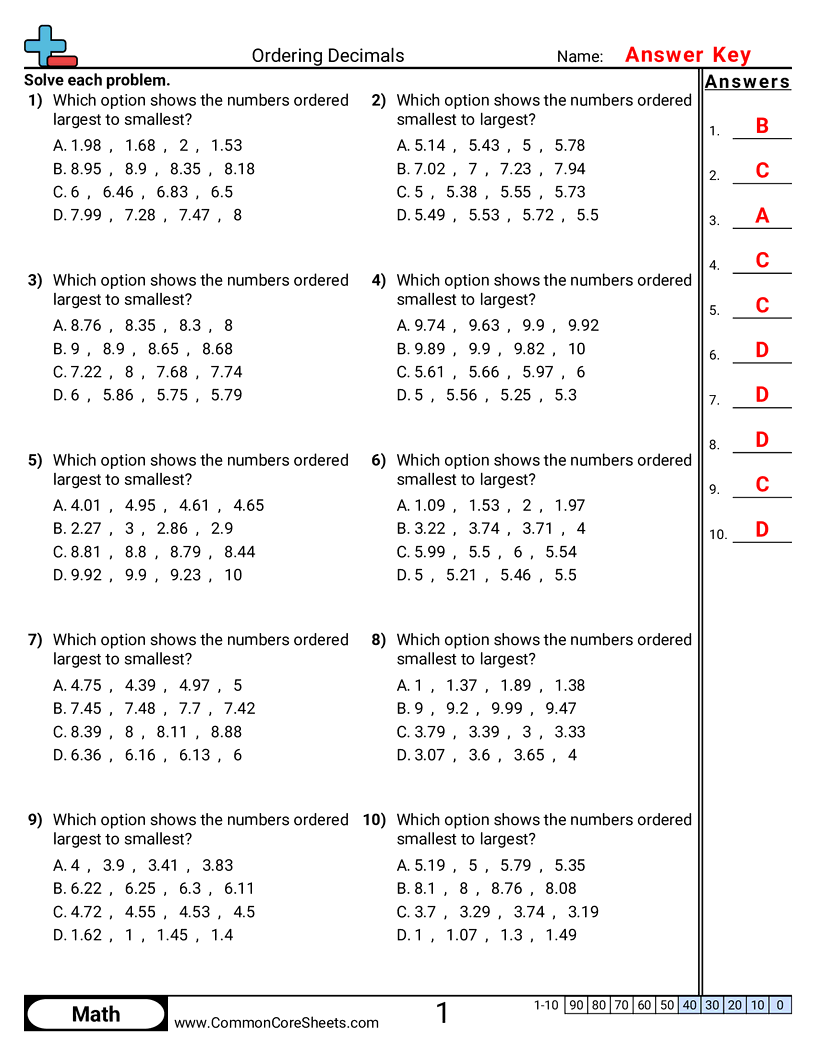
×Student Goals: Understanding DecimalsAfter completing this worksheet, students should have a clearer understanding of decimal values. They should be able to distinguish decimal fractions and understand the place and value of each digit in a decimal number. They can recognize how decimal numbers are derived from fractions, where each position after the decimal point represents a fraction of 10. This understanding will allow them to visualize how certain decimals represent smaller values than others, and why 0.8 is greater than 0.27 for instance.Ordering DecimalsAnother significant achievement the students should attain is the ability to order decimals accurately. They should be able to compare and order decimal numbers, whether they are expressed on a number line, in list form, or randomly. Such skill is crucial in different mathematical operations involving decimals such as addition, subtraction, multiplication, or division. It is also a step towards mastering more advanced topics such as statistical data interpretation.Practical ApplicationPractical application of knowledge is a crucial part of learning. Upon completion of the worksheet, students should be able to apply the knowledge gained in real-life situations. Decimals are used everywhere in daily life – from shopping, where we compare prices, to measuring ingredients for cooking, to calculating distances. Although elementary, understanding decimals importance can facilitate everyday calculations and conversions.Visual RepresentationThe worksheet also seeks to develop the student’s ability to visualize mathematical concepts. Visualization is a powerful tool which can simplify the understanding of abstract mathematical concepts. As such, by the end of the worksheet, students should be able to visually represent decimals using models or number lines. That way, mathematical problems become graphics that they can work with to reach an answer.Critical ThinkingFinally, the worksheet is designed to enhance the students' critical thinking skills. By using these puzzle-like questions, they encourage the students to think critically and analytically, to look beyond just numbers and apply logical reasoning to solve them. This encourages a growth mindset and raises their confidence and competence in problem-solving tasks.