×Description:
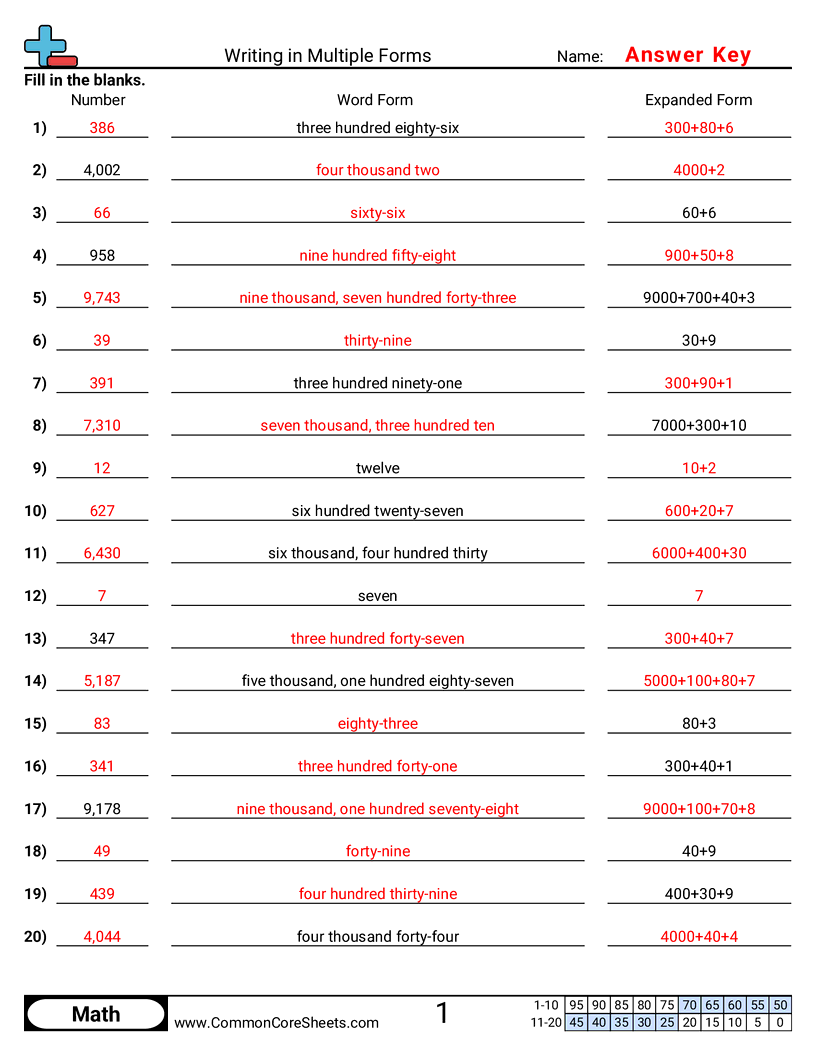
"This worksheet is designed to reinforce children's understanding of numbers through diverse forms: numerical, written, and broken down. It features 20 math problems, such as converting '176' into 'one hundred seventy-six' and '100+70+6'. Students can explore a multitude of study options, like customization for personalized learning, conversion to flashcards for portable study, or remote education. Ideal for establishing a strong number sense and flexible learning."
×Student Goals: Understand Number CompositionAfter completing the worksheet, students should be able to understand the composition of numbers. This involves taking a number and breaking it down into its component base-ten units. Whether they're working with two-digit numbers or numbers in the thousands, students should develop the ability to see numbers as whole entities as well as the sum of their parts.Translate Numbers into Word FormsStudents will gain proficiency in translating numbers into their word forms. They will traverse from the concrete to the abstract, moving from physical digits to their written counterparts. This translation skill reinforces the connection between numerical and linguistic symbols, aiding overall literacy.Translate Word Forms into NumbersLikewise, students will also learn to translate number words back into their numerical forms. This skill allows students to understand numbers in multiple formats, which can be especially helpful in real-world scenarios where numbers may be represented in words, such as in a legal document or narrative text.Boost Arithmetic SkillsThrough completing this worksheet, students will establish a strong foundation in arithmetic principles. The ability to break down numbers into their component parts will not only enhance their number sense, but also provide vital building blocks for addition and subtraction.Enhance Cognitive SkillsFinally, this exercise will help students to enhance their cognitive skills. By shifting between numerical and word forms, and deconstructing numbers, students are carrying out higher-order thinking that engages and challenges their minds. This task can contribute to improvements in other cognitive areas, like problem-solving, memory, and analytics.