×Description:
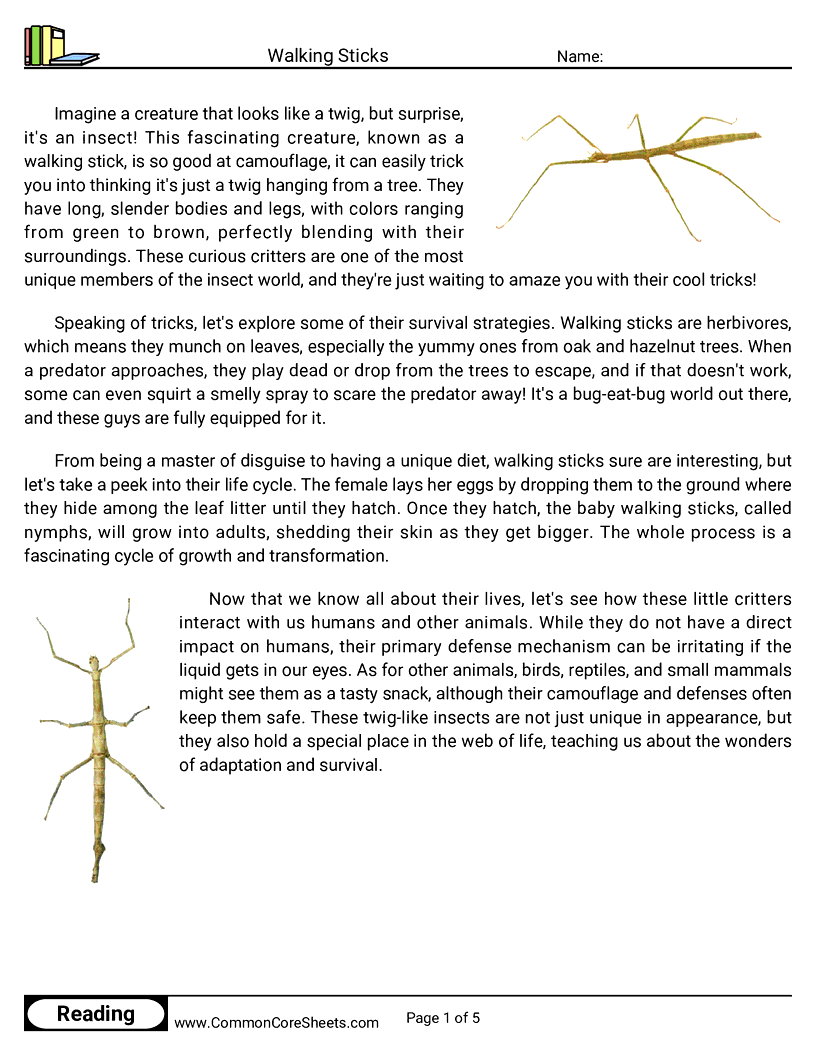
"This worksheet is designed to enhance children's reading skills and knowledge about walking sticks. It comprises 20 thought-provoking queries about this insect's diet, color, lifecycle, defense mechanisms, predators, and habitat. The worksheet can be tailored as per the learners' needs, transmuted into flashcards, or adapted for distance learning to make the educational experience more interactive and engaging."
×Student Goals: Knowledge AcquisitionAfter completing the worksheet, students should possess a comprehensive understanding of walking sticks including their diet, physical features, life cycle, habits, and interaction with the environment. They should have grasped the key characteristics that make these insects unique in nature.Critical ThinkingThis worksheet will enhance the students' critical thinking abilities. The multifaceted questions require students to apply their knowledge, think critically, and make connections to draw educated conclusions. This will improve their problem-solving skills and competency in logical reasoning.Reading ComprehensionThe worksheet aims to improve students' reading comprehension. By reading questions and choosing the correct answers, they will reinforce their understanding of the text and develop their ability to understand and analyze written information.Memory RecallThrough this exercise, students will work on memory recall. The variety of problems included in the worksheet facilitates knowledge retention and provides an opportunity to reinforce and recall information, this enhancing their memory skills.Exposure to Biological ScienceStudents will gather fundamental knowledge of biological science, particularly entomology (the study of insects). This exposure paves the way for interest in broader scientific exploration, encouraging them to dig deeper into the subject.Curiosity and InterestBy engaging in the Worksheet, students can cultivate an interest in the natural world, sparking curiosity about the fascinating diversity of insect species, their behaviours, adaptation mechanisms, and coexistence in ecosystems.