4md6×Description:
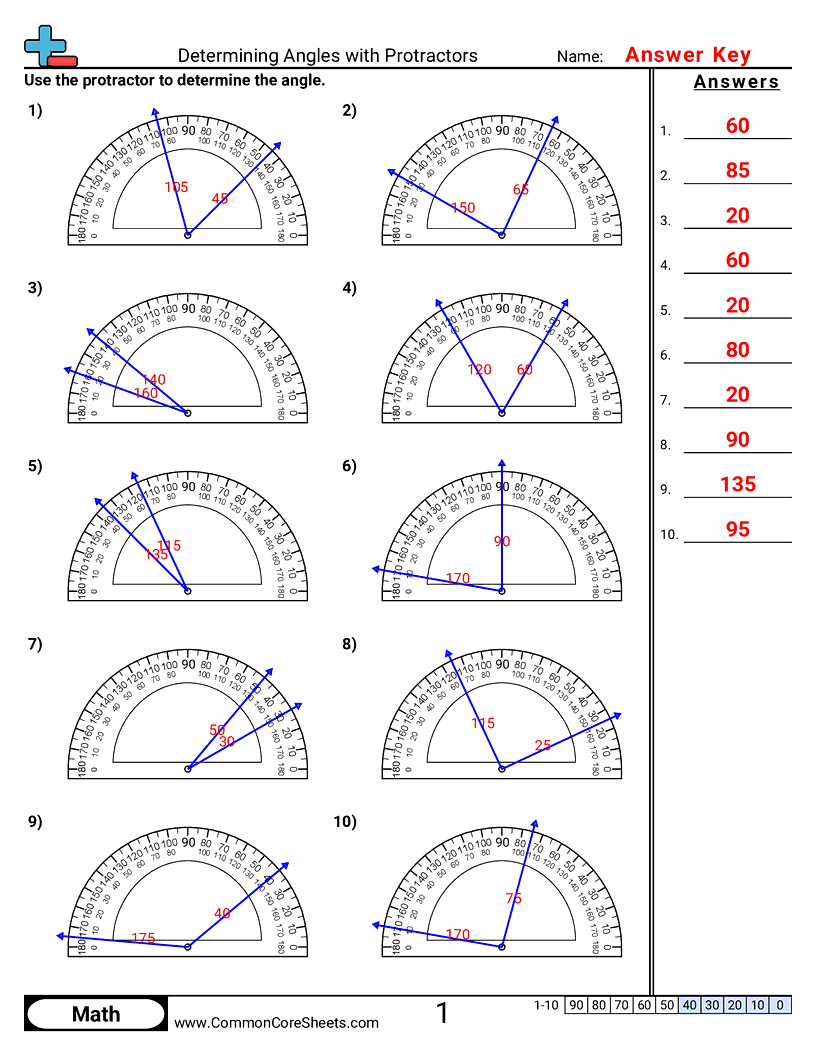
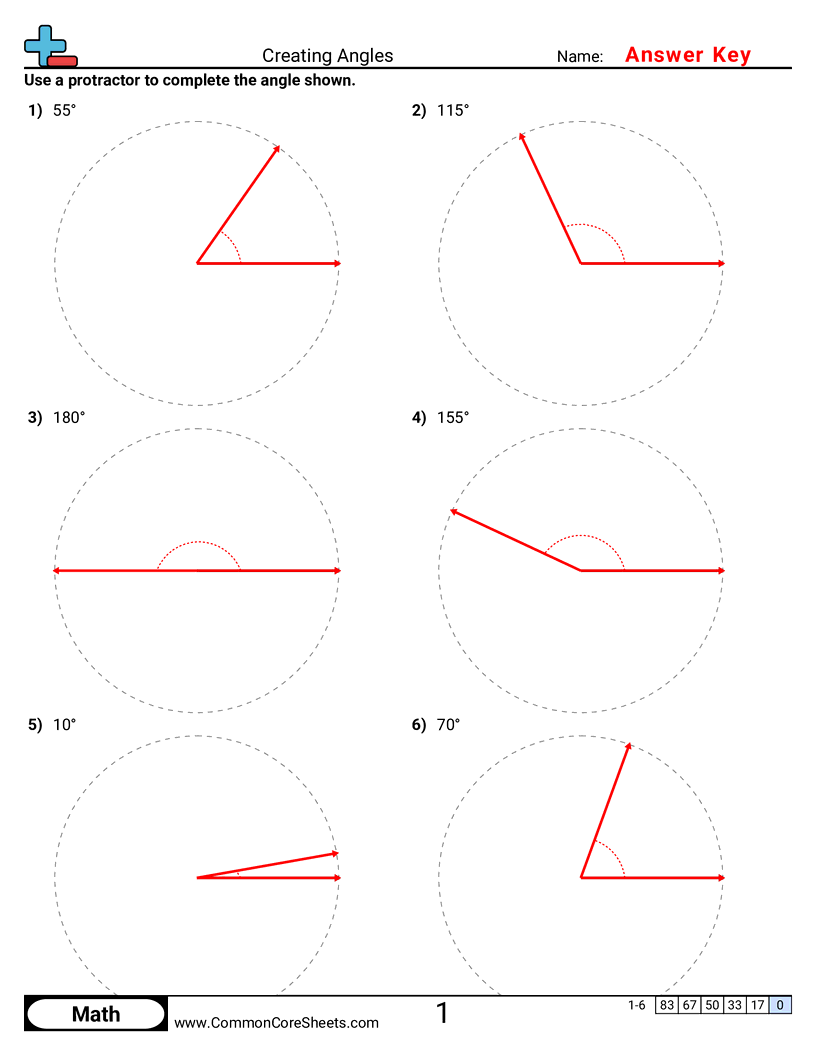
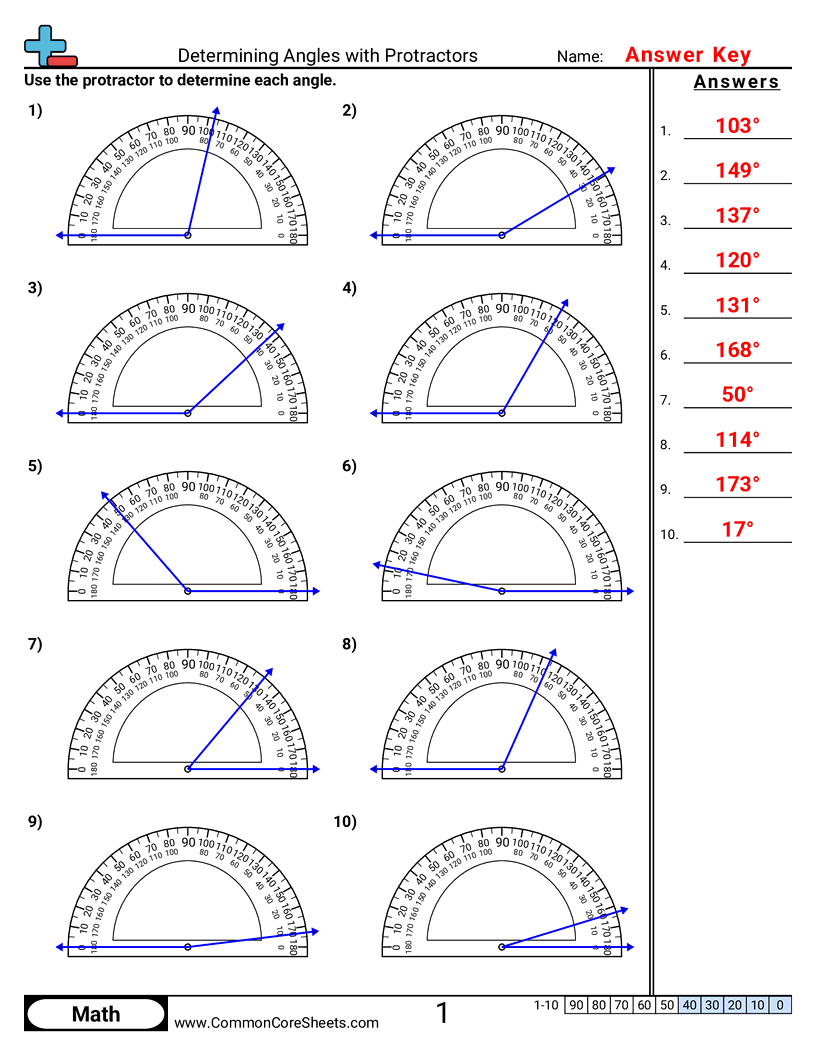
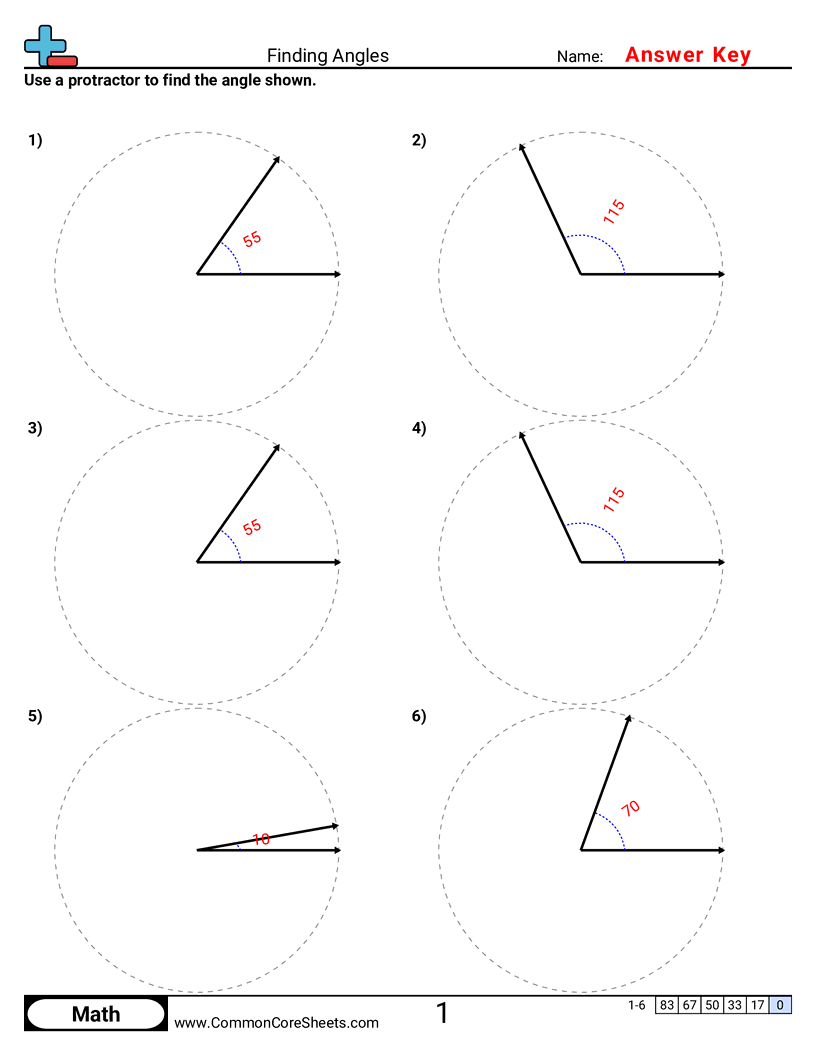
"This worksheet is designed to develop children's mathematical skills by learning to determine angles using protractors. It features 10 problems that engage students in identifying angles, enhancing their understanding and proficiency in math. Suited for distance learning, users can customize this worksheet to their preference or even convert it into flashcards, making the learning experience flexible and interactive."
×Student Goals: Mathematical UnderstandingAfter completing the worksheet on 'Determining Angles with Protractors', students should have an enriched understanding of the concept of angles and their measurements. They should have developed a detailed comprehension of the protractor as a mathematical tool and its application in measuring different angles in degrees. This allows students to visualize and explore the theory of angles in a practical, interactive way.Analytical ThinkingThis exercise aids in cultivating the students' analytical thinking skills. Because each question requires identification and measurement of angles, it enhances their ability to analyze visual data. They are expected to have improved their spatial skills, focusing not only on abstract numbers but also on actual physical space and dimensions.Problem SolvingThe worksheet is contrived to build and refine the problem-solving abilities of the students. They should be comfortable interpreting the measurements of different angles and be able to solve mathematical problems regarding angles effectively and accurately. The practice of measuring different angles will demonstrate the variability and potential complexities, helping them develop a problem-solving mindset.Application of KnowledgeAccomplishing the worksheet ensures that students can apply garnered mathematical concepts to new and unfamiliar situations. This indicates that the teachings have been internalized and that students can apply their knowledge practically. This practical application of knowledge is integral to their mathematical progress.Precision and AccuracyBy determining angles with protractors, students are expected to develop their precision and accuracy skills. This means they should be able to effectively use a protractor to measure angles accurately and distinctly. This learning outcome extends beyond mathematics; precision and accuracy are life skills that apply to various forms of learning and everyday tasks.Confidence and ProficiencyOn successful completion of this worksheet, students should have gained enough confidence in the subject matter. Engaging with this resource should make children feel more proficient in the topic of angles and their measurements. The competence derived from this action-based learning can foster an overall interest and positive attitude towards learning mathematics.