6sp5c×Description:
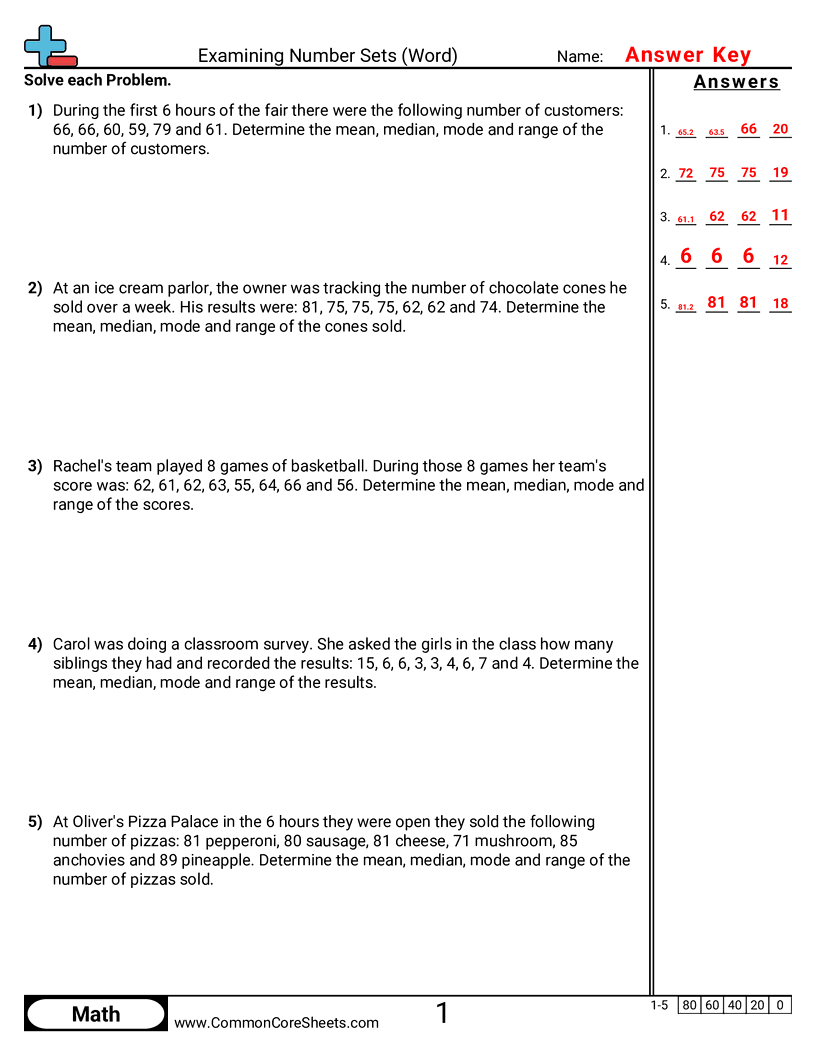
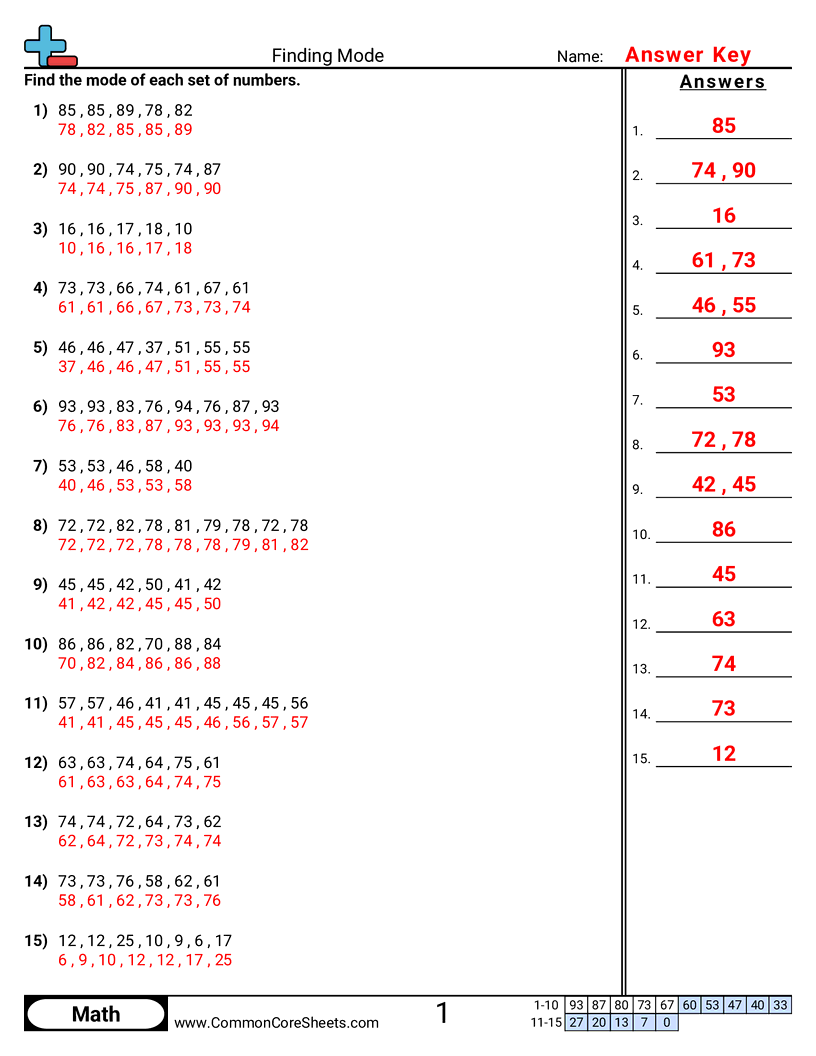
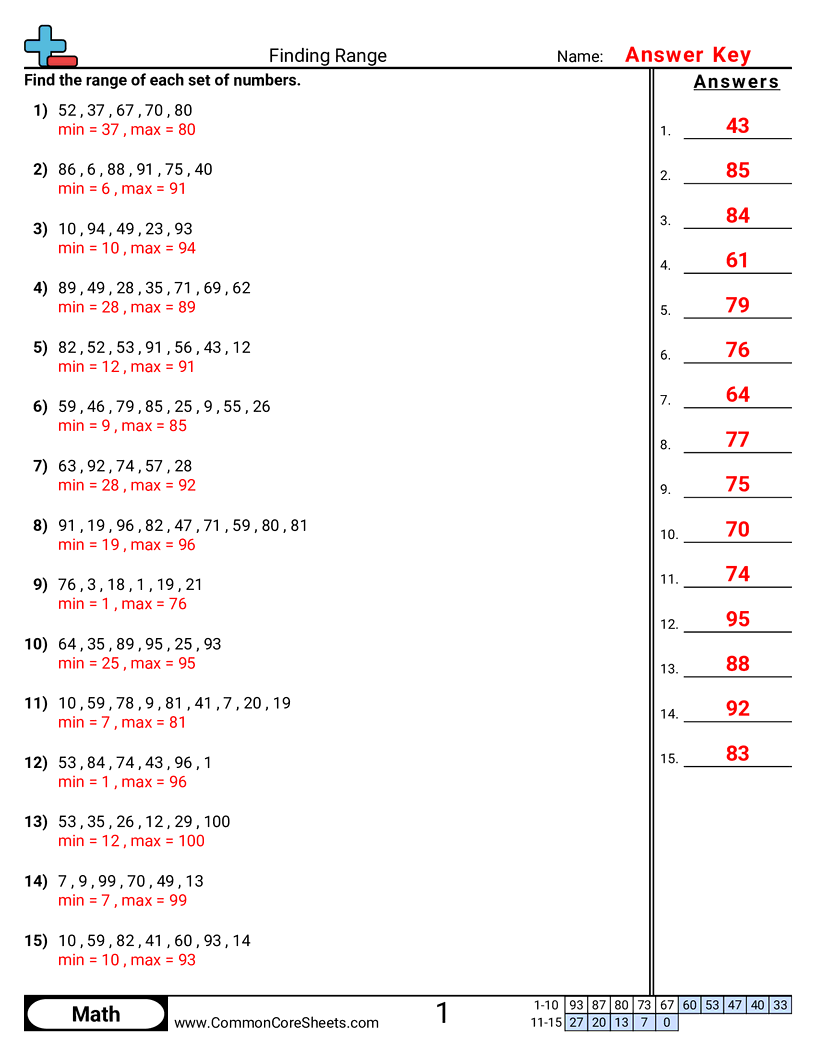
"This worksheet is designed to help children examine number sets through engaging word problems involving real-life scenarios. In studying patterns of sports scores, car count, pencil sharpening, playground activities, and pizza sales, children will determine the mean, median, mode, and range. The worksheet is versatile & can be customized for individual learning, converted into flash cards or employed in distance learning to enrich mathematical understanding."
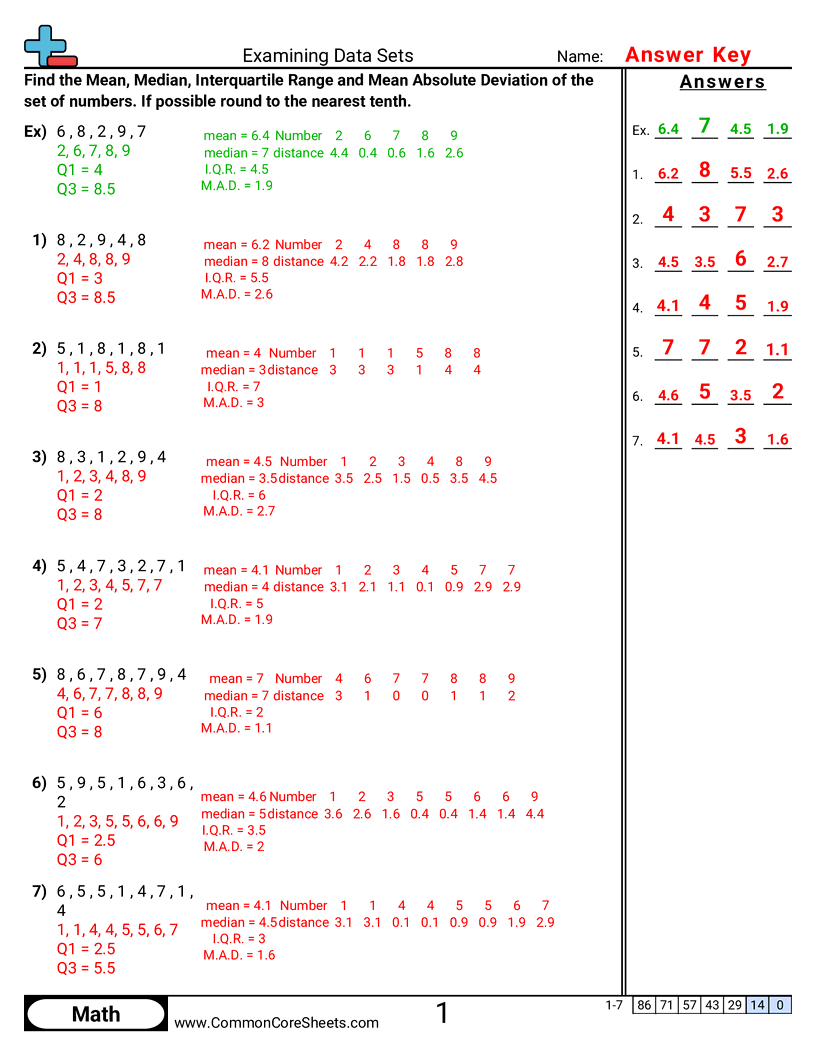
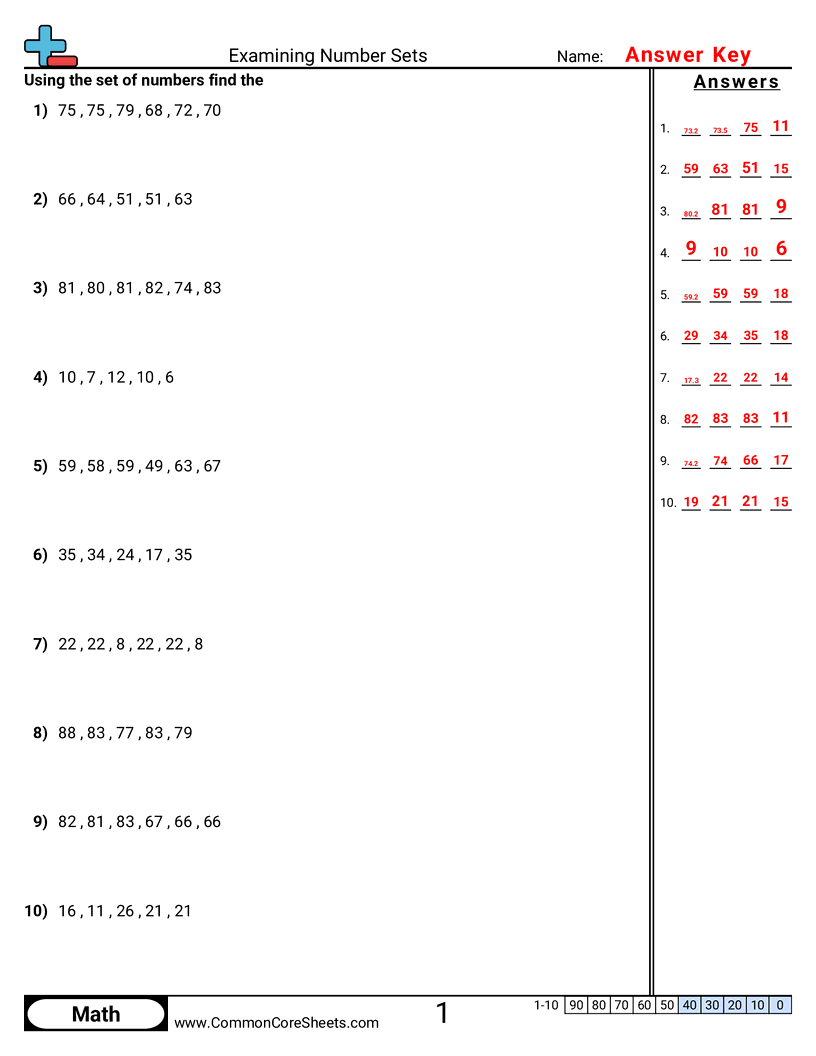
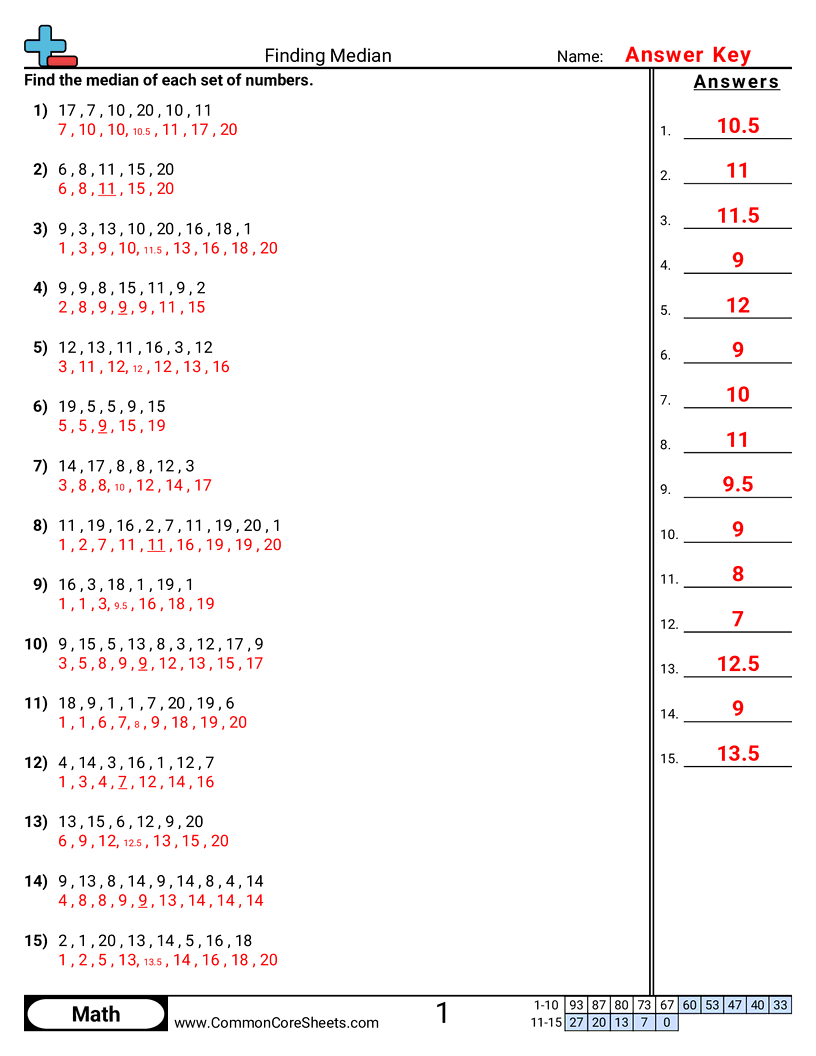
×Student Goals: Understanding of Statistical ConceptsAfter completing the worksheet, students will have a deeper understanding of basic statistical concepts, including mean, median, mode, and range. These are fundamental concepts in mathematics which provide foundational knowledge for future studies in more advanced statistical and mathematical analysis.Enhanced Analytical SkillsThrough solving the problems in this worksheet, students will enhance their analytical skills. They will be able to sort numerical data, calculate averages, identify the middle number in a data set, determine the number that appears most frequently, and identify the difference between the smallest and largest numbers in a set - also known as the range.Real-World Problem-Solving AbilityThis worksheet incorporates real-world scenarios into math problems, thereby boosting students' ability to apply mathematical concepts to solve real-life problems. This will improve their problem-solving skills and ability to transfer learned knowledge to unfamiliar contexts. Thus, making mathematical learning more meaningful and applicable to everyday life situations.Increased Numerical FlexibilityBy working with different number sets and calculating the mean, median, mode, and range for each set, students will gain an increased flexibility in working with numbers. This experience will enhance their overall numerical fluency - an important skill in all fields of math.Improved Attention to DetailThe task of examining number sets and calculating various measures requires students to pay careful attention to the presented data, enhancing their attention to detail. This skill is not only vital in mathematics but also in many other fields of study and areas of life.