×Description:
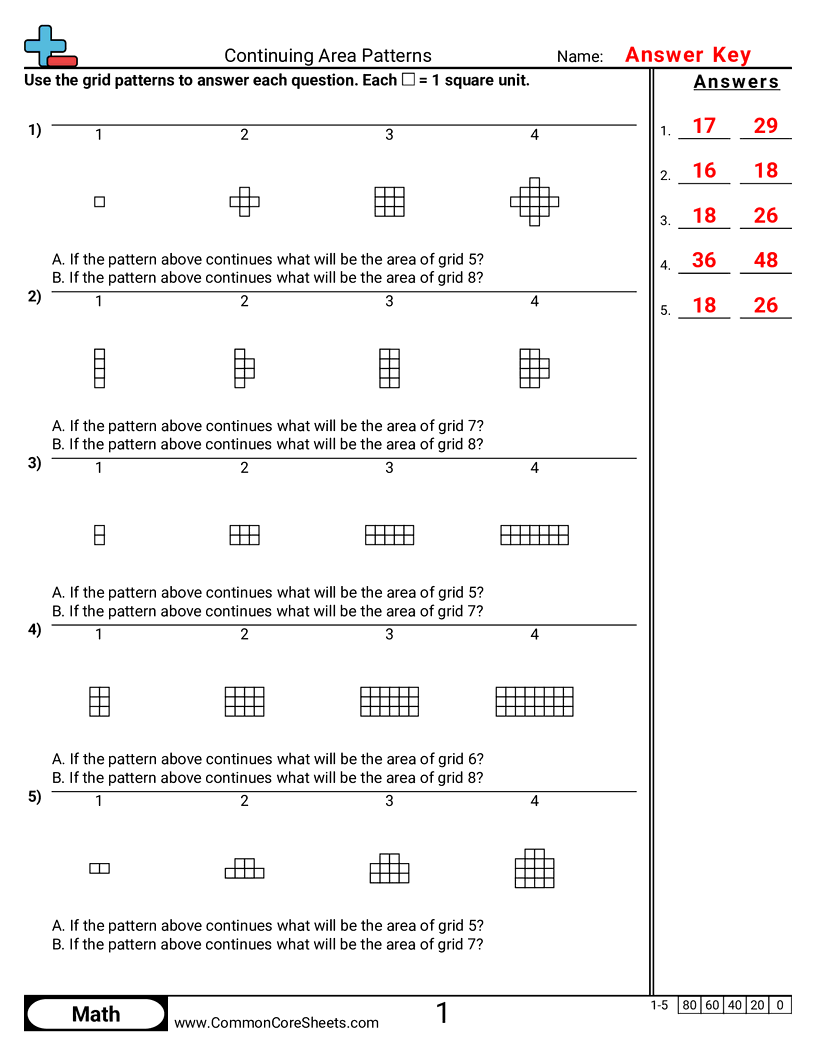
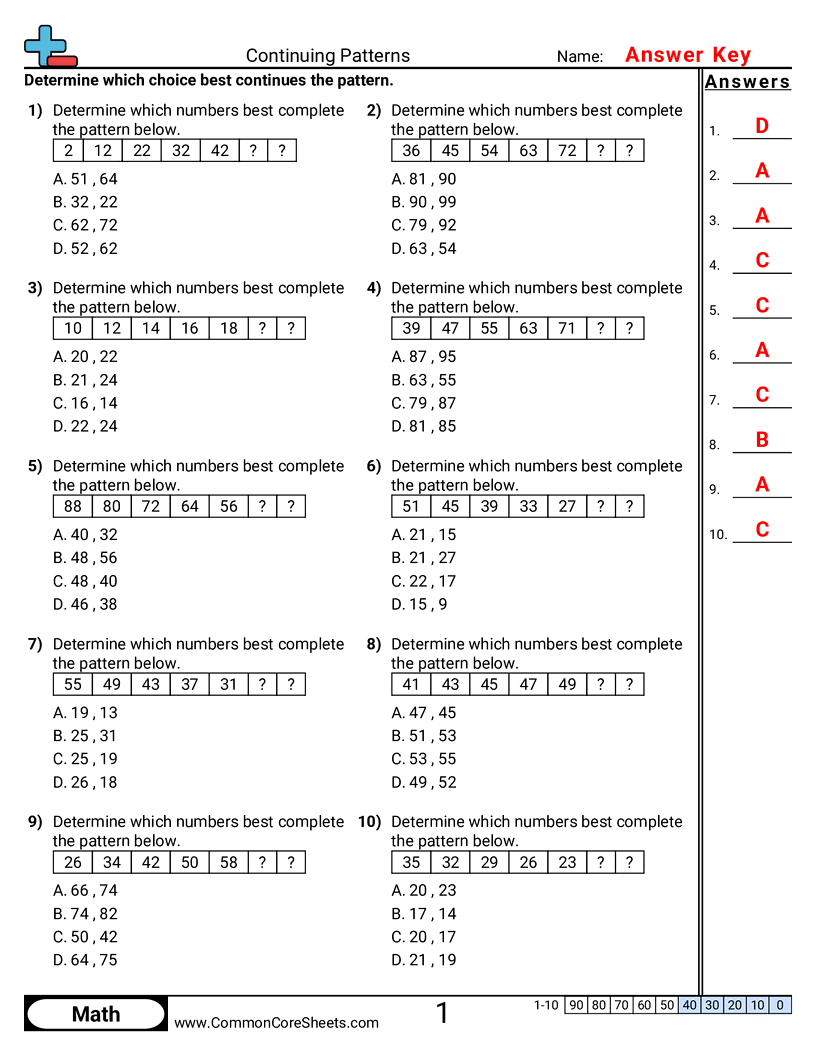
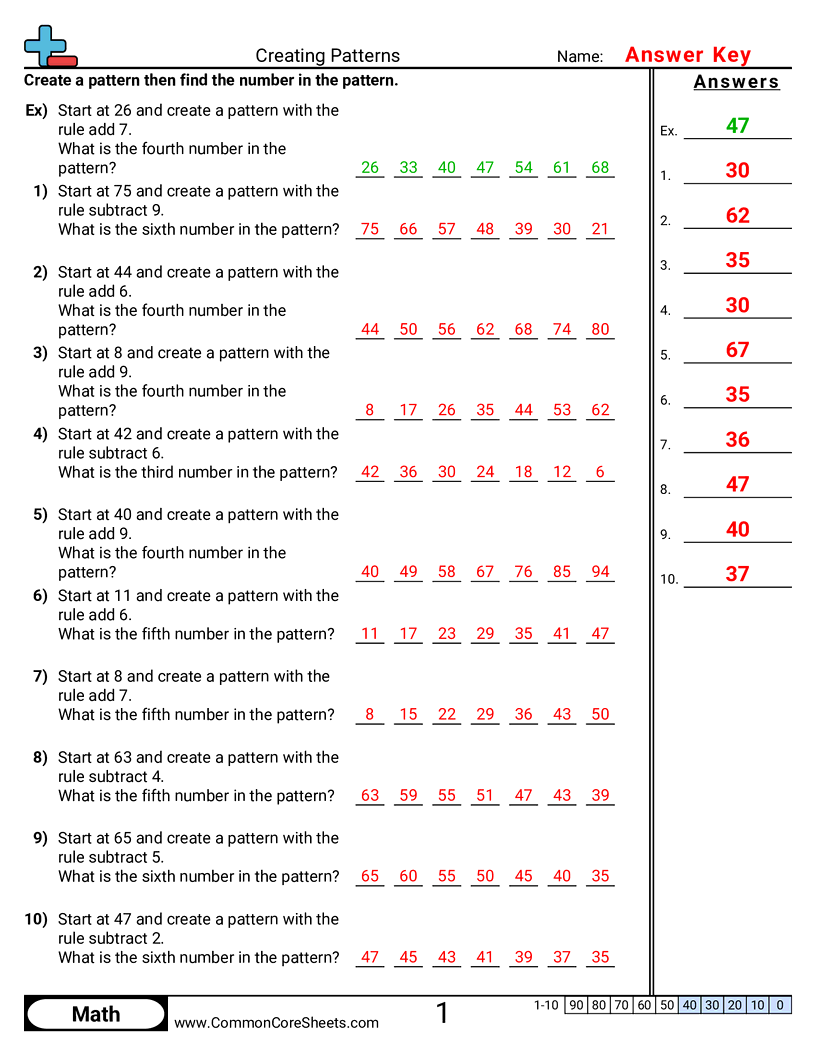
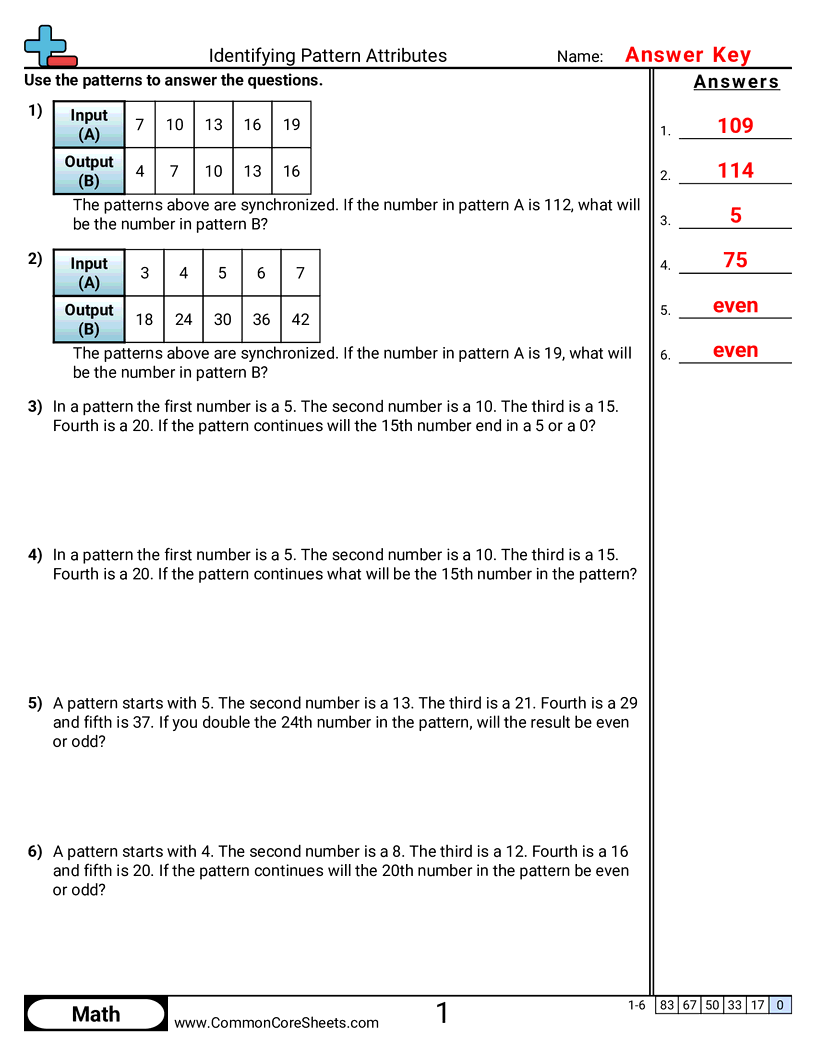
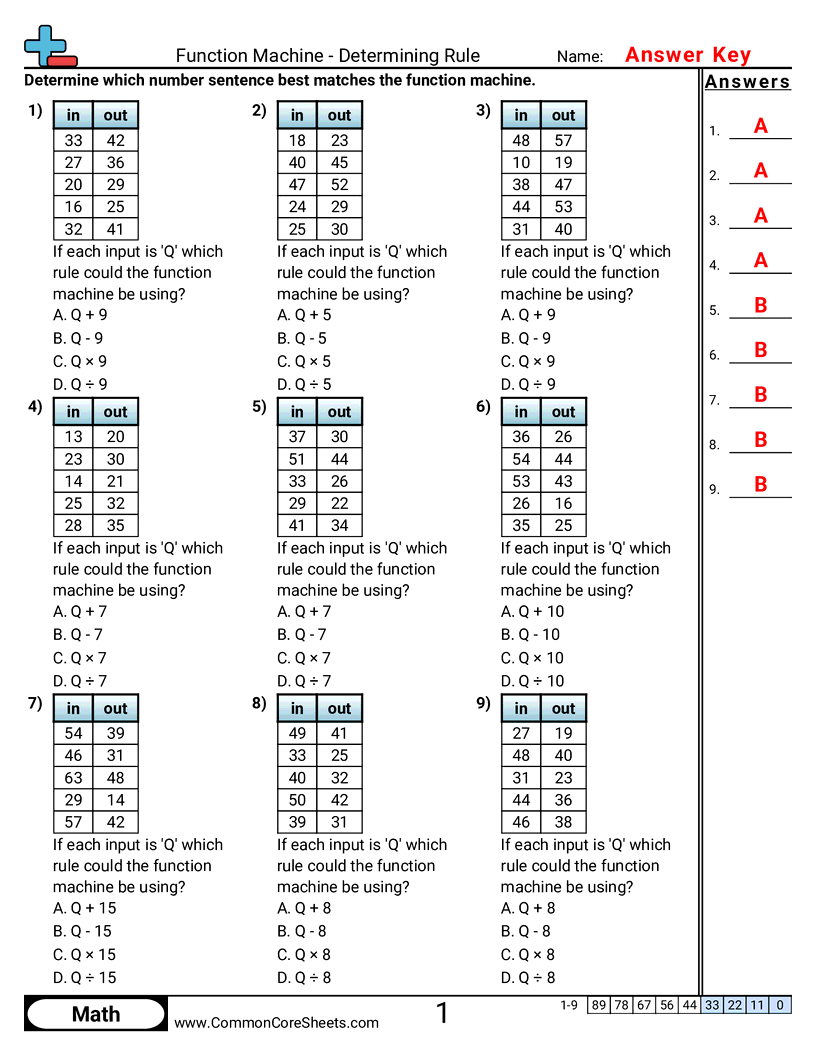
"This worksheet is designed to assist children in understanding continuous pattern rules using tables. It includes six example math problems that involve applying formulas based on patterns. Students learn critical thinking by determining cooking times, game points, drawing numbers, and more. Customizable for various learning needs, it can be converted into flash cards or utilized for distance learning, making it versatile and accessible."
×Student Goals: Understanding PatternsUpon completion of this math worksheet, students should have a much firmer grasp on identifying and understanding patterns. This important skill will allow them to predict future events or trends based on observed patterns. It strengthens cognitive abilities such as reasoning, generalizing, and problem-solving which are critical for more complex math concepts.Mastering TablesThe worksheet offers problems where inputs and outputs are illustrated in table form. Having worked through these problems, students will improve their ability to accurately and effectively interpret data from tables. This skill is a foundation for data analysis, a critical part of many disciplines, in and beyond mathematics.Applying Pattern RuleOne of the core learnings from this activity is the application of the pattern rule using tables. Students can predict or determine what comes next, after having identified the rule or pattern of the table. Math problems that focus on the pattern rule nurture a student's analytical mind and their ability to recognize and formulate rules.Multiplication and AdditionThe problems posed in the worksheet will provide the students with a practical application of addition and multiplication. By working out the pattern rules, students solidify their addition, and multiplication skills which are highly essential basic arithmetic concepts used in everyday life and advanced mathematics.Enhancing Logical ThinkingAfter completing this worksheet, students should be able to think logically. It encourages them to ask questions, make predictions, and establish connections, all part of logical thinking processes. Through these practical exercises, they're exercising and sharpening their logical thinking skills, enabling them to face more advanced problems in the future.Problem SolvingThe worksheet provides an opportunity for the students to enhance their problem-solving ability. As they formulate pattern rules based on the given data and use this rule to solve for unknowns, they're practicing how to break a problem down into smaller, more manageable parts, an essential aspect of effective problem-solving.