4g1×Description:
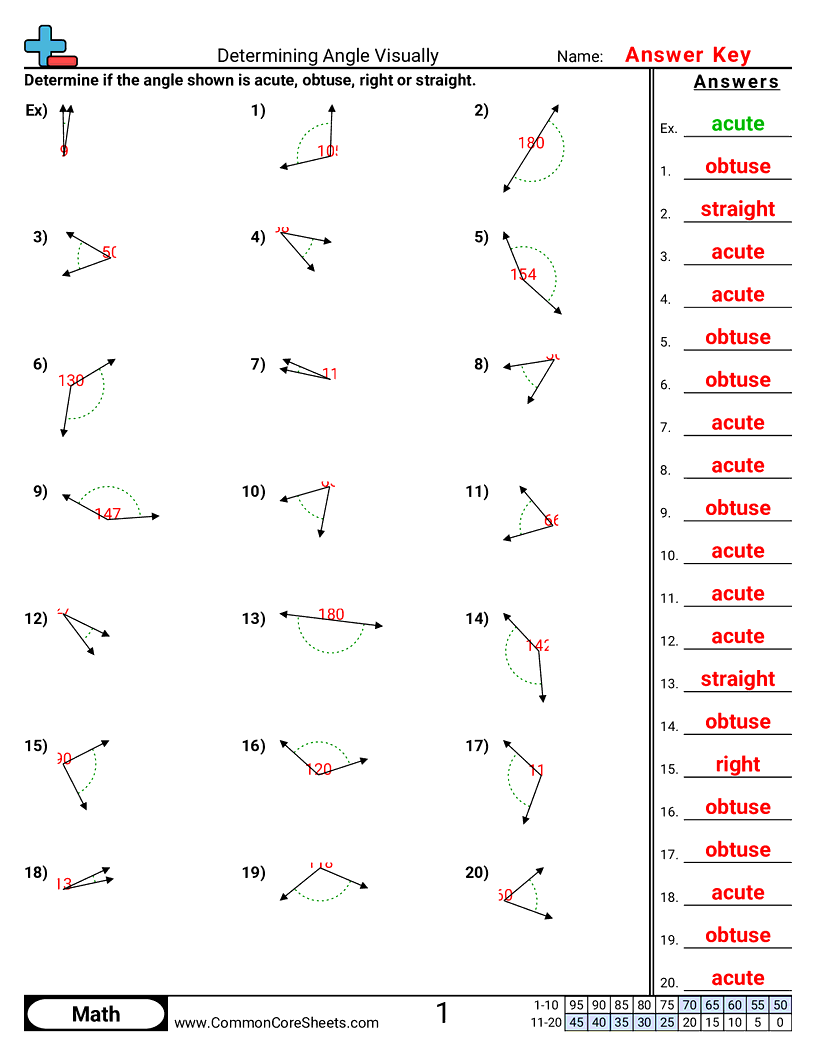
"This worksheet is designed to engage elementary students in understanding the concept of a 90° angle. It includes 20 interactive problems where students determine the relationship of different angles to 90°. The digital format makes customization easy, allowing conversion into flash cards, or adaptation for distance learning. It reinforces fundamental math principles and promotes hands-on learning."
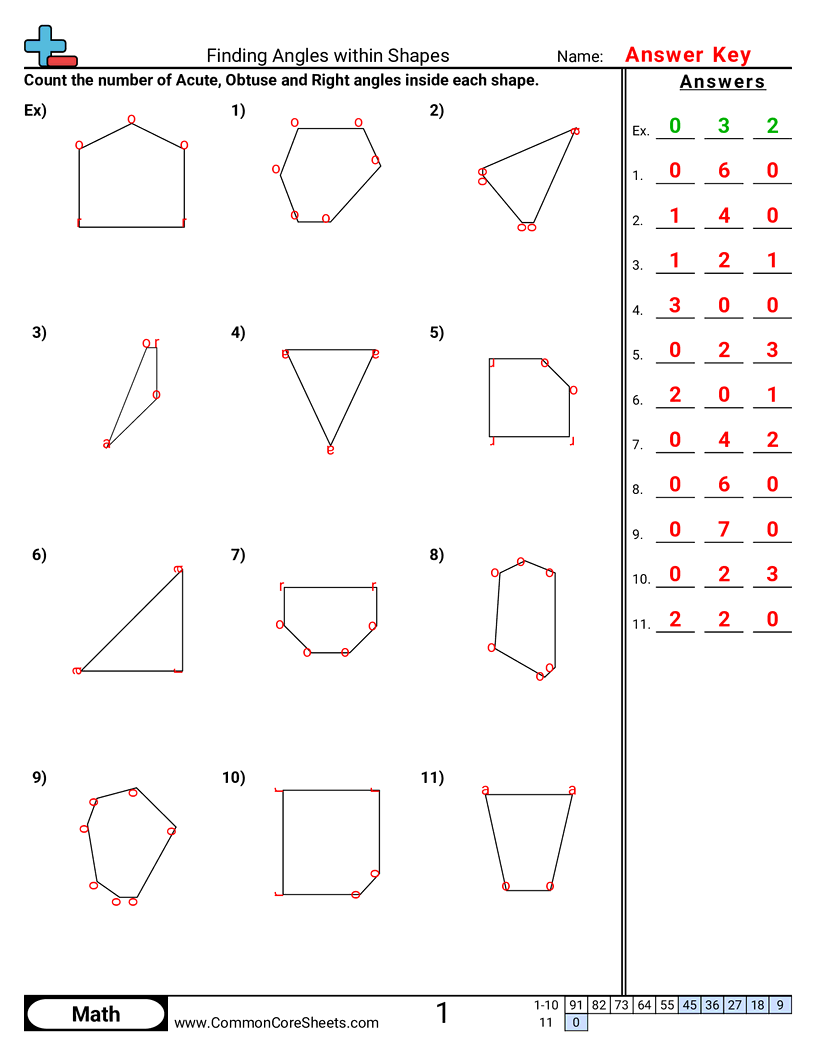
×Student Goals: Understanding AnglesBy successfully completing this worksheet, students will have enhanced their knowledge on angles. They will be better able to identify an angle as either more, less, or equal to 90°. In other words, students should have a clear understanding of acute, right, and obtuse angles. This ability is essential as it serves as a foundation for various other aspects of geometry, including but not limited to understanding the properties of triangles, quadrilaterals and other polygons.Building Problem-Solving SkillsThe worksheet is designed to encourage students to apply their logical and mathematical thinking in order to determine the relation of various angles to 90°. This requirement will not only help students to strengthen their comparison and analytical abilities, but it will also assist them in problem-solving tasks that will crop in later higher-level mathematics subjects. Through the repeated practice of evaluating different angles, students are expected to have developed better problem-solving skills.Developing PrecisionWith the aim of accurately determining the relationship of given angles to 90°, students are expected to have developed a keen sense of precision and accuracy. In the field of Mathematics, precision is key, and by accurately identifying the measurement of each angle, students are honing their attention to detail. This complimented with consistent practice, the worksheet will help students become more accurate in their mathematical computations and deductions.Enhancing Mathematical VocabularyUpon completion of the worksheet, students would have broadened their mathematical vocabulary as well. They should be comfortable with using terms like 'acute', 'right', and 'obtuse' to describe and categorize angles, further embedding these terms in their learning. Understanding these terms is not only valuable for their mathematical progress but also facilitates effective communication of mathematical concepts with peers and teachers alike.